
Trump Furious After Supreme Court Strikes Down Tariff Policy, Announces New 10 Per Cent Tariff on All Countries
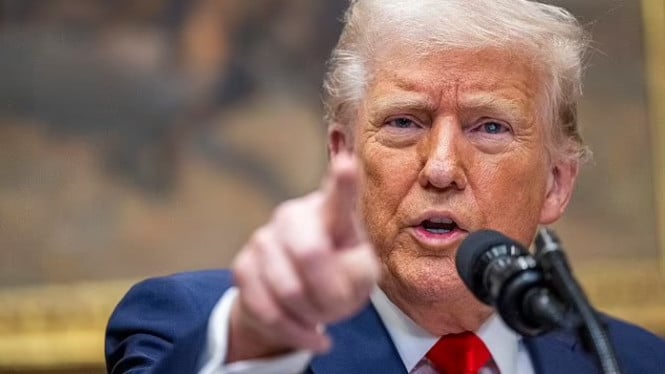
US President Donald Trump’s plan to impose sweeping tariffs has triggered fresh turmoil after the Supreme Court struck down the legal basis for the policy. The ruling represents a significant blow to Trump’s economic agenda and opens a new chapter in the battle between the White House and the judiciary.
In a 6-3 decision, the United States Supreme Court ruled that the International Emergency Economic Powers Act (IEEPA) of 1977 does not grant the president authority to impose tariffs. The majority of justices — comprising a mix of conservative and liberal members — found no explicit reference to tariffs in the legislation.
The ruling also upheld lower court decisions that had previously declared Trump’s IEEPA-based tariffs illegal.
Trump responded sharply to the ruling, calling the Supreme Court decision “very disappointing” and accusing the court of being influenced by “foreign interests.” He had nominated two of the justices who ruled against him, and reacted with anger.
“I am ashamed of some of the members of the court, truly ashamed, for not having the courage to do what is right for our country,” Trump told reporters.
Trump affirmed that he would use separate authority to impose a uniform 10 per cent tariff on all imports into the United States — after having imposed various tariffs spontaneously last year to coerce and punish other countries.
“To protect our country, a president can actually impose higher tariffs than what I have imposed in the past,” Trump said, asserting that the ruling had made him “more powerful.”
A Blow to Trump
The ruling is considered Trump’s most significant setback at the Supreme Court since returning to office. During his second term, Trump has aggressively used tariffs as a tool of diplomatic pressure, including imposing “reciprocal” tariffs against countries deemed to engage in unfair trade practices.
The policy also targeted major partners such as Mexico, Canada and China, citing illegal drug flows and immigration issues.
Nevertheless, sectoral tariffs on steel, aluminium and a number of other products remain in force as they rest on separate legal foundations. Several other trade investigations are also ongoing and could potentially trigger additional tariffs.