
Trump Faces Setback Due to Iran War, Finally Takes This Action in the US
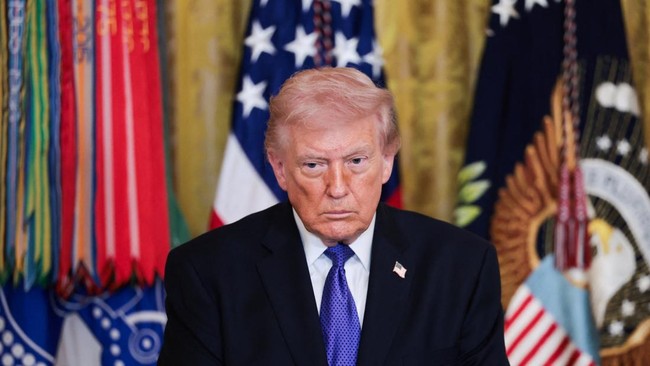
US President Donald Trump has issued a 60-day suspension of the long-standing Jones Act, which governs domestic shipping (cabotage). This measure aims to stabilise the oil market amid the conflict with Iran. White House spokesperson Karoline Leavitt stated that the temporary suspension will allow vital resources, such as oil, natural gas, fertiliser, and coal, to flow freely to US ports during that period. “The Trump administration remains committed to continuously strengthening our critical supply chains,” she said in her statement, as quoted by CNBC International on Thursday (19/3/2026). For context, the Jones Act was enacted in 1920 by President Woodrow Wilson. The policy at the time required that goods transported between US ports could only be carried by US-flagged vessels. The act aimed to develop the domestic shipping industry following the First World War. However, it has been criticised as a form of protectionism, and some economists have recently argued that it hinders domestic trade. Trump’s two-month suspension was announced as oil prices rose again due to the conflict in Iran, where key energy infrastructure has been targeted in attacks and the Strait of Hormuz has been effectively closed. Currently, Brent crude, the international benchmark, has reached $111 per barrel. This comes after Trump expressed frustration in recent days over the reluctance of US allies to help secure the strait, a crucial global oil shipping route that is now nearly halted due to Iranian military threats. According to Daleep Singh, global chief economist at asset manager PGIM, there are fewer than 100 vessels compliant with the Jones Act. Thus, waiving the act frees up more international tankers to transport fuel between US ports. However, the impact of the suspension may remain limited. This is due to a mismatch where most US refineries are designed to process crude oil from the Middle East, while the US primarily produces lighter shale oil. “Simply put: the US can now distribute fuel more easily, but it still cannot process enough of what it produces to achieve self-sufficiency,” Singh said in a note to clients. On the other hand, a coalition of nine US maritime labour groups has expressed deep concern over the Jones Act suspension. They also argue that the step will not significantly lower fuel prices. “This broad waiver disrupts our national security, weakens military readiness, and hands critical maritime jobs to foreign vessel operators,” the groups stated jointly. “It has been clearly proven that the main determinant of petrol prices remains the cost of global crude oil, and various analyses show that domestic shipping contributes less than one cent per gallon,” the labour groups added.