
Trump Delays Shipments to Europe: This is the World's Most Sought-After American Weapon
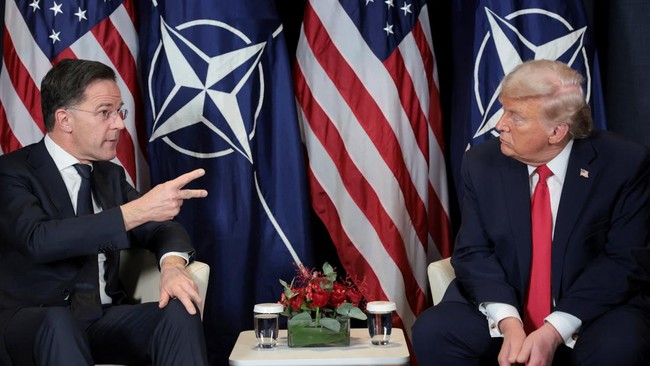
The United States (US) is reportedly beginning to delay some arms shipments to several European countries as the war against Iran continues to drain Washington’s weapon stockpiles. This situation illustrates that the conflict, which erupted at the end of February 2026, is not only shaking the Middle East but also starting to pressure the global arms supply chain. These delays are also placing US allies in Europe in a difficult position. On one hand, Washington has continuously urged its NATO partners in Europe to increase purchases of US-made weapons. This push aligns with the United States’ position as the world’s largest arms exporter to date. SIPRI data shows that in the 2021-2025 period, the US share of global arms exports reached 42%, up from 36% in the 2016-2020 period. Several US officials are said to have informed some of their partners in Europe that some previously contracted arms shipments are likely to experience delays. The affected countries are said to include the Baltic and Scandinavian regions. Some of these weapons were previously purchased through the Foreign Military Sales (FMS) scheme, a US government programme for selling arms to other countries with logistical support and official approval from Washington. However, even with contracts in place, deliveries are said to not proceed as planned. This indicates that the war against Iran is beginning to burden US stocks of certain ammunition and important weaponry. Since the war began with the US-Israel airstrikes on 28 February 2026, the need for weapons for operations in the Middle East has continued to increase. Complaints are starting to emerge from the European side. The delays are seen as making their position uncomfortable, especially since some of the affected countries are close to Russia, making the rhythm of arms shipments a highly sensitive defence issue. This situation also comes at a time when Europe is becoming the centre of global arms demand. SIPRI data records that in the 2021-2025 period, Europe became the region with the largest share of global arms imports, at 33%. This is the first time since the 1960s that Europe has held that position. The delayed weapons are said to include various types of ammunition, including munitions that can be used for both offensive and defensive needs. Data from the SIPRI Arms Transfers Database also shows that the United States was the world’s largest arms exporter in 2025. The most ordered weapons are fighter aircraft, armoured vehicles, and artillery. The US Burden Has Been Heavy Even Before the Iran War. Actually, pressure on US weapon stocks has occurred even before the Iran conflict erupted. In recent years, Washington has depleted its weapon reserves to support Ukraine since Russia’s invasion in 2022, as well as to sustain Israel’s military operations in Gaza since the end of 2023. This means the Iran war comes at a time when US weapon reserves are already thinner than a few years ago. Now, with the new conflict demanding additional large supplies, the pressure is even more felt. The situation is becoming more complex because since the military campaign against Iran began, Tehran is reported to have fired hundreds of ballistic missiles and drones at Gulf region countries. Most were successfully intercepted, including with PAC-3 Patriot interceptor missiles, a type of weapon also badly needed by Ukraine to protect its energy infrastructure and military facilities from Russian ballistic missile attacks. Amid this situation, US officials are also said to believe that those weapons are more needed for the war in the Middle East. Washington even assesses that European countries have not sufficiently helped the US and Israel in efforts to reopen shipping routes in the Strait of Hormuz. The Problem is that delays in US arms shipments are not a new issue. For a long time, many European capitals have been frustrated because deliveries of US-made weapons are often late. Now, amid a major war draining Washington’s stocks, that anxiety could grow larger. Some European officials are even said to be starting to more seriously consider European-made weapon systems as alternatives. This is an irony in itself. Under President Donald Trump, the US is instead pushing its NATO partners in Europe to increase purchases of American weapons, as part of efforts to shift Europe’s conventional defence burden from the US to European countries themselves. However, as demand increases, US delivery capabilities are starting to falter.