
Trump Delays Attack on Iran for Two Weeks, Agreement Reached
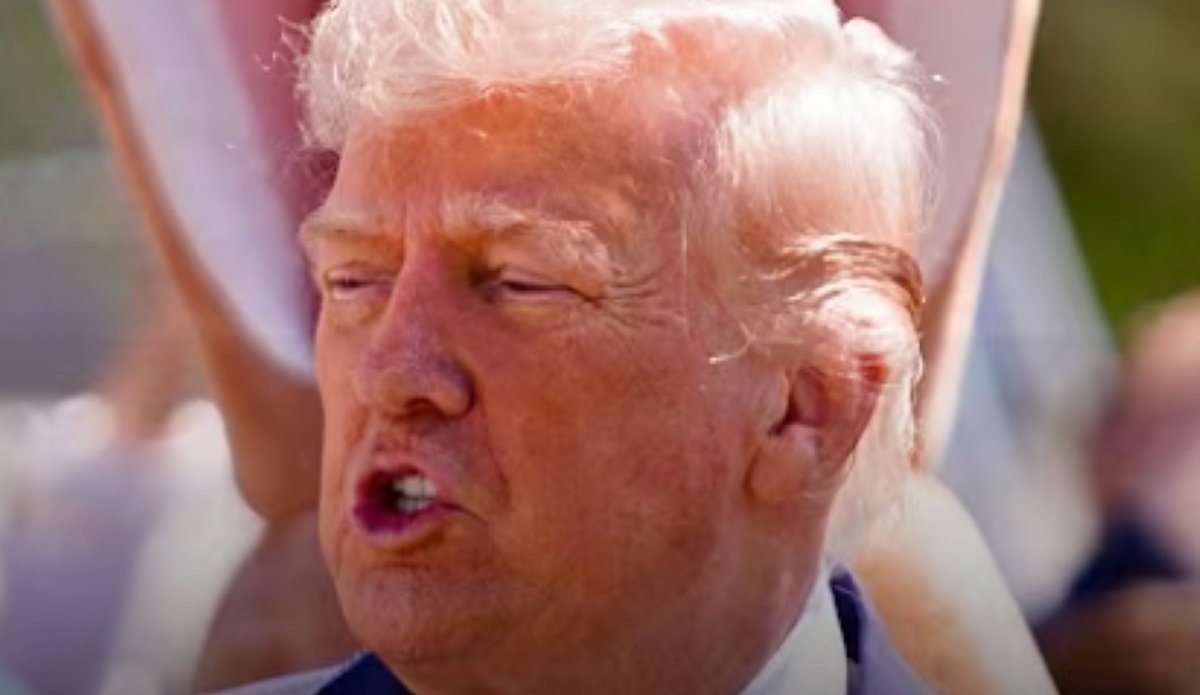
The US government faces a policy dilemma with no truly comfortable options. US President Donald Trump has decided to suspend plans for a military attack on Iran for two weeks, just hours before the deadline he had set himself. This decision came after Trump issued strong threats that the entire civilisation would perish that night if Tehran did not meet Washington’s demands. Trump announced this via his Truth Social account on Tuesday (7 April) evening local time, about an hour and a half before the attack deadline. In his statement, Trump revealed that the decision followed communication with Pakistani officials acting as mediators. He mentioned that Pakistan’s Prime Minister Shehbaz Sharif and Field Marshal Asim Munir asked him to hold back the attack plans. However, the suspension comes with conditions: Iran must immediately reopen the Strait of Hormuz. “Based on conversations with Prime Minister Shehbaz Sharif and Field Marshal Asim Munir from Pakistan, they asked me to hold back the destructive force sent tonight to Iran on the condition that the Islamic Republic of Iran agrees to the full, immediate, and safe opening of the Strait of Hormuz. I agree to suspend the bombing and attacks on Iran for two weeks,” Trump wrote, as reported by Al Jazeera on Wednesday (8 April). Shortly after the statement, Iran’s Foreign Minister Seyed Abbas Araghchi confirmed a temporary agreement. He stated that Iran is willing to halt its military operations if attacks on his country are stopped. “If attacks on Iran are halted, our Mighty Armed Forces will stop their defensive operations,” Araghchi wrote. He also added that over the next two weeks, a safe route in the Strait of Hormuz can be opened through coordination with Iran’s military. Additionally, Araghchi expressed appreciation to Pakistan for its last-minute mediation efforts. Further talks between the relevant parties are planned to take place in Islamabad soon. Previously, tensions had sharply escalated ahead of the attack deadline. Trump had posted a threatening statement in the morning, sparking global concerns. “The entire civilisation will die tonight, it will never be able to be revived,” Trump wrote. “I don’t want that to happen, but it might happen,” he continued. He also described the moment as one of the most important in the world’s long and complex history. In his latest statement, Trump again claimed success for US military strategy and said Iran has submitted an acceptable ceasefire proposal. “This will be a two-sided ceasefire,” he wrote. “The reason we are doing this is because we have met and exceeded all military objectives and reached a definitive agreement on long-term peace with Iran as well as peace in the Middle East. We have received a 10-point proposal from Iran and believe it is an implementable basis for negotiation,” he said. Trump emphasised that the next two weeks will be used to finalise the peace agreement. He even expressed optimism that most differences between the two countries have been resolved. “Almost all past points of contention have been agreed between the United States and Iran,” he said. “It is an honour to see this long-standing issue almost resolved,” he added. On the other hand, the announcement has been met with mixed reactions. Al Jazeera correspondent Osama Bin Javaid assessed that the decision could ease tensions in the Middle East region, which was previously on the brink of major escalation. “It will be a collective relief for this region and its surroundings, because the alternative is horrific,” he said. “The level of anxiety around this region is extraordinary, and Donald Trump is the only one who can calm it down, because he is the one who first lit the fire,” he explained. However, in Tehran, public responses tend to be sceptical. Some parties question whether the suspension means a complete halt to the conflict or just a delay of specific attacks. “It’s unclear, at least to me, whether he is suspending everything that has happened since the start of the war or extending the deadline for total destruction of power plants,” said Al Jazeera correspondent Mohamed Vall. The conflict between the US-Israel alliance and Iran has lasted more than five weeks since the joint military attacks began on 28 February. Washington and Tel Aviv stated that the operation aims to eliminate the Iranian threat and prevent the development of nuclear weapons. However, several international law experts consider the action an unprovoked attack that violates international law. Since the conflict broke out, the death toll has continued to rise. Nearly 2,076 people have been killed in Iran, while 28 have died in Gulf countries. On the other side, the United States has lost 13 military personnel, and 26 deaths have been reported in Israel.