
Trump Concedes—Putin Smiles: US Opens Taps for Russian Oil Purchases
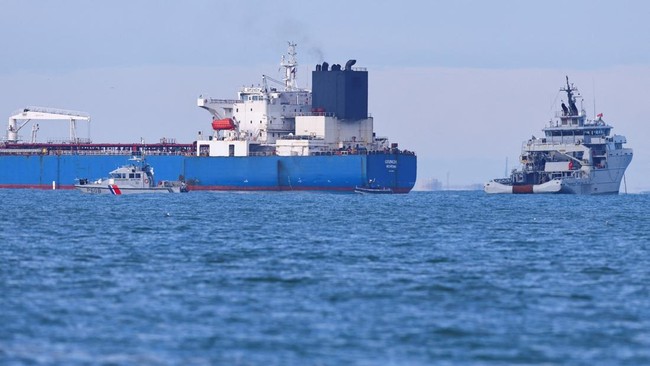
The American government has taken an unusual step amid global energy market turbulence stemming from conflict with Iran. Washington granted temporary permission on Thursday, 12 March 2026, to purchase Russian oil currently stranded at sea, aimed at alleviating pressure on world energy supplies.
US Treasury Secretary Scott Bessent stated that the policy is limited and applies only for a short timeframe. In a post on platform X, Bessent stressed that the measure is not intended to broadly reopen Russian oil trade. He described the policy as a “narrowly tailored and temporary measure” applying solely to oil already in transit.
According to CNBC’s sources, approximately 124 million barrels of Russian oil are currently at sea across roughly 30 locations worldwide—equivalent to between five and six days of US demand. Washington’s temporary authorisation to purchase this oil is expected to help ease the volatile energy market that has intensified since conflict with Iran erupted.
Global oil prices have moved sharply since the Iranian conflict began. Last Monday, oil prices briefly approached US$120 per barrel. Meanwhile, the Brent crude benchmark closed slightly above US$100 per barrel on Thursday. The surge followed Iran’s new supreme leader Mojtaba Khamenei’s pledge to continue closing the Strait of Hormuz, a critical maritime route for most Middle East oil exports.
Bessent sought to calm market concerns, characterising the current oil price spike as temporary. “The temporary increase in oil prices is a short-term and temporary disruption that will ultimately provide great benefits to our nation and economy in the long term,” he said.
Whilst opening a channel for Russian oil purchases at sea, the US government emphasised the policy will not greatly benefit Russia’s government. Bessent noted that most of Moscow’s energy revenue comes from taxes levied at the production stage, not at the trading stage. In other words, transactions involving oil already at sea will not significantly boost Russian government revenues.
The authorisation also has a clear time limit. A notice on the US Department of Treasury website states that this exemption applies only to Russian oil products loaded onto vessels on or before 00.01 Eastern Standard Time (EST) on 12 March, with purchases permitted through 11 April at 00.01 EST.
This measure follows Washington’s earlier policy granting temporary exemptions to certain countries regarding Russian oil imports. Last week, the US government granted India a 30-day exemption to purchase Russian crude oil.
Western nations continue to maintain sanctions against Russia’s energy sector following Moscow’s 2022 invasion of Ukraine. The Group of Seven developed nations along with the European Union have imposed a price cap on Russian oil set at around US$44.1 per barrel. The EU has also committed to phasing out all remaining Russian oil imports by the end of 2027 at the latest.
Energy sanctions against Russia have actually been tightened since the Ukraine war began. In 2022, President Joe Biden banned Russian oil, liquefied natural gas, and coal imports into the US—a key step for Washington to pressure Moscow’s energy revenue sources following the Ukraine invasion.