
Trump Claims War Will End Soon, but Analysts Predict Conflict Could Last Much Longer
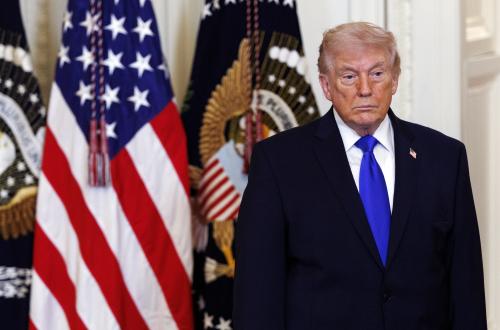
The conflict between Iran and the United States and Israel is estimated to have the potential to last far longer than many parties anticipate. This assessment was provided by energy and environment analyst Kurt Cobb in his analysis published on Oilprice.com. US President Donald Trump, however, has claimed the war will end soon as attacks by the US and Israel continue to bombard Iran.
According to Cobb, many parties previously believed tensions with Iran would resolve quickly. Some anticipated that US President Donald Trump would choose to make a deal with Iran and then claim victory.
If a deal did not materialise, many analysts also predicted that Iran’s regime would quickly collapse due to combined attacks by the United States and Israel. Some even predicted that Iran’s government could fall due to popular uprising or be forced to request peace within days.
However, this scenario has not materialised.
Cobb believes that the casual complacency regarding the possibility of war has now disappeared. Several world leaders have begun expressing concern about the conflict’s development. According to Cobb, one key to understanding this conflict is the differing definitions of victory between the two sides.
For Iran, victory is defined simply as the regime in power remaining in place. Meanwhile, the United States and Israel view victory as the fall of Iran’s current government and its replacement with a new, friendlier regime, or even the fragmentation of the nation.
President Trump has reportedly added the condition that the only acceptable outcome is “unconditional surrender” from Iran.
On the other hand, Iran’s Foreign Minister, in an interview with NBC, emphasised that his country sees no reason to negotiate with the United States. Iran believes that two previous negotiations were merely used as a pretext to launch attacks.
“We are not asking for a ceasefire and do not see any reason why we should negotiate with the United States,” said the Iranian official as cited by Cobb.
This situation creates the potential for the conflict to transform into a prolonged war.
Cobb also argues that the assumption that the United States and Israel can win the war through air power alone contradicts many historical precedents. He cites the Vietnam War, when the United States dropped more bombs than the total tonnage dropped during World War II, yet still failed to win the war. If the conflict continues without negotiation, Iran is predicted to continue launching retaliatory strikes whilst awaiting the possibility of a ground invasion.
Conversely, many believe the United States will not send large ground forces into Iran. However, Cobb reminds observers that if such a scenario materialises, invasion preparations could take months and face Iran’s challenging geography, dominated by mountainous terrain.
According to him, such an invasion could potentially be a military disaster for the United States.
If invasion does not occur, another option for the United States and Israel is to conduct large-scale bombing of Iran. However, this approach risks destroying Iran’s economy without producing a clear victory.
In such circumstances, Iran could potentially attack the energy infrastructure of oil and gas-producing nations in the region. Countries that could be affected include Iraq, Kuwait, Oman, Qatar, Saudi Arabia, and the United Arab Emirates. If energy infrastructure in these nations is damaged, the world could face a prolonged energy crisis.
Cobb also reminds observers that Iran has previously demonstrated a willingness to engage in economic warfare, including disrupting energy traffic through the Strait of Hormuz. This waterway carries approximately 20 per cent of the world’s crude oil and liquefied natural gas exports. According to Cobb, the longer the conflict lasts, the greater its impact on global energy prices and the global economy will be.
Rising energy prices could affect various industrial sectors, ranging from petrochemical textiles, food production dependent on natural gas-based fertilisers, mining, packaging, tyres, to power generation using gas and diesel fuel.
Cobb emphasises that it is difficult to predict precisely the direction of the Iran conflict. According to him, too many variables can influence the course of the war.
“Humans are far more difficult to predict than nature,” Cobb wrote.