
Trump Claims US Can Open Strait of Hormuz Without Other Nations' Assistance
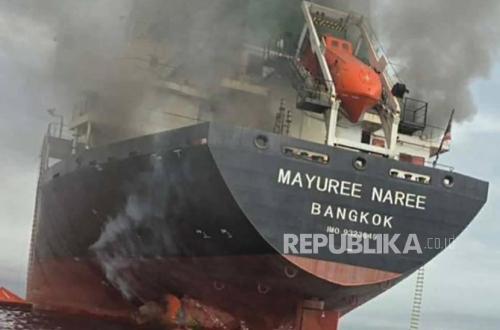
WASHINGTON — US President Donald Trump stated that the United States does not require assistance from other nations in efforts to reopen the Strait of Hormuz for international shipping. According to him, the US is the world’s strongest nation.
“I’m not pressing them, because my position is, we don’t need anybody. We are the strongest country in the world. We have the strongest military in the world. We don’t need them,” Trump said, as cited on Tuesday (17 March 2026), from Sputnik/RIA Novosti.
He added that in several instances he requested assistance not out of necessity, but to understand how those nations would respond. Trump also claimed that several nations have expressed readiness to assist the US in opening the Strait of Hormuz.
“Some are very enthusiastic, but some others are not,” he said.
On 28 February, the US and Israel launched attacks against targets in Iran, including Tehran, which caused damage and killed civilians.
Iran subsequently retaliated by launching attacks against Israeli territory and US military facilities in the Middle East.
The escalation prompted a de facto halt to traffic in the Strait of Hormuz, a critical shipping route for oil and liquefied natural gas from Persian Gulf states to global markets. The disruption has also impacted oil exports and production in the region.
Meanwhile, Japanese Foreign Minister Toshimitsu Motegi stated that Japan will cooperate with the US and other nations to ensure safe navigation in the Strait of Hormuz. Motegi conveyed this during a telephone conversation with US Foreign Secretary Marco Rubio on Monday (16 March), according to Kyodo.
The conversation took place after US President Donald Trump urged nations via social media to send warships to secure the Strait of Hormuz. However, that request was not mentioned in the conversation between the two foreign ministers, according to ministry sources.
Rubio explained to Motegi the US position and efforts regarding the conflict, and both agreed to maintain close communication regarding the situation in the Middle East, according to the ministry. Both also affirmed their commitment to cooperate ahead of a meeting between Trump and Japanese Prime Minister Sanae Takaichi in Washington, which is expected to take place on Thursday.
The conflict, now in its third week, has led Iran to effectively close the Strait of Hormuz, a narrow waterway through which approximately 20 per cent of global oil and liquefied natural gas passes, in response to US and Israeli attacks since the end of last month.
More than 90 per cent of Japan’s crude oil imports originate from the Middle East, much of which passes through the strait.
For Japan, deploying Self-Defence Force (SDF) assets and personnel to foreign regions that could potentially become involved in combat operations remains a sensitive issue due to its constitution, which prohibits war. Tokyo may order SDF vessels to escort Japan-related vessels in maritime security operations that permit limited weapons use.
Motegi also spoke separately by telephone with his counterparts, Prince Faisal bin Farhan Al-Saud of Saudi Arabia and Sheikh Abdullah bin Zayed Al Nahyan of the United Arab Emirates, to affirm cooperation in de-escalating the situation.
They also discussed efforts to ensure stable crude oil supplies and the safety of Japanese citizens in the region, according to the ministry.