
Trump Claims Peace Negotiations, Iran Totally Denies: Who Is Lying?
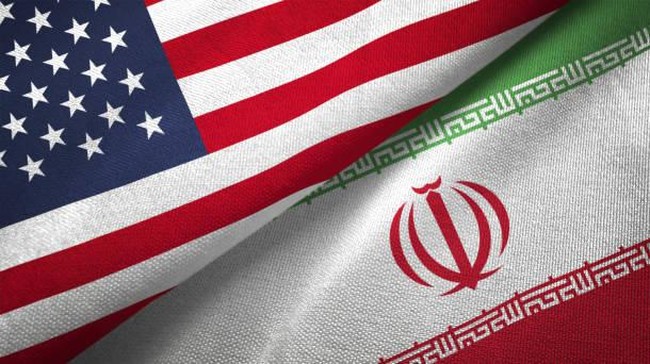
The misalignment of statements between US President Donald Trump and high-ranking Iranian officials has raised significant questions regarding claims of negotiations to end the war that has lasted nearly a month.
Trump insists the talks are “productive”, while Tehran repeatedly denies them, highlighting a narrative divide amid the conflict that also involves Israeli Prime Minister Benjamin Netanyahu.
In a situation filled with war narratives and propaganda from various parties, it is difficult to ascertain who is telling the truth. However, examining each party’s interests regarding potential negotiations or ending the conflict is deemed to provide a clearer picture.
Trump stated there are “key points of agreement” following talks he described as “very good” with an unnamed high-ranking Iranian official. That statement came as US stock markets opened at the start of the trading week. The five-day deadline he gave Iran to respond positively also coincides with the end of the trading week.
Several observers have cynically highlighted the timing, especially after oil prices fluctuated over the past two weeks following developments in the Middle East and briefly reached around US$120 per barrel the previous week.
Trump’s statements on negotiations are also seen as buying time for more US troops to arrive in the Middle East, should Washington decide on a ground invasion of Iranian territory.
One figure questioning Trump’s motives is Iran’s Parliament Speaker Mohammad Bagher Ghalibaf. He denied the existence of such talks and accused the negotiation claims of being an attempt to manipulate markets.
“No negotiations are being conducted with the United States, and fake news is being used to manipulate financial and oil markets and to escape the quagmire trapping the United States and Israel,” Ghalibaf wrote on social media, as quoted by Al Jazeera on Wednesday (25/3/2026).
US Interests
This narrative difference makes public comments difficult to use as indicators of whether negotiations are truly happening or not. The situation then shifts to an analysis of each party’s interests in continuing or ending the war.
Trump is seen as underestimating the consequences of the conflict he initiated with Netanyahu on 28 February, including Iran’s ability to withstand attacks without collapsing.
“They should not have attacked all the other countries in the Middle East… No one expected that,” Trump said last week.
He added that even the “greatest experts” did not anticipate such developments.
However, several experts, including US intelligence officials, had previously warned of those risks. Current field developments now force Trump to face previously ignored consequences.
Although some allies push for continuing the conflict, Trump is known for being willing to make deals to exit difficult situations. In this context, ending the war is also seen as providing political and economic advantages.
The US President has ordered his government to grant temporary sanctions exemptions for some Iranian oil to calm oil prices. This is the first time since 2019 that Washington has eased restrictions on Iranian oil.
That move is also viewed as a response to Iran’s strategy of expanding the conflict to the Gulf region and the Strait of Hormuz, a vital route through which about one-fifth of the world’s oil and liquefied natural gas supplies pass.
The war has been unpopular in the US from the start and is increasingly disliked as consumers feel the impact on fuel prices and other economic sectors. This situation occurs ahead of this year’s congressional elections, where Trump’s Republican Party is expected to face challenges.
Trump now faces two choices: prolonging the war with economic and political consequences, or ending it and facing criticism for failing to complete what he called a “short-term operation”.
Iran’s Perspective
However, that decision does not entirely rest with Trump. Iran, attacked for the second time in less than a year, is seen as having fewer incentives to end the war without effective deterrents against future attacks.
Iran’s approach also appears to have changed. Previously limited attacks have been replaced with more aggressive tactics, indicating Tehran is no longer overly focused on containing escalation.
In this condition, some analysts believe Iran may benefit if the conflict drags on to increase pressure in the region and ensure the state’s survival.
There is also the assumption that Israel’s missile interceptor stocks are depleting, allowing Iran to strike targets more effectively. Hardliners in Iran are believed to see this as a reason to continue the conflict so Israel’s defence systems do not have time to recover.
However, Iran also faces major losses. The government states that more than 1,500 people have been killed across the country. Infrastructure has suffered severe damage, and the power grid is potentially the next target.
Iran’s relations with Gulf countries have also deteriorated sharply, and after repeated attacks from Tehran, those relations are expected to be difficult to restore to pre-conflict levels.
On the other hand, moderate groups in Iran believe the situation could still worsen. They argue that a certain level of deterrence has been achieved and the time for opening talks may have arrived.
If concessions can be obtained, such as promises of no future attacks or greater authority in the Strait of Hormuz, they may assess that momentum for reaching an agreement has formed.