
Trump Busy with War, US Residents Puzzled by Egg Prices
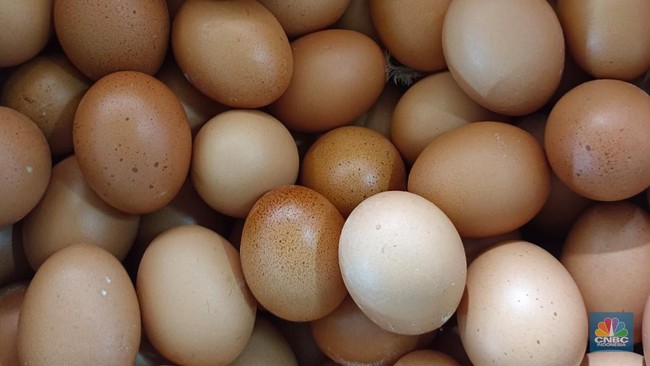
Global egg prices are back in the spotlight. Within a single month, the surge has been extreme, particularly in the United States. The market is moving rapidly, from a phase of sharp decline to a brief rally triggered by a combination of supply, seasonal factors, and lingering effects from past crises. According to Trading Economics, US egg prices stood at US$1.17 per dozen on Friday (27/3/2026), down 0.11%. Despite the dip, the price of natural eggs has jumped 186% in one month. Year-to-date, prices have soared 97%. This egg price surge is feared to further fuel US inflation. Meanwhile, US inflation is also expected to face additional pressure from rising fuel prices amid the Iran war, which was triggered by US President Donald Trump’s policies. In China, egg prices are at CNY 3,480 per tonne, up 2.08% daily, with a monthly increase of 6.81% and an annual rise of 11.97%. The egg market is in a phase of sharp adjustment, not a one-way trend. The previous decline phase has roots that can be traced. According to the USDA, the egg market faced heavy pressure from the highly pathogenic avian influenza (HPAI) outbreak throughout 2024 into early 2025. The laying hen population was hit hard, supply shrank drastically, and prices surged to levels that turned eggs into an expensive commodity in many households. As bird flu cases began to subside in mid-2025, producers quickly moved to rebuild hen populations. Production recovered on a large scale. The USDA notes that retail egg prices have already fallen 34.2% in early 2026 compared to the previous year, while farm-level prices are projected to drop even further by 44.1% throughout the year. This is a correction phase after the extreme surge. Data from Texas reinforces this picture. According to WFAA, egg prices in the region are now around US$2.50 per dozen, down 58% from last year. The number of laying hens has increased from 292 million in March 2025 to 308 million this year. This means supply is abundant again. With rising supply and demand temporarily weakening due to previous high prices, downward pressure on prices became inevitable. However, the current monthly surge comes from a different angle. This spike is driven by seasonal factors. Demand is rising ahead of Easter, a period of high egg consumption for food and traditions. With supply already recovered, the short-term demand increase is enough to lift prices briefly, though it does not alter the annual trend. Another factor emerges downstream. According to The Guardian, the processed food industry based on eggs, such as Easter chocolate, faces complex cost pressures, especially from raw materials like cocoa that surged in recent years. Producers are responding with adjustments to sizes and prices. This signals that cost pressures in the food chain have not fully eased, even as upstream egg prices have dipped. There is also substitution dynamics. With beef and other protein prices remaining high—the USDA projects a 5.5% rise in beef and veal prices this year—consumers are shifting to eggs as a cheaper protein source. This shift prevents price declines from being too deep, while creating momentary demand spikes as prices stabilise. This monthly surge is the result of three-layered interactions: post-bird flu supply recovery, food sector cost pressures, and seasonal demand spikes. In this context, extreme short-term movements are part of the normalisation process, not an anomaly.