
Trump 'Burns' Money: US War Against Iran Costs Reach Rp15 Trillion Per Day
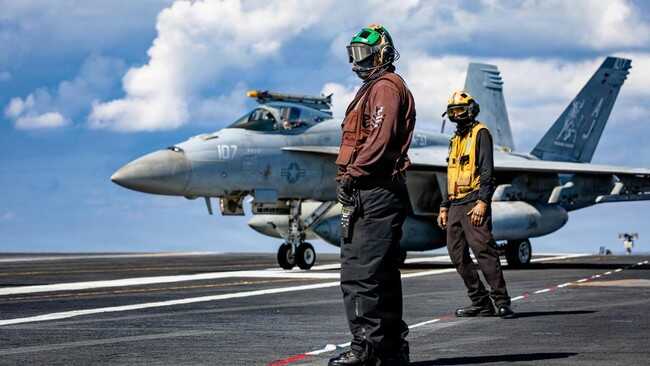
Jakarta, CNBC Indonesia - A few days after the United States launched a major military operation against Iran, the cost of war that must be borne by American taxpayers began to attract attention, with an estimated value of around Rp15 trillion per day. There are still no signs that the conflict will end soon, while analysts estimate Washington’s expenditures for the operation to reach almost one billion dollars per day.
The military operation known as Operation Epic Fury takes place amid open war between the US and Iran. However, to date the Pentagon has not released an official estimate of the total cost of the operation, and the government has not yet submitted an additional budget request to Congress to fund the war.
Several public policy observers say the uncertainty on the ground makes the overall cost of the conflict difficult to predict.
“It is highly unpredictable, so we will not know the cost until everything is finished,” said Lindsay Koshgarian, director of the National Priorities Project program at the Institute of Policy Studies, quoted by CNN International on Friday (6/3/2026).
Koshgarian also said the conflict is unnecessary and diverts attention from domestic agendas.
“This conflict is not necessary and takes resources away from other policies that could make Americans’ lives more affordable,” she noted.
She reminded that history shows wars can end up with very large costs.
“The cost of the Iraq War ultimately reached nearly US$3 trillion,” Koshgarian said.
Almost US$900 Million Per Day
The latest analysis by a Washington think tank shows that the US military operation against Iran currently costs about US$891.4 million per day or about Rp15 trillion.
The estimate was produced by the Center for Strategic and International Studies (CSIS) based on data published by the Pentagon regarding targets hit and the military assets deployed in the operation.
In its report, CSIS estimated that costs could fall if the United States began using cheaper weapons and if Iran’s attack intensity decreased.
However, the institute stressed that battlefield developments remain the main factor determining the final cost of the conflict.
“However future costs will largely depend on the intensity of operations and the effectiveness of Iran’s retaliation,” CSIS wrote in its report.
Air and Sea Operations as the Largest Expenditure
According to the analysis, most of the war costs come from air, sea, and land operations conducted by the American military.
Air operations are estimated to cost around US$30 million per day, while naval operations require around US$15 million per day.
On the other hand, land operations are estimated to require around US$1.6 million per day.
CSIS also details several of the most expensive military assets used in the operation.
For air power, daily costs include tanker and cargo aircraft around US$9 million per day, aircraft carrier air wings around US$5 million per day, non-stealth fighter jets around US$5 million per day, and stealth fighter jets around US$5 million per day.
Meanwhile, in naval operations, costs include aircraft carriers around US$6 million per day and destroyers around US$5 million per day.
For land operations, costs consist of artillery brigades around US$1 million per day and National Guard battalions at less than US$1 million per day.
More Expensive Than Iran Attack Last Year
The current war costs also far surpass the US military operation against Iran’s nuclear facilities in June 2025, known as Operation Midnight Hammer.
Last year’s operation lasted only about two and a half hours, but still incurred billions of dollars in costs.
According to CSIS analysis, the first 100 hours of the current war have cost about US$3.7 billion.
By comparison, Brown University’s Costs of War project estimates Midnight Hammer in the previous year cost between US$2.04 billion and US$2.26 billion.
In that operation, the largest costs came from the use of various weapons and advanced fighter aircraft, including 40 MOP bombs weighing 30,000 pounds with costs between US$49 million and US$70 million, 7 stealth bombers B-2 with costs between US$31.75 million and US$37.8 million, and 24 Tomahawk missiles costing around US$36 million to US$45.6 million.
Potential Costs Up to US$95 Billion
Although daily war costs are already enormous, total eventual spending will still depend on how long the war lasts.
The administration of President Donald Trump itself gave varying estimates of the operation duration, ranging from two weeks, four weeks to six weeks.
US Defense Secretary Pete Hegseth even hinted that the military operation will still intensify.
“We have only just begun,” Hegseth said on Wednesday. He added that American forces would “accelerate” their operations.
Meanwhile, Kent Smetters, director of the Penn Wharton Budget Model at the University of Pennsylvania, estimates that the total cost of the war could be very high if the conflict lasts two months.
According to him, a two-month war could cost between US$40 billion and US$95 billion, depending on whether the US deploys ground troops and how quickly ammunition stocks need replacing.
However, Smetters warned that those costs are still smaller than potential losses if Iran were to obtain nuclear weapons.
He cautioned that such a scenario could cause “trillion-dollar damages.”