
Trump Boasts He Doesn't Need China Despite US Struggles to End Iran War
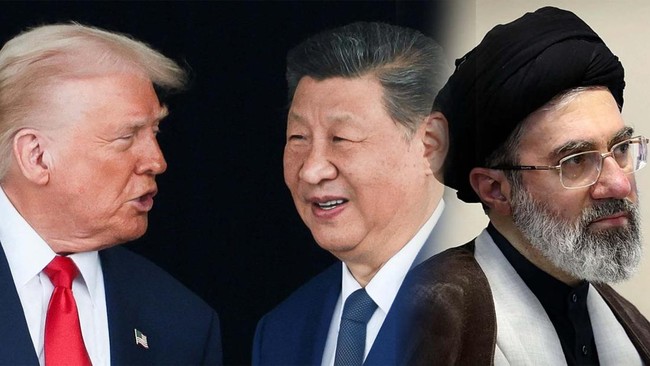
US President Donald Trump has stated that he does not need China’s help to end the war against Iran, amid increasingly bleak prospects for achieving a permanent peace agreement and Tehran’s growing control over the Strait of Hormuz, a vital global energy route.
Trump made the remarks ahead of an important meeting with Chinese President Xi Jinping in Beijing this week. Although Washington had previously hoped Beijing could leverage its influence over Iran, Trump now insists the US can resolve the conflict without assistance from others.
“I think we don’t need any help regarding Iran. We will win one way or another, peacefully or otherwise,” Trump told reporters on Tuesday (12/5/2026) local time, as reported by Reuters.
Trump’s statement comes as the Iran-US war, which has lasted more than two months, shows no signs of ending. The fragile ceasefire in place since early April is also seen as failing to pave the way for a broader agreement.
With diplomacy at a standstill, Iran is reportedly tightening its hold on the Strait of Hormuz. Sources familiar with the matter say Tehran has begun forging agreements with Iraq and Pakistan for oil and liquefied natural gas (LNG) shipments from the Gulf region.
Several other countries are also exploring similar cooperation models. This move is viewed as potentially making Iran’s control over the Strait of Hormuz more permanent.
The narrow waterway has long been the lifeline of global energy trade, channelling about one-fifth of the world’s oil supply. Since the conflict erupted, shipping traffic in the area has been disrupted due to blockades and ongoing military tensions.
The Trump administration itself is attempting to demonstrate alignment with Beijing on the importance of free access to the Strait of Hormuz. On Tuesday, the US government stated that senior US and Chinese officials agreed last month that no country should impose “tolls” on shipping traffic in the area.
China, which maintains close ties with Iran and remains one of its major oil buyers, did not dispute the statement.
Nevertheless, Trump is expected to discuss Iran during his meeting with Xi Jinping this week. Washington reportedly wants to urge Beijing to pressure Tehran into agreeing to a deal with the US to end the war.
The US’s main demands include halting Iran’s nuclear programme and ending Tehran’s control over the Strait of Hormuz.
In response, Iran has put forward counter-demands, including compensation for war damages, an end to the US blockade, and cessation of hostilities across all conflict fronts, including in Lebanon, where US ally Israel continues to battle Iran-backed Hezbollah.
Trump dismissed Iran’s demands as “rubbish”.
The US Central Command (CENTCOM) stated that the aircraft carrier USS Abraham Lincoln is currently in the Arabian Sea to enforce the US blockade. According to CENTCOM, the carrier has diverted 65 commercial vessels and disabled four others.
Meanwhile, the Pentagon revealed that the war’s costs have reached $29 billion, up $4 billion from last month’s estimate. An official said the increase covers operational costs, repairs, and replacement of military equipment.
The conflict is also beginning to strain the US domestic economy. Petrol prices continue to rise, pushing annual inflation to its highest level in nearly three years.
Surveys indicate the Iran war is unpopular with the US public, especially ahead of the national elections that will determine whether the Republican Party can retain its congressional majority.
A Reuters/Ipsos poll completed on Monday showed that two out of three Americans believe Trump has failed to clearly explain why his country is at war with Iran. This figure includes one in three Republican voters and nearly all Democratic voters.
On the other side, Iranian officials continue to adopt a hardline stance.
A report from the Fars news agency quoted an official from Iran’s Islamic Revolutionary Guard Corps (IRGC) saying Tehran has expanded the definition of the Strait of Hormuz territory into a zone stretching from the coast of Jask city in the east to Siri Island in the west.
In Tehran, the IRGC also conducted military exercises that state television described as “centred on preparations to confront the enemy”.