
Trump Administration Claims Iran War Has Been 'Ended' Before Congress Deadline
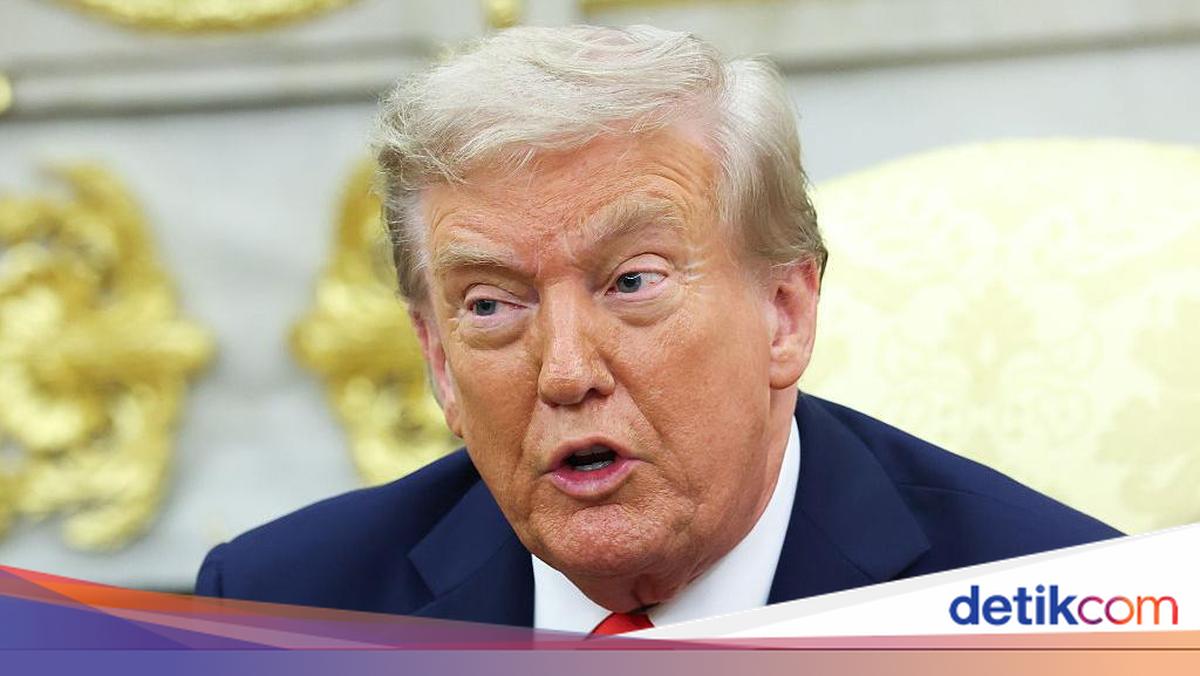
Citing AP on Friday (1/5/2026), the statement bolsters the argument made by Defence Secretary Pete Hegseth during his testimony before the Senate on the previous Thursday. He stated that the ceasefire has effectively stopped the war.
Based on this reasoning, the Trump administration is said not to have met the requirements mandated by the 1973 law to seek official congressional approval for military actions lasting more than 60 days.
A senior administration official speaking anonymously said, “The hostilities that began on Saturday, 28 February, have ended.” The official stated that the US military and Iran have not exchanged fire since the two-week ceasefire began on 7 April.
Although the ceasefire has been extended, Iran continues to maintain control over the Strait of Hormuz, and the US Navy upholds a blockade to prevent Iranian oil tankers from exiting to sea.
It is known that the Iran war began on 28 February 2026. Under the War Powers Resolution, a law aimed at limiting the president’s military powers, President Donald Trump had until Friday to seek congressional authorisation or halt the fighting. The law also allows the government to extend that deadline by 30 days.
Meanwhile, the Democratic Party has urged the government to seek official approval for the war against Iran. According to them, the 60-day deadline is likely to be a turning point for most Republican lawmakers who support temporary action against Tehran but insist on congressional input for anything longer.
“That deadline is not a suggestion; it is a requirement,” said Senator Susan Collins, R-Maine, who on Thursday voted in favour of a measure that would end military action in Iran because Congress has not given its approval.
She added that “further military action against Iran must have a clear mission, achievable objectives, and a defined strategy to end the conflict.”
Furthermore, Richard Goldberg, who served as director for countering Iran’s weapons of mass destruction on the National Security Council during Trump’s first term, said he recommended to administration officials that they shift to a new operation, which he believes could be called “Epic Passage,” a sequel to Operation Epic Fury.
That new mission, he said, “would essentially be a self-defence mission focused on reopening the strait while retaining the right to take offensive actions to support the restoration of freedom of navigation.”
“For me, that solves everything,” added Goldberg, who is now a senior adviser at the Foundation for Defense of Democracies, a hardline think tank in Washington.
Earlier, while testifying before the Senate Armed Services Committee on Thursday, Hegseth said the administration’s “understanding” is that the 60-day countdown is paused while both countries are in a ceasefire.
Senator Tim Kaine, D-Va., who questioned Hegseth about the timeframe, later told reporters that the defence secretary “put forward a very novel argument that I have never heard before” and “certainly has no legal basis.”
Katherine Yon Ebright, an adviser at the Brennan Center’s Liberty and National Security Program and an expert on war powers, said the interpretation would be “a significant extension of previous legal manoeuvres” related to the 1973 law.
“To be very, very clear and unambiguous, there is nothing in the text or intent of the War Powers Resolution that indicates the 60-day countdown can be paused or ended,” she said.