
Truck Operators Back Zero ODOL by 2027, But Call for a Middle Ground
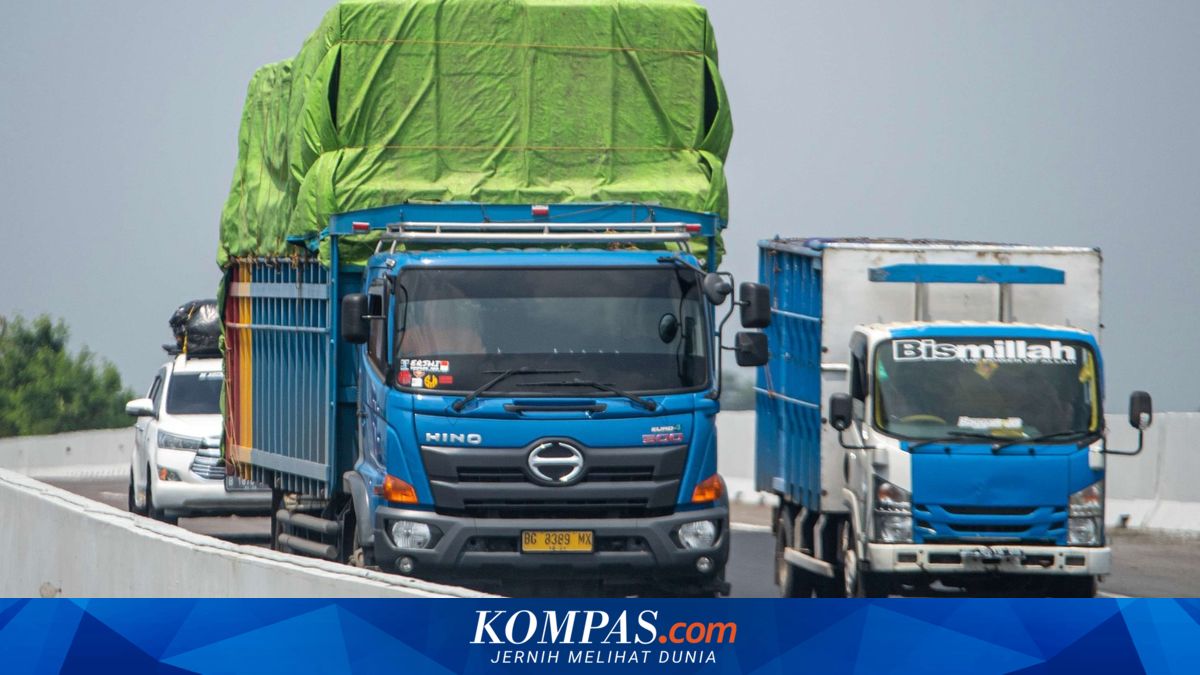
JAKARTA – The players in goods transport broadly support the government’s plan to implement the Zero Over Dimension Over Loading (ODOL) policy from 2027. However, businesspeople ask that the rule be accompanied by economic solutions so as not to burden the operations of companies or truck drivers on the ground.
Gemilang Tarigan, Chairman of the Indonesian Truck Owners Association (Aptrindo), said that he, together with the government and cargo owners, had discussed a ‘middle ground’ concept as a solution towards implementing Zero ODOL.
‘Last year, we held a symposium with the National Police’s Traffic Corps in Yogyakarta. At that time, during the symposium the police engaged with us,’ Gemilang told the III National Assembly of Aptrindo, in Jakarta, on Wednesday, 20 May 2026.
‘There was a joint commitment, meaning we proposed to the government about the carrying capacity through a system called the middle ground,’ he said.
He explained that in practice there have been two interests on the ground – from truck operators and truck owners, and from cargo owners.
‘Because, up to now the truck operators and cargo owners have asked to raise the carrying capacity of vehicles. But there is still no clarity. The law dates back to 2009,’ he said.
‘Technology policy has changed. So we established what is called the middle ground at that time which we proposed to the police and the ministries so that it could be discussed with cargo owners and ourselves as the operators. That is now being rolled out,’ he said.
What is meant by ‘the middle ground’ is an effort to find a compromise between the government’s aim to curb ODOL practices and the needs of the business actors to keep logistics distribution operations efficient.
Through this concept, operators hope for a new agreement on vehicle carrying capacity limits, transport tariffs, and regulatory adjustments that are more relevant to the industry’s current conditions.
Gemilang said this approach is important so that Zero ODOL is not implemented in a rigid manner using old rules that fail to consider the economic conditions of business players.
In addition, Aptrindo also highlighted the issue of transport costs, which have long been a challenge for logistics companies and truck drivers.
‘But operators are demanding, as mentioned, what about transport costs, carrying capacity, and so on,’ Gemilang said.
‘This is what we are mediating at present to push for an agreement with the government on this. Because the law is also undergoing changes,’ he added.