
Trio of Defendants Cleared of Obstruction of Investigation Charges in Three Corruption Cases
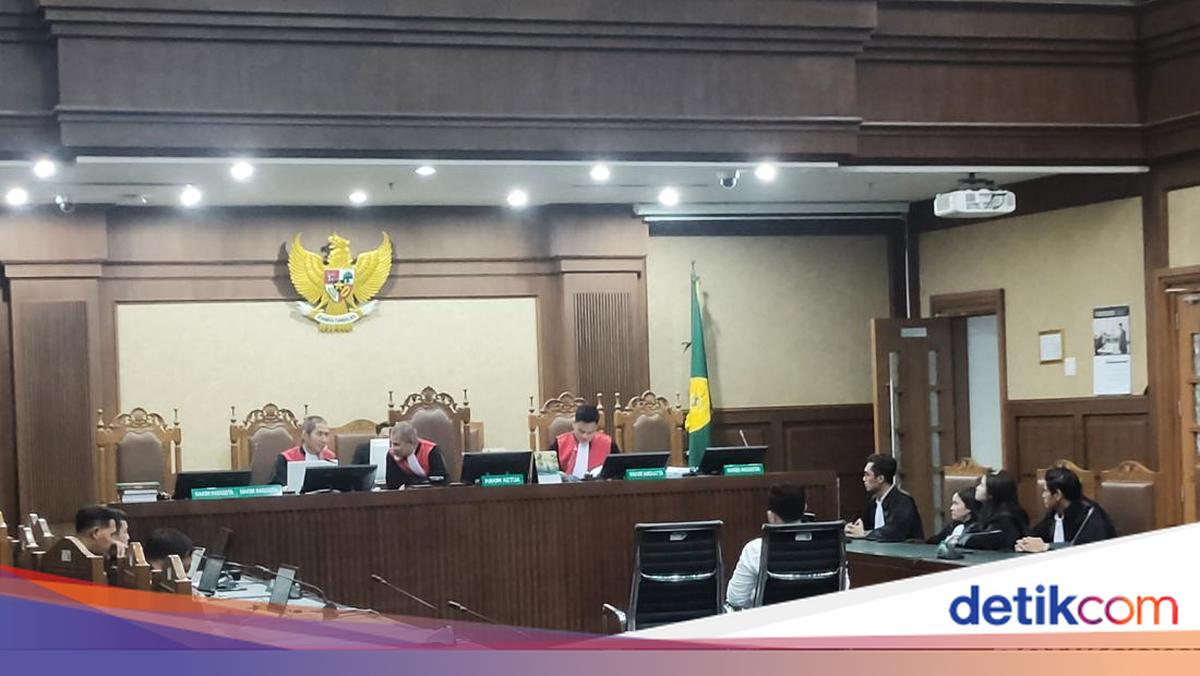
A panel of judges has acquitted three defendants in cases of alleged obstruction of investigations in three corruption cases. The three defendants were Junaedi Saibi, an advocate; Adhiya Muzzaki, a buzzer; and Tian Bahtiar, Director of JakTV. They were charged by prosecutors with sentences of eight and ten years’ imprisonment. The prosecutor believed they obstructed investigations in the three corruption cases. The cases concerned include corruption in tin commodity governance, sugar import corruption at the Ministry of Trade, and corruption relating to the processing of export licenses for crude palm oil (CPO) or cooking oil products. The prosecution said the three actively and deliberately carried out non-judicial schemes outside court to shape a negative public opinion that the handling of the cases by the prosecutors in those three matters was not correct.
The verdict hearings for the three were held at the Jakarta Anti-Corruption Court on Tuesday 3 March. The panel acquitted the defendants.
The judge acquitted Adhiya of the charges. The judge found Adhiya not proven to have committed obstruction of investigations as alleged by the prosecution.
“Acquitting the defendant of the charges brought by the Public Prosecutor,” the judge added.
The judge ordered Adhiya be released from detention immediately upon pronouncement of the verdict. The judge also ordered restoration of Adhiya’s rights to abilities, position, dignity and honour.
“The judge said: ‘Order the defendant released from custody immediately after this verdict is pronounced.’
The judge stated that proving obstruction of investigations cannot be based solely on physical acts, but also the real impact. The judge said Adhiya had posted content on social media only after obtaining approval from the lawyer Marcella Santoso. The judge stated that the total amount Adhiya received from Marcella amounted to Rp 864,500,000, which Adhiya used for personal needs and to pay the buzzer.
“Considering that the total payments received by the defendant Adhiya Muzzaki from witness Marcella Santoso amount to Rp 864,500,000, which Adhiya used for personal needs, to pay each buzzer Rp1,500,000 per project, assist colleagues with rent, and purchase laptops for buzzer teams needing them for university,” the judge said.
The judge said Adhiya’s postings cannot be simply viewed as evidence of malicious intent to obstruct investigations, but rather as an exercise of democratic ethics.
The judge found that Adhiya did not have malicious intent to obstruct investigations in the three corruption cases.
“Considering that from the sequence of acts proven in the trial, the panel of judges concluded that there was no evidence of malicious intent to prevent, obstruct, or derail investigations, prosecutions, and trials against the suspects, defendants, or witnesses in the corruption cases involving the defendant M Adhiya Muzzaki,” the judge said.
The judge stated that the proof of the matter in court should have been in a general criminal trial rather than a corruption case. The judge stated that the obstruction charge under Article 21 of the TIPIKOR Law, read together with Article 20(c) of Law No. 1 of 2023 on the Penal Code did not apply to Adhiya.
The verdict for Junaedi Saibih was similar. The judge acquitted him of obstruction of investigations charges in the three corruption cases.
“Acquitting the defendant of the charges brought by the Public Prosecutor,” the judge added.
The judge noted that the seminar conducted by Junaedi was part of his duties as a lecturer and that the University of Indonesia did not object to the activity.
The judge stated that Junaedi did not know the sequence of bribery processes to the panel of judges for the acquittal in the cooking oil case. The judge stated that Junaedi did not know or approve the creation of negative content about the Attorney General’s Office handling the three cases.
“Considering that during the trial it emerged that defendant Junaedi Saibih never knew, approved, or participated in the creation of news articles negative towards the Attorney General’s Office, whether in mainstream media or social media as referred to by the prosecution,” the judge said.
The judge stated that Junaedi was not proven to have instructed reporting to IPB professor Bambang Hero Saharjo regarding the calculation of damages in the tin case. The judge stated that the delay of the cooking oil case proceedings was in accordance with the Indonesian Criminal Procedure Code and not an attempt by Junaedi to delay the trial.
“Considering that, therefore, the panel believes that after being proven in court based on witness statements and other corroborating evidence, defendant Junaedi Saibih never instructed reporting Bambang Hero to the police, nor pursued any legal action.”
The judge also stated that Junaedi was not involved in mobilising crowds in Bangka Belitung as alleged in the indictment.
The judge stated that the elements of Article 21 of the TIPIKOR Law on obstruction of investigations in the oil, tin, and sugar import cases were not met for Junaedi.
Tian Bahtiar also acquitted by the judge. He was the Director of JakTV when the case unfolded. The judge stated that legal action against the Press regarding his journalistic work could not be prosecuted immediately, either criminally or civilly. This is in line with a ruling by the Constitutional Court.
“Considering that the Constitutional Court, in decision No. 145/PUU-XXIII/2025, has held that legal action against journalists in the performance of their duties …”