
Tri Tito Karnavian: Strengthening Families is Key to Expanding Access to Justice for Women and Children
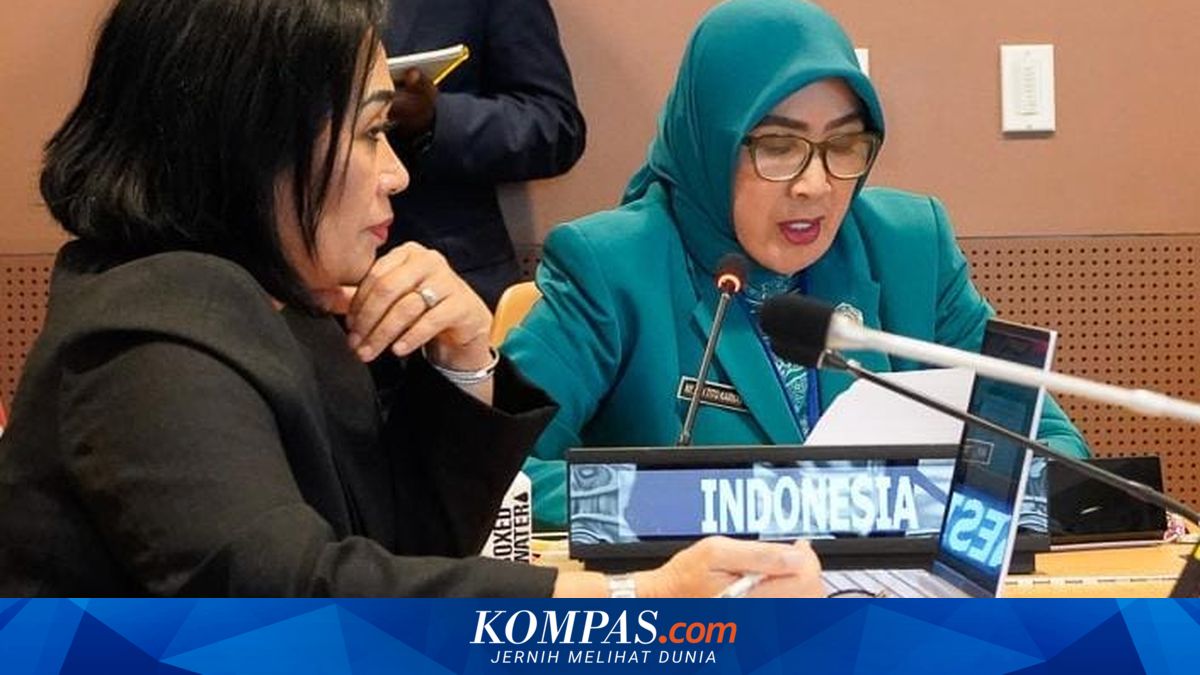
Tri Tito Karnavian, chairwoman of the National Steering Committee for Family Empowerment and Welfare (TP PKK), has affirmed that strengthening families is the key to expanding access to justice for women and children.
She outlined Indonesia’s experience in broadening access to justice for women through a family and community empowerment approach. This was presented by Tri at a side event of the 70th Commission on the Status of Women (CSW70) at the United Nations headquarters in New York on Thursday, 12 March 2026.
At the international forum, Tri stated that the PKK movement, which has been present for more than five decades, plays an important role in serving as a bridge between government policy and society in strengthening the protection of women and children at the grassroots level.
“The PKK movement is a national movement supported by more than 6 million community activists who work down to the family level through more than 2 million grassroots groups. This network enables direct engagement with families at the community level,” she said in a press release received by Kompas.com on Saturday, 14 March 2026.
Tri explained that although the PKK is not mandated as a women’s organisation, the majority of its leaders and activists are women who serve as agents of change in society.
Tri identified three main approaches through which the PKK contributes to strengthening access to justice for women.
First, enhancing legal literacy within families through various community empowerment activities, such as community meetings, childcare activities, and home visits. Through these activities, families are encouraged to understand their rights and obligations in family life, recognise violence as a violation of rights, and understand the importance of legal identity and civil registration.
Second, promoting early prevention of potential conflict or violence within families. Because PKK activists come from the same communities as those they serve, they can identify various social vulnerabilities early, allowing problems to be addressed before they escalate into violence.
Third, strengthening public access to protection mechanisms and formal justice systems. In this regard, PKK activists help connect women and families with various available services, such as social services, healthcare facilities, legal aid, and women’s and children’s protection units.
“Justice must be present not only in courtrooms, but also in homes, communities, and daily family life,” she said.
For information, the side event was organised by the Indonesian Government as part of Indonesia’s contribution to promoting strengthened access to justice for women and girls through family and community-based approaches.
The forum is part of the CSW70 series of activities taking place from 9–19 March 2026.
The event was attended by delegations from various UN member states, international organisations, and civil society to strengthen global commitment to gender equality and women’s empowerment.
The event featured several speakers from various countries and was moderated by Themba Mahleka, Associate Director of Pathfinders for Peaceful, Just and Inclusive Societies.