
Travel Bans Extended for Former Religious Affairs Minister Yaqut and Gus Alex
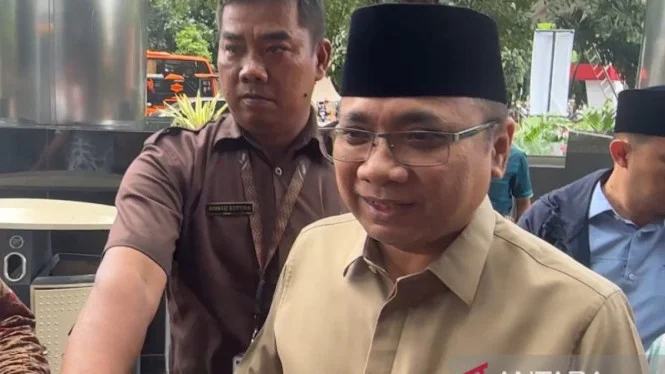
Jakarta, VIVA — The Corruption Eradication Commission (KPK) has extended the overseas travel bans for two suspects in the hajj quota case, namely former Religious Affairs Minister Yaqut Cholil Qoumas (YCQ) and Ishfah Abidal Aziz (IAA), also known as Gus Alex.
“That is correct, the KPK has extended the overseas travel bans for both suspects in the hajj quota case, Mr YCQ and Mr IAA,” KPK spokesperson Budi Prasetyo told reporters in Jakarta on Thursday, 19 February 2026.
Budi said the travel bans for both suspects were imposed in connection with the investigation into alleged corruption in the determination of quotas and the administration of hajj pilgrimages at the Ministry of Religious Affairs for the 2023–2024 period.
“That is correct, until 12 August 2026,” he said.
According to Budi, the KPK extended the travel bans for both suspects until Wednesday, 12 August 2026. However, the extension does not apply to the owner of the Maktour travel bureau, Fuad Masyhur Hasan.
Previously, on 9 August 2025, the KPK announced the commencement of its investigation into the alleged hajj quota corruption case and stated it was in communication with the Supreme Audit Agency (BPK) to calculate state losses.
On 11 August 2025, the KPK announced that the preliminary calculation of state losses in the case exceeded Rp1 trillion and imposed travel bans on three individuals for up to six months.
Those subject to the bans were former Religious Affairs Minister Yaqut Cholil Qoumas, Ishfah Abidal Aziz alias Gus Alex — a former special adviser during Yaqut Cholil’s tenure as minister — and Fuad Hasan Masyhur, the owner of hajj travel operator Maktour.
On 18 September 2025, the KPK alleged that 13 associations and 400 hajj travel agencies were involved in the case.
In addition to the KPK’s investigation, a special inquiry committee (Pansus) on hajj within the House of Representatives (DPR) had previously stated it had uncovered a number of irregularities in the administration of the 2024 hajj pilgrimage.
The key issue highlighted by the committee concerned the 50-50 split in the allocation of 20,000 additional quota places granted by the Saudi Arabian government.
At the time, the Ministry of Religious Affairs divided the additional quota equally — 10,000 places for regular hajj and 10,000 for special hajj.
This arrangement was inconsistent with Article 64 of Law No. 8 of 2019 on the Administration of Hajj and Umrah Pilgrimages, which stipulates that special hajj quotas should account for eight per cent, with 92 per cent allocated to regular hajj quotas.