
Trapped by Rubber and Palm Trees, Orangutan Evacuated to Leuser
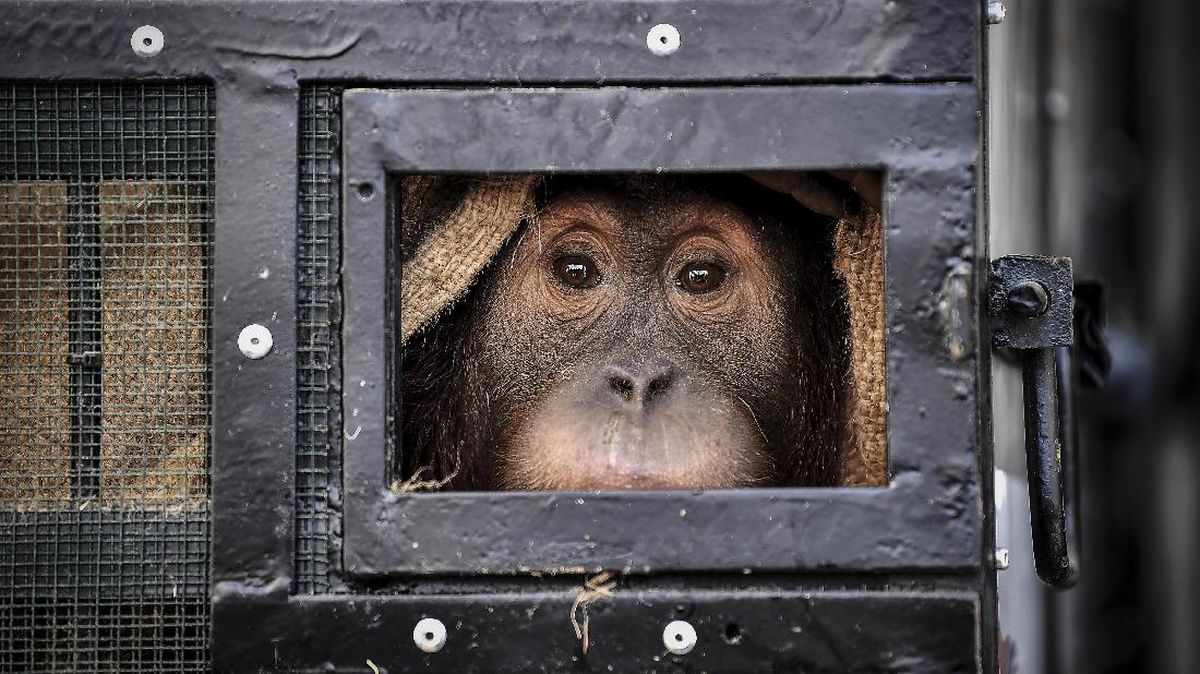
An adult male orangutan repeatedly descended into villagers’ huts and roamed around rubber and palm oil plantations in Karya Jadi Village, Batang Serangan Subdistrict, Langkat Regency, North Sumatra.
The appearance of the protected animal raised concerns due to the risks of exposure to agricultural pesticides and being shot by wild boar hunters.
The North Sumatra Natural Resources Conservation Centre (BBKSDA) collaborated with the Gunung Leuser National Park Authority (BBTNGL) and the Human-Orangutan Conflict Response Unit (HOCRU) from YOSL-OIC to conduct the evacuation.
The Head of the Wildlife Conservation Division for Region I Kabanjahe, Amenson Girsang, explained that initial information was received on 20 April 2026 when the HOCRU team was monitoring orangutans near the location. Villagers reported that the animal frequently came down from the trees and approached farming areas.
“The team immediately coordinated to follow up on the report to prevent potential human-wildlife conflicts,” he said on Saturday (25/4).
The following day, on Tuesday (21/4), a joint team from the Aras Napal Resort and HOCRU YOSL-OIC went to the site. They found one individual orangutan in an isolated forest area surrounded by young rubber and palm oil gardens.
The evacuation was carried out by a veterinarian using measured sedation doses to ensure the animal’s safety.
“After being secured, the orangutan underwent a health examination. The results showed that the 25-year-old male orangutan, weighing approximately 60 kilograms, was in healthy condition without injuries or defects,” he said.
Amenson added that based on those results, the team decided to proceed with translocation on the same day. Through coordination between BBKSDA North Sumatra and BBTNGL, the release site was determined in the primary forest of the Cintaraja Resort area within Gunung Leuser National Park.
“The journey to the release point was not easy. The team had to traverse difficult terrain, including crossing a river using a raft to transport the orangutan. The distance between the evacuation site and the translocation site was estimated at 14 kilometres,” he said.
The orangutan immediately emerged and climbed the nearest tree, slowly disappearing into the dense forest. This evacuation is part of efforts to quickly address potential human-wildlife conflicts while ensuring orangutans can live safely in their natural habitat.
“This activity represents a rapid response through collaboration among parties to handle potential negative interactions between humans and orangutans, as well as efforts to rescue protected wildlife so they can return to living safely in their natural habitat,” he said.