
Transport Minister States Ban on Cart Operations Facilitates Smooth Mudik Routes
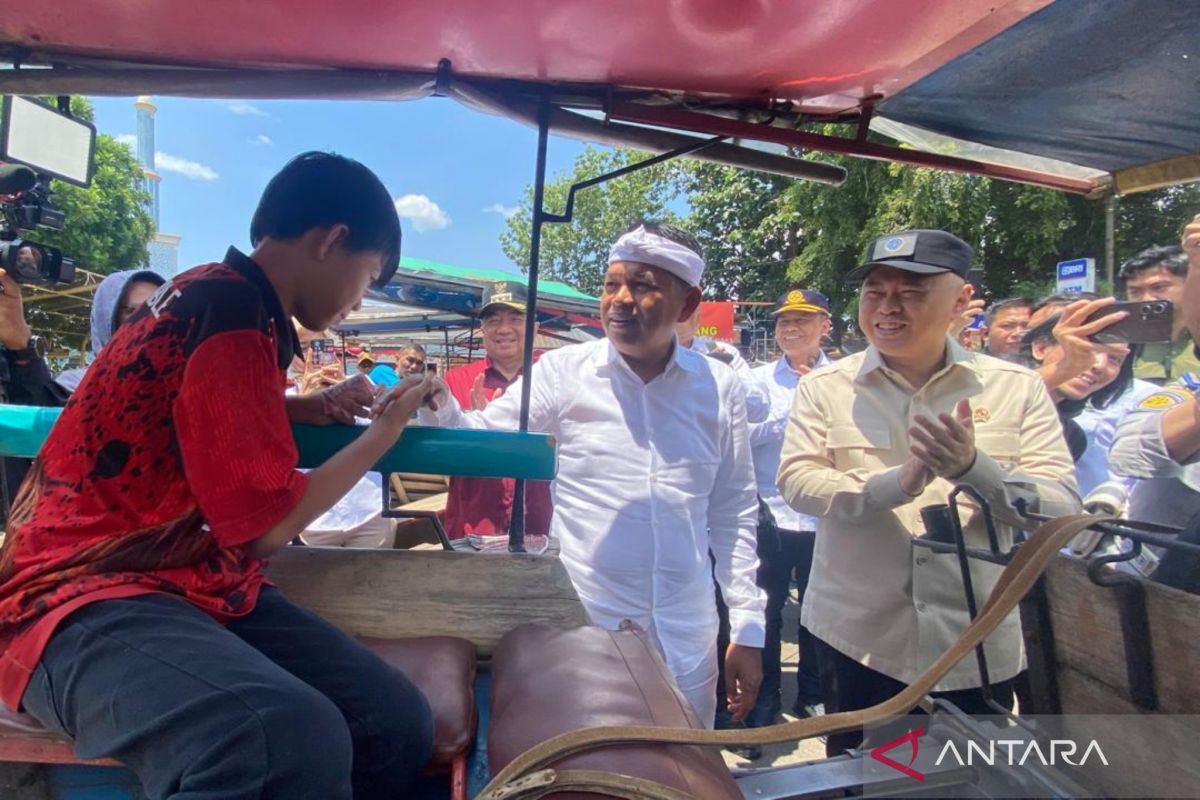
The Transport Minister’s endorsement of West Java’s traditional cart ban during Eid holiday season
Garut — Indonesia’s Minister of Transport, Dudy Purwagandhi, has stated that West Java Provincial Government’s policy banning cart (delman) operations on major roads during the Eid holiday exodus and return period can help facilitate smoother traffic flow.
“This is the Governor’s programme to assist the central government in managing Eid transportation flows, specifically to facilitate our people who will be travelling home for the holidays,” said the Transport Minister during an inspection of compensation payments for cart drivers at Garut Police Headquarters in West Java on Saturday.
He explained that the policy represents a provincial government effort to support management of Eid transportation to ensure holidaymakers can travel safely and smoothly.
The Transport Minister praised the West Java Governor’s approach, which not only focuses on traffic fluidity but also provides support to cart and pedicab operators in West Java affected by the policy.
“It also provides added value for our people who work with carts, pedicabs, and similar vehicles,” he stated.
Regarding whether this policy could be applied in other regions, the Minister indicated it was possible, noting that several other areas have already implemented restrictions on traditional vehicles. However, he cautioned that implementation depends on local conditions, particularly areas affected by holiday exodus traffic, and the financial capacity of local governments to prepare compensation budgets.
“I urge local governments whose areas experience significant Eid transportation traffic to consider this, though we reiterate that it depends on the readiness of each region,” he said.
West Java Governor Dedi Mulyadi symbolically distributed compensation to cart drivers to offset the impact of the seven-day ban before and after Eid at Garut Police Headquarters.
Cart drivers in Garut received compensation of Rp1.4 million per driver, equivalent to Rp200,000 per day — a substantial amount compared to their typical daily earnings of around Rp100,000 or less.