
Transport Minister pushes for accelerated transformation of national aviation services
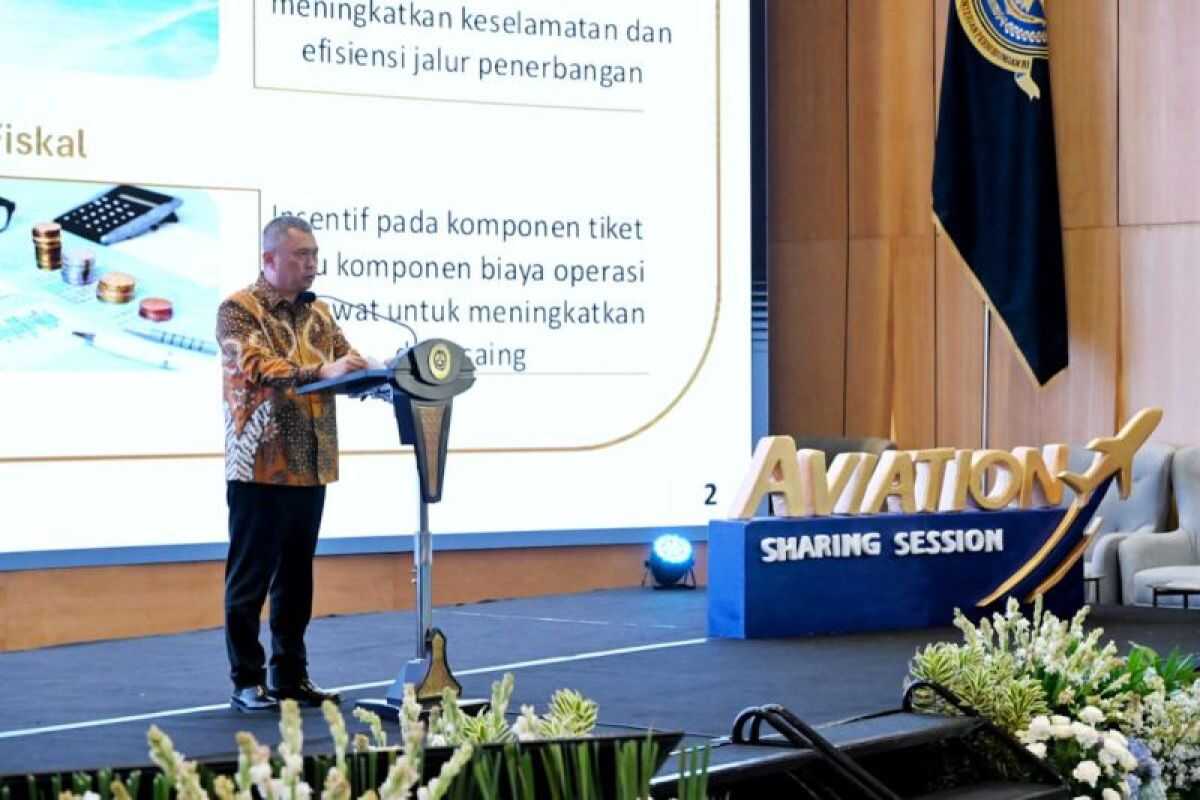
Jakarta (ANTARA) – Transport Minister (Menhub) Dudy Purwagandhi urged accelerated transformation of the national aviation sector to address the various challenges currently faced by the industry. ‘The transformation steps must be undertaken through a strategic approach involving regulators, operators, and all aviation stakeholders,’ Dudy said in a briefing in Jakarta on Friday. He emphasised this during the Aviation Sharing Session organised by the Directorate General of Civil Aviation of the Ministry of Transport (Kemenhub). According to him, the aviation sector is currently facing a number of challenges that have attracted widespread public attention. ‘In an era of information openness as it is today, any disruption to aviation services can quickly become a matter of public concern and affect public confidence in the aviation industry,’ he said. He noted that several issues often highlighted by the public in the aviation sector include flight delays, airport facilities that are not yet fully optimal, and passenger travel experiences that are not yet entirely satisfactory. On the other hand, the aviation industry also faces external dynamics that are not light, such as fluctuations in jet fuel prices, the need for investment in technology and infrastructure, and the rising standards of aviation safety that are increasingly high. Therefore, he said, to strengthen the competitiveness of the national aviation industry amid global dynamics, accelerating aviation transformation is very necessary. This transformation is aimed at increasing aviation safety, operational efficiency, and the quality of service to the public. Dudy urged industry players to take a number of strategic steps to drive change in this sector. Among them through strengthening the digitisation of aviation services or Smart Aviation. In addition, the government also promotes the development of the concept of Airportpreneurship so that airports do not merely function as transport hubs, but also as centres of economic growth. Modernisation of the air navigation system and improvements in infrastructure quality are also necessary in the transformation. These steps are expected to boost service capacity while strengthening safety and on-time performance. In pushing the transformation of the aviation sector, the government emphasises four important factors that all stakeholders must pay attention to. He said the four are safety and security, synergy and collaboration, attention to operational details, and preparedness to face various uncertainties. ‘Aircraft safety must always be the top priority in every policy-making or operational decision. At the same time, collaboration among stakeholders must also be strengthened so that the transformation of this sector can run optimally,’ said Dudy. According to him, the transformation of the aviation sector cannot be done piecemeal, but requires close cooperation between regulators, operators, and all stakeholders. An integrated approach is considered essential to sustain the industry while improving service quality for the public. ‘We must always be prepared to face uncertainties that may arise at any time in the aviation industry. Therefore, strong coordination, consistent supervision, and operational readiness are key to maintaining the reliability of national aviation services,’ he said. The event was also attended by Deputy Minister of Transportation Suntana, Head of BMKG Teuku Faisal Fathani, Director General of Taxation of the Ministry of Finance Bimo Wijayanto, Director General of Civil Aviation of the Ministry of Transportation Lukman F Laisa and their colleagues at the Ministry of Transportation, as well as several leaders of state-owned enterprises, private sector companies, and associations in the aviation transport sector.