
Transport Expert Urges Ministry of Transportation to Evaluate Taxi Permits Following Train Collision
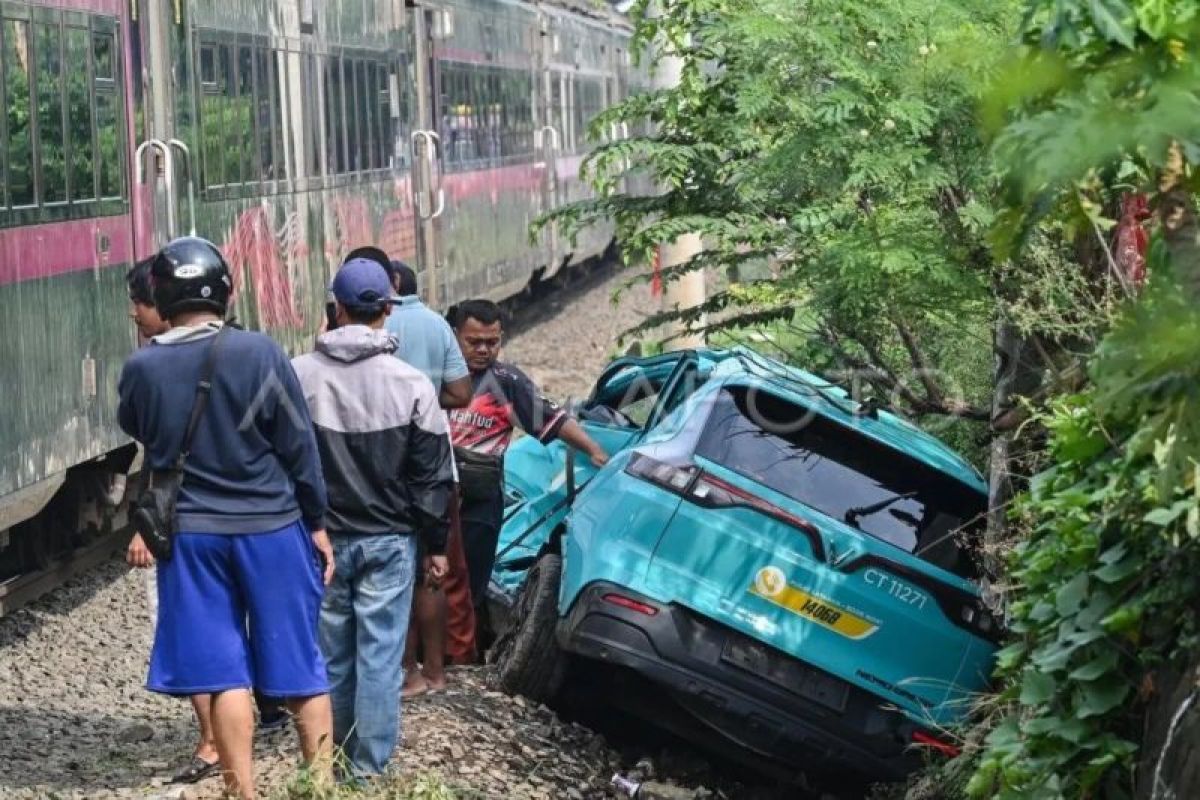
Jakarta (ANTARA) - Transport expert Djoko Setijowarno has urged the Ministry of Transportation to evaluate the operational permits of the Green SM taxi provider, or “green taxi”, following a train accident at Bekasi Timur Station that claimed the lives of more than a dozen people.
“The issue with that taxi is who granted the permit? How could so many enter Indonesia? What about the Minister of Transportation’s process for the permits?” said Djoko when contacted in Jakarta on Wednesday.
The academic from the Civil Engineering programme at Unika Soegijapranata and advisor to the Indonesian Transport Society (MTI) stressed that the government must take firm action to prevent similar incidents from recurring.
According to him, regulations for national taxis have been applied quite strictly so far, thus the same standards are needed for all transport operators.
“Yes, national taxis are regulated,” he stated.
Previously, the Directorate General of Land Transportation of the Ministry of Transportation conducted a surprise inspection at the Green SM taxi pool in Bekasi, West Java, on Tuesday night, following the train accident incident at Bekasi Timur Station.
Based on data from the Directorate General of Railways of the Ministry of Transportation in 2026, there were 40 accidents at level crossings recorded. The majority of incidents (57.5 percent) occurred at crossings without gates, with 23 cases, while the other 17 cases (42.5 percent) occurred at gated crossings.
The main trigger for accidents was dominated by drivers forcing their way through (34 cases), followed by stalled vehicles (4 cases), and delays in closing the gates (3 cases). The impact of these accidents was very fatal, claiming 25 lives (61 percent), as well as causing 5 serious injuries (12 percent) and 11 minor injuries (27 percent). The vehicles involved included 22 cars (55 percent) and 18 motorcycles (45 percent).
Furthermore, the causes of stalling incidents at crossings were (1) cars stopping with engine failure on the crossing, (2) motorcycle rear wheels getting stuck due to carrying heavy loads of goods, such as chickens, (3) cars experiencing engine trouble while on the tracks, and (4) low-deck trucks getting stuck because the gradient elevation at the crossing did not match the truck.
The impact of vehicles on the crossings resulted in track deformations that could endanger train travel. This could be caused by three factors: dynamic loads, material fatigue, and subsidence of the rail foundation.