
Transport expert deems proposal to relocate women's carriage in KRL inappropriate
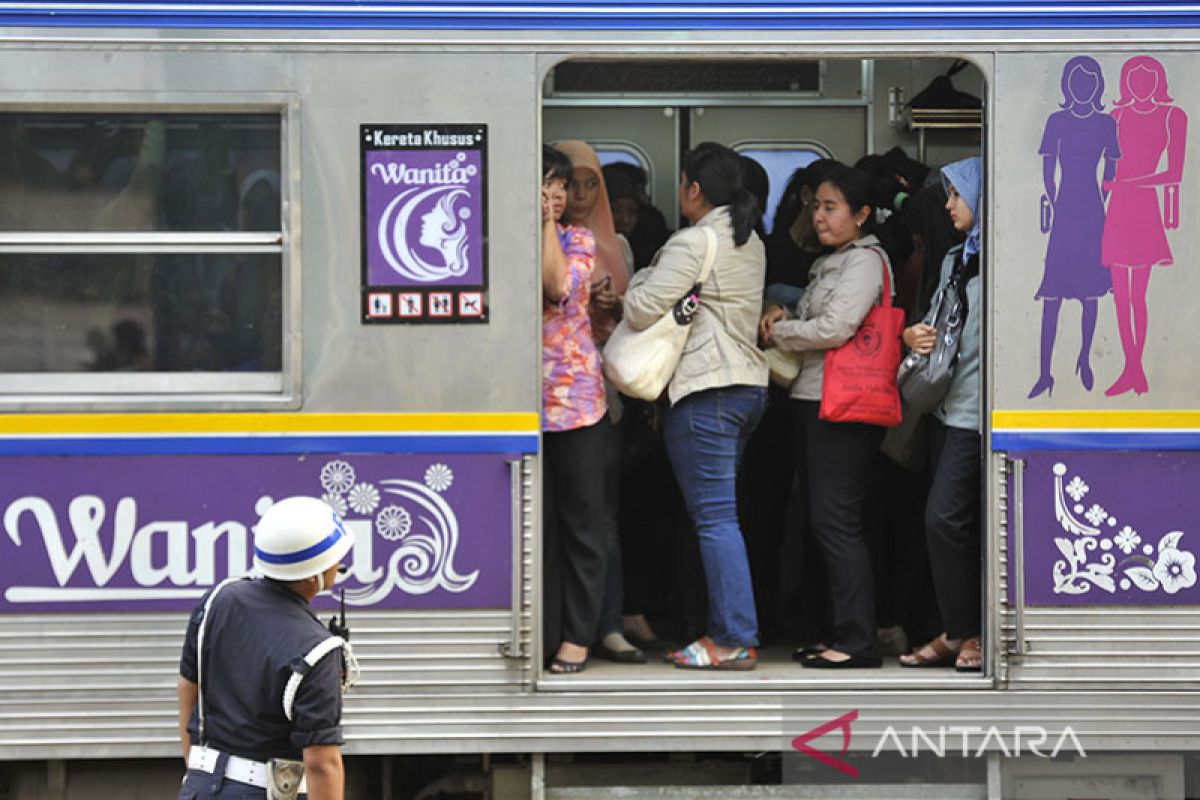
Jakarta (ANTARA) - Transport expert Deddy Herlambang has spoken out regarding the statement by the Minister of Women’s Empowerment and Child Protection (PPPA), Arifah Fauzi, who proposed relocating the women’s special carriage on KRL Commuter Line trains following the accident incident in East Bekasi.
According to Deddy, the proposal is not a good solution. He believes that the lives of every person are equally valuable and need to be protected.
“It’s the same; the lives of men or women are all precious. In fact, it would be more exclusive if the Women’s Special Train (KKW) were placed at the ends, as in Japan,” Deddy stated when contacted in Jakarta on Wednesday.
He also emphasised the need for strategic and comprehensive steps to improve national railway safety, especially following the accident at Bekasi Timur Station on 27 April 2026.
He stressed that although Law Number 23 of 2007 has placed safety as the primary principle, its implementation in the field has not yet fully met fail-safe system standards.
Furthermore, Deddy assessed that the accident revealed vulnerabilities in dense routes with mixed traffic patterns between KRL and long-distance trains, train journey control systems, and mitigation of rear-end collision risks.
From a technological perspective, Deddy considered the importance of implementing technology-based safety systems, such as Automatic Train Protection (ATP) for long-distance trains and modern signalling systems, like the European Train Control System (ETCS) or Communications-Based Train Control (CBTC) for urban services.
In addition, he continued, human factors need to be strengthened through risk-based driver fatigue management, emergency simulation training, dual confirmation mechanisms for critical signals, and a work culture that prioritises safety over punctuality.
He also emphasised the importance of comprehensively implementing the Railway Safety Management System (RSMS) so that the safety system is no longer reactive, but based on prevention and risk management.
On the other hand, Deddy highlighted the need for stronger integration between railway regulators and operators in ensuring the reliability of facilities and infrastructure, including infrastructure maintenance.
He stressed the importance of handling level crossings, including the preparation of operational standards for road users if vehicles break down on the tracks.
He hopes that these steps can serve as the basis for comprehensive improvements to prevent similar accidents from recurring in the future.