
Transforming Inequality Amidst Redistribution
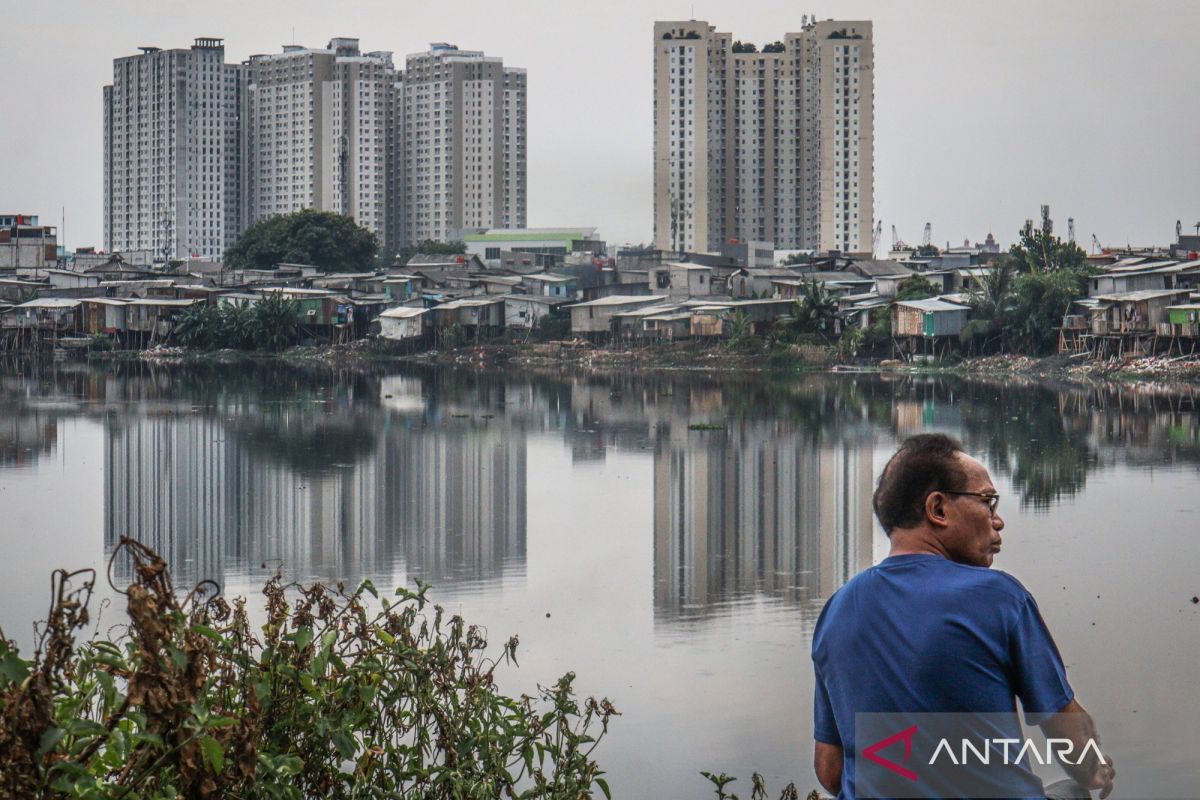
Jakarta (ANTARA) - Economic inequality is often understood as the wide gap between the upper and lower groups. When that gap narrows, the problem is considered resolved.
In development practice, inequality rarely disappears entirely. It more often changes form. At certain stages, inequality no longer appears as a stark chasm but as more subtle differences, particularly in households’ ability to maintain the continuity of their welfare.
In recent years, the distribution of expenditure in Indonesia has shown clear improvement. The gap in expenditure between groups has narrowed, and the share of expenditure for the bottom 40% of the population has increased. This change indicates that the results of economic growth are increasingly distributed and not just concentrated in the upper group. This redistribution forms an important foundation for social stability and sustainable development.
This improvement is also reflected in the development of national expenditure inequality. According to BPS data, in September 2025, the inequality level measured by the Gini ratio was recorded at 0.363, lower than previous periods. This downward trend extends the tendency for improving expenditure distribution, after inequality pressures increased during the pandemic period. In aggregate, this picture shows that inequality is decreasing and the structure of population expenditure distribution is becoming more balanced.
This distribution improvement has occurred both in urban and rural areas. Inequality in cities has decreased, as has in villages, with rural inequality consistently lower than urban. However, this redistribution has different characteristics between villages and cities. In rural areas, the share of expenditure for the lower group is relatively larger, reflecting a more even distribution. However, this redistribution occurs within a still limited economic structure. The variation in expenditure between groups is narrower because the overall expenditure level is relatively low. In other words, redistribution in villages is not always synonymous with greater economic strength.
In urban areas, the situation is different. Although inequality has decreased, the more complex economic structure creates expenditure variations that remain wide. In September 2025, the urban Gini ratio was recorded at 0.383, much higher than the rural figure of 0.295. Cities provide more income opportunities but also present high living costs and sharp differences in job quality. Here, inequality is not just about the size of expenditure but about income stability, job security, and access to protection.
These differences become even more apparent when extended to the regional level. Inter-regional inequality still shows quite wide variations, including in provinces with high economic activity. Some areas with strong economic bases still record inequality levels above the national average, while others show much more even distribution. This condition confirms that inequality cannot be simplified as an issue of underdeveloped versus developed regions. Even in areas with large economic capacity, the distribution of welfare within them is not always even.