
Transatlantic Slavery: The Greatest Crime in Human History?
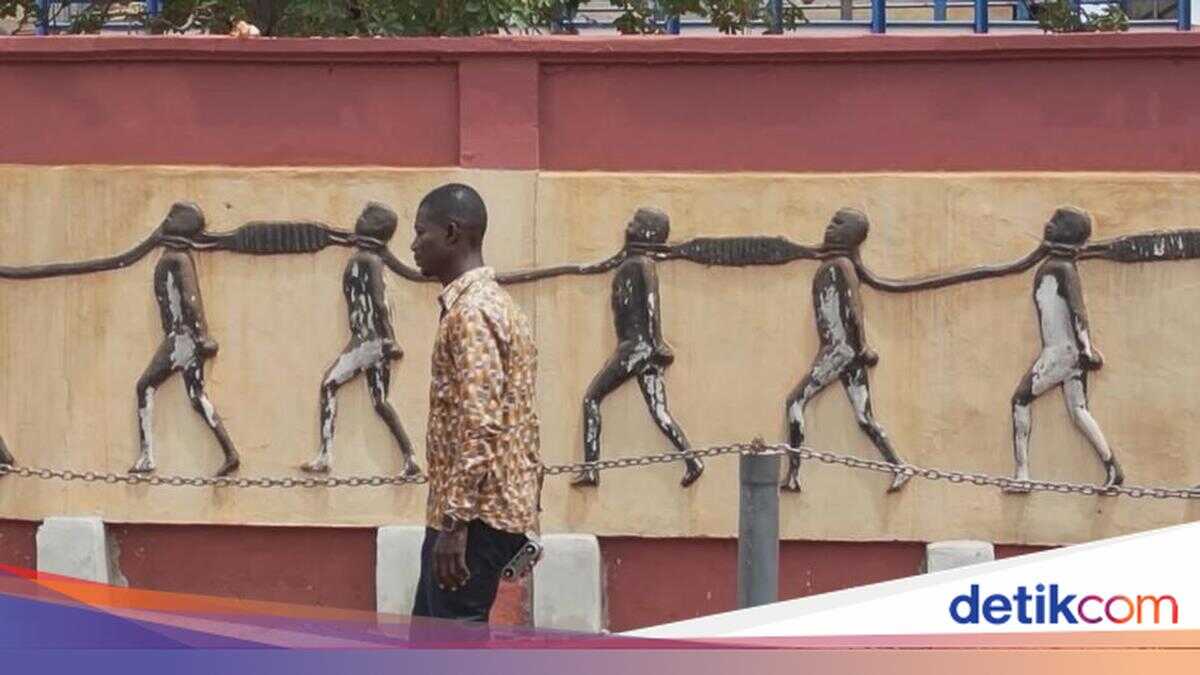
Ghanaian President John Dramani Mahama intends to submit a proposal backed by 40 African Union member states to the United Nations in March. According to Mahama, the proposed resolution is grounded in a strong legal basis and an “indisputable moral obligation”.
The resolution is merely the first step, he said on the sidelines of the African Union Summit in Addis Ababa last weekend. With broad support from the African Union, the historical truth about the transatlantic slave trade must finally be recognised as the most serious crime against humanity.
The Slave Trade: A Tragedy in Human History
Historians agree that the slave trade between the 15th and 19th centuries — the forced displacement of millions of people from Africa to North, Central, and South America — constitutes one of the great tragedies in human history. It is estimated that more than 15 million men, women, and children were forcibly displaced over approximately 400 years.
Other sources cite between 12 and 12.8 million people. Around 10.7 million of them reached the Americas alive, whilst approximately 1.5 to 2 million perished during the voyage.
In Addis Ababa, Mahama recalled those who leapt from ships, choosing death, or who were thrown overboard when sick and weakened.
Historical and Legal Validity
Ghanaian human rights expert Kojo Asante, from the Ghana Center for Democratic Development, described the initiative as one possessing “historical and legal validity”. In an interview, he emphasised that the transatlantic slave trade inflicted deep wounds on affected nations, the effects of which are still felt today. For a long time, these nations have sought recognition or at least an apology from the perpetrators of the past. For some countries, this has been a political struggle spanning decades.
In Ghana, the issue has long been on the agenda. Mahama is not the first president to support reparation demands. His predecessor, Nana Akufo-Addo, also championed the cause, Asante noted.
What About Reparations?
Last year, the African Union designated 2025 as the “Year of Justice for Africans through Reparations”. According to the resolution, reparations should be understood as a future-oriented instrument linked to development.
However, Mahama stressed that this is not about monetary sums but rather recognition of historical truth. Financial questions will be addressed in due course.
Historical Reassessment Meets Western Resistance
Asante also pointed to a growing counter-movement, particularly among ultraconservatives in the United States. Within Donald Trump’s national security policy circles, arguments have emerged that the current generation should not be held accountable for the actions of their ancestors.
The transatlantic slave trade therefore remains a politically sensitive and controversial issue, especially for nations that economically benefited from slavery and colonialism.
What Does Civil Society Say?
Young people in particular support the initiative, Asante said. Although the topic still feels abstract to many, historically minded young Ghanaians back it.
However, Asante cautioned against focusing too heavily on the past. Young people strongly desire good governance today. Historical justice is important, but what matters is how political elites use their power today to create a better future. Many problems in African countries originate domestically and are not solely attributable to colonial powers.
A Competition of Crimes?
Mahama stated that in modern history, there is no greater injustice against humanity than the slave trade. Critics have questioned how this statement compares with the crimes of the Holocaust.
Asante rejected such comparisons. This is not about ranking historical atrocities, but rather acknowledging the transatlantic slave trade for what it was: a profoundly inhumane practice with global consequences. Its lasting legacy is racism. This demonstrates that this chapter of history remains relevant today. What matters is recognition and learning lessons to ensure such crimes are never repeated.
Africa’s Shared Responsibility
Mahama also emphasised that the truth about the history of the transatlantic slave trade must be “told in its entirety”.
Critics note that this also encompasses the fact that African elites, traders, and kingdoms were involved as intermediaries in the trade. Historians argue that the majority of those captured in Africa were enslaved by fellow Africans before being sold to European traders.
Asante acknowledged that these aspects are also part of the historical truth. Forms of slavery existed within African societies before the transatlantic trade. This history must also be recognised because of its social and economic consequences.
Why Focus on the “Transatlantic” Slave Trade?
The transatlantic slave trade was not the only form of slavery in Africa. However, according to Asante, it was the one with the greatest economic, political, and social impact. Its global consequences continue to shape the world order today.
At the same time, the Ghanaian human rights expert stressed that however important historical reassessment may be, African leaders face major challenges in the present and future.
The responsibility for development and good governance now lies in their hands.
This article was originally published in German and adapted by Sorta Caroline.