
Tramadol Abuse Spreads, BNN Increases Monitoring of Distribution
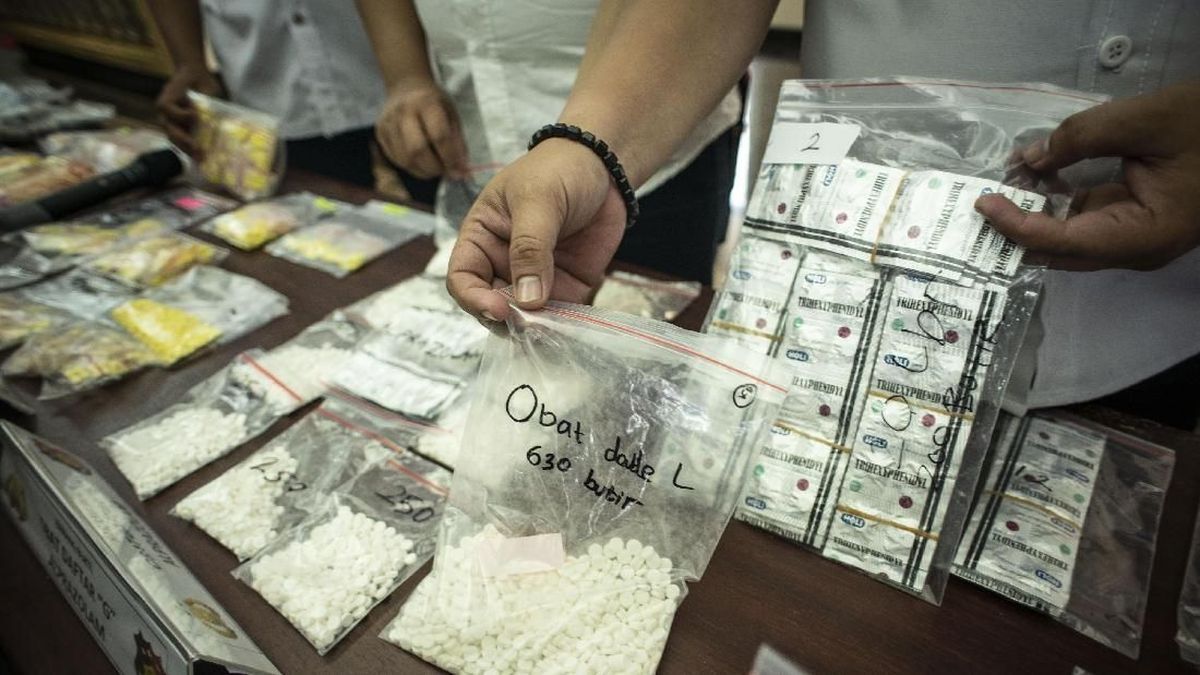
The National Narcotics Board (BNN) is monitoring trends in the abuse of powerful tramadol medication, which is reportedly spreading and generating widespread discussion on social media.
“The BNN monitors trends in the abuse of powerful drugs, including tramadol, because it has the potential to cause addiction,” said BNN Chief Major General Suyudi Ario Seto in Jakarta on Thursday, 12 March, cited by Antara.
Suyudi explained that tramadol is an analgesic or painkiller that works on the central nervous system and falls within the category of synthetic opioids. It is typically used to relieve moderate to severe pain, such as post-operative pain.
“Because it works on the central nervous system, this drug has the potential to cause addiction if used contrary to medical guidelines,” he said.
In Indonesia, according to Suyudi, tramadol is not classified as a narcotic or psychotropic substance. Its status is that of a restricted drug that can only be used with a doctor’s prescription.
The Food and Drug Authority (BPOM) classifies tramadol as a Specific Drug (OOT) frequently subject to abuse, which is why oversight has been tightened.
Suyudi mentioned that illegal distribution of this drug continues to be found, such as sales without a doctor’s prescription, illegal drug outlets, sales through social media, and large-scale distribution to certain groups.
“This causes tramadol to frequently be misused to obtain stimulant effects or mild euphoria,” he said.
According to Suyudi, because tramadol is not a narcotic or psychotropic substance, primary oversight responsibility lies with BPOM and the Ministry of Health, whilst the BNN focuses on monitoring abuse trends.
“Because of its effects on the central nervous system (opioid) and its potential to cause addiction (euphoria), this drug is closely monitored by the BNN and BPOM,” he said.
Professor Ari Fahrial Syam, Professor and Consultant in Gastroenterology Hepatology at the Department of Internal Medicine at FKUI-RSCM, stated that tramadol is a restricted drug that cannot be sold freely to the public.
He reminded that use of this painkiller must be through a doctor’s prescription because it risks causing addiction and abuse.
“This (tramadol) is a restricted drug and must be with a doctor’s prescription. It must have a doctor’s prescription. So it cannot be sold freely,” said Ari when contacted by Antara from Jakarta on Wednesday.
According to Ari, tramadol is frequently used in medical settings to relieve mild to moderate pain. However, its status as a restricted drug means its use must be closely monitored by medical professionals.
He stated that this restriction is implemented because tramadol has the potential to cause addiction if used improperly. Certain effects of this drug are also frequently cited as reasons for misuse by some individuals.
“Tramadol is a painkiller that doctors often use to treat mild to moderate pain, and is typically combined with paracetamol. But this is also classified as a restricted drug because it is indeed frequently misused and can cause addiction or dependence,” he added.
Tramadol Circulation Widespread
The distribution of tramadol has recently come under scrutiny because it has allegedly been sold freely in pharmacies and roadside medicine kiosks. However, consumption of this drug cannot be sold freely and must be accompanied by a doctor’s prescription.
The latest case occurred in Pasar Rebo, East Jakarta, when residents threw firecrackers at cosmetic and medicine shops. Residents were upset because these shops were suspected of selling tramadol and other banned drugs.
East Jakarta Metro Police Chief Senior Commissioner Alfian Nurrizal said on Tuesday, 10 March, that during a search at the location, officers seized various medicines, including 15 packages or 150 tablets of Trihexyphenidyl drug, as well as 250 yellow tablets suspected to be Tramadol.
The most sensational tramadol case occurred in 2023, when police arrested a person known as R or commonly called Mantri Ableh and another person with the initials B for distributing certain restricted drugs (OKT) in Mulyaja Village, Kutawaluya District, Karawang Regency.
From the hands of the two suspects, police seized 3,500 tablets of banned drugs.
“We enforced the law against two residents from the village (Mulyaja) regarding the distribution of OKT with the initials R alias A, and B alias W,” said Karawang Police Narcotics Chief First Inspector Arif Zainal Arifin in his official statement at Karawang Police Headquarters, reported by detikJabar in August 2023.
Arif said that based on investigations, the two suspects distributed the banned drug to the community indiscriminately. From youths, adults, elderly people, to children, all became addicted.
Following this arrest, Mulyajaya Village went viral because residents were reported to be addicted to tramadol in large numbers. Based on this, the Health Office conducted screening of 114 residents. The results showed that 54 people underwent further examination on two different days.
Twenty-nine people underwent examination on Saturday, 12 August, and the remainder were examined on Monday, 14 August.
“Of the 29 people we examined on Saturday, 10 proved to have consumed tramadol and heximer, and today we called 24 people. Of the 24 people who attended, those who stated they had consumed totalled eight people, so the total is 18 people,” he explained.
He said the 18 people then underwent further examination. The results showed that the 18 people tested negative for restricted drugs and showed no signs of addiction.
The Food and Drug Authority (BPOM) stated that it is currently investigating allegations of free tramadol sales in kiosks and will take firm action regarding the misuse of the drug.
“Tramadol falls within the decision, BPOM Regulation number 21. It is a Specific Drug,” said BPOM Chief Taruna Ikrar at a meeting in Jakarta on Tuesday.
He explained that specific drugs are restricted drugs but commonly used, for example pain relievers, fatigue relievers, and the like. Tramadol, he said, functions as an anti-inflammatory medication.