
Trail of Value-Adding Downstreaming, MIND ID Premieres The MINDJourney
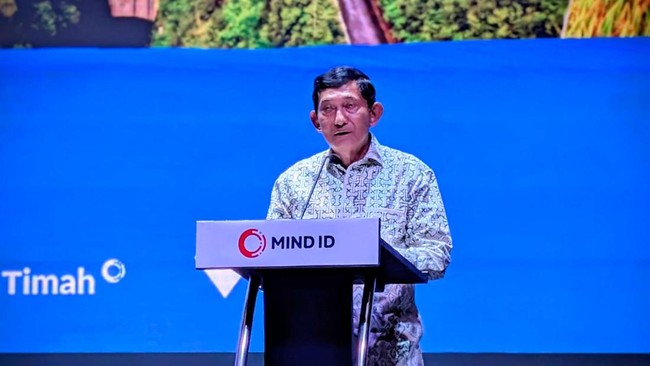
Indonesia’s Mining Industry Holding MIND ID has held the premiere screening of a documentary film titled The MINDJourney. The presence of this film is part of efforts to showcase the complete process of creating added value from minerals, from upstream to downstream, as well as the real impacts on society and the environment.
The MINDJourney serves as a visual medium that records the journey of mineral resource management from the pre-mining stage, mining operations, to post-mining, carried out responsibly and sustainably.
Through a narrative closer to the public, the film presents the connections between industrial processes, downstreaming, sustainability, and the real benefits felt by society, including small and medium enterprises (UMKM) in the areas around operations.
MIND ID’s President Director, Maroef Sjamsoeddin, stated that this film is part of efforts to strengthen the integration of the MIND ID Group while providing education to the public about responsible mining practices.
“Through this film, we want to present a medium that can show how all members of the MIND ID holding work under the same umbrella. We want to build shared understanding, both internally and externally, regarding mining practices carried out with the principles of good mining practice from planning, operations, to post-mining,” he said in an official statement on Thursday (2/4/2026).
Maroef added that the film is also expected to provide a more balanced perspective on the mining industry, which has often received negative stigma.
“Indeed, mining activities change the surface, but if carried out with the right principles, mine management can provide great benefits to the environment and society. Through this film, we want to show how these practices are implemented by all members of the MIND ID holding,” he explained.
In addition, the film also highlights the importance of downstreaming as an effort to ensure that Indonesia’s mineral wealth provides optimal added value domestically. So far, some mineral commodities have been exported without maximum processing, so their economic value is enjoyed abroad.
For example, through the integrated bauxite-alumina-aluminium processing chain developed by the MIND ID Group, there is a significant increase in added value, from around US$40 per tonne of raw bauxite ore to around US$400 per tonne of alumina, up to US$2,800-US$3,000 per tonne of aluminium.
This value can even continue to increase when aluminium is further processed into industrial products such as battery frames, electric vehicle bodies, and high-tech components.
The impact of this downstreaming not only strengthens the national industry’s competitiveness but also drives job creation, UMKM growth, and increased contributions to state revenues. Maroef also emphasised that integrated and responsible mineral resource management is an important foundation for sustainable national economic development.
“Indonesia’s mineral resource wealth must be managed optimally to provide the greatest possible benefits to society and support Indonesia’s future development,” he asserted.
Meanwhile, the producer and director of The MINDJourney, Ari Sihasale, revealed that the documentary was made based on the team’s direct experiences during coverage in various mining operation areas.
“This is the first time we have made a documentary about mining. Initially, we only knew about the mining world from social media, which often shows the negative side. But when we came directly to the field, we actually saw many things that opened new perspectives,” he said.
The documentary production process involved a long journey covering various operation locations of MIND ID Group members as well as direct interactions with communities around the mines.
“We travelled for more than 50 days and met directly with the community. Many of them feel real benefits, from health, education, to UMKM development. Things like this are what we want to highlight, because the human side of mining also needs to be known by the public,” he explained.
He hopes that the film can serve as an educational medium to help society understand the role of mining in national development.
“This documentary is not just entertainment, but is expected to open our eyes and hearts that when mining is done responsibly, the benefits can be felt by the wider community,” he concluded.