
Traffic Death Toll Falls 45 Per Cent During Return-to-Hometown Migration Operation
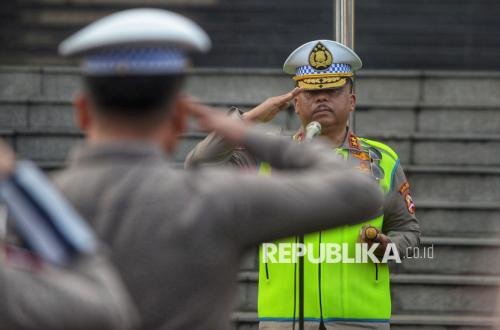
The Head of the National Traffic Command (Kakorlantas) of the Indonesian National Police, Inspector General Agus Suryonugroho, announced that traffic fatality figures during the Ketupat 2026 operation have decreased significantly. By the third day of the operation, death toll from traffic accidents fell 45 per cent compared to the previous period.
This reduction represents a key indicator of the security measures undertaken by police across various transport routes. National Police personnel were deployed on toll roads, arterial roads, terminals, stations, and integrated security posts to ensure smooth and safe travel for the public.
“The most important figure I can share with colleagues is that fatalities have dropped 45 per cent,” said Agus whilst providing a press statement at the National Traffic Command Centre in Cikampek, West Java, on Sunday (15 March 2026).
He explained that the Ketupat operation focuses not only on traffic management during the outbound and return migration periods, but also on maintaining public security during the social and spiritual momentum leading up to Eid al-Fitr.
According to Agus, traffic conditions on major routes remain manageable. Vehicle congestion has not yet appeared on either toll roads or arterial routes used by those returning home.
“We report to colleagues that current traffic flow is quite controlled. There is no congestion yet,” said the National Traffic Command head.
Agus noted that vehicles leaving Jakarta via toll roads heading towards the Trans Java route, Bandung, and Sumatra are estimated to be in the initial phase of this year’s total migration potential. This shows vehicle movement remains relatively slow in the early migration phase.
The National Traffic Command is monitoring the possibility of surging vehicle numbers after the evening meal during Ramadan. To anticipate this, traffic engineering scenarios have been prepared, ranging from contraflow to one-way systems.
“We are waiting for the possibility that after the breaking of fast there will be a surge in traffic. However, traffic management engineering scenarios are already prepared. Whether in the afternoon or evening, contraflow or possibly one-way systems will be implemented if needed—everything is ready,” said Agus.
Real-time monitoring of traffic conditions is conducted using various technology tools. The National Traffic Command utilises CCTV, vehicle monitoring radar, and ETLE drones flown approximately every three hours to monitor vehicle movement.
Traffic engineering has also been implemented at several points experiencing increased vehicle volume. Traffic diversion is in place in the Gadog area towards Puncak, as well as contraflow on the Bogor–Ciawi–Sukabumi (Bocimi) section in Cibadak.
At ferry crossing points, police have prepared vehicle flow control schemes towards ports. On the Merak route towards Sumatra, officers have prepared delay system and buffer zone scenarios if vehicle queues approach the port area.
Officers are also coordinating with the Ministry of Transport to anticipate congestion at the Ketapang–Gilimanuk crossing by increasing ferry capacity.
The National Police emphasised that the Ketupat operation is a humanitarian operation prioritising migrant safety. All security scenarios have been prepared to ensure the public’s journey is safe throughout their trip home and back.