
Traffic Chief: Data-Based National One-Way Return Flow for Eid, Can Be Extended
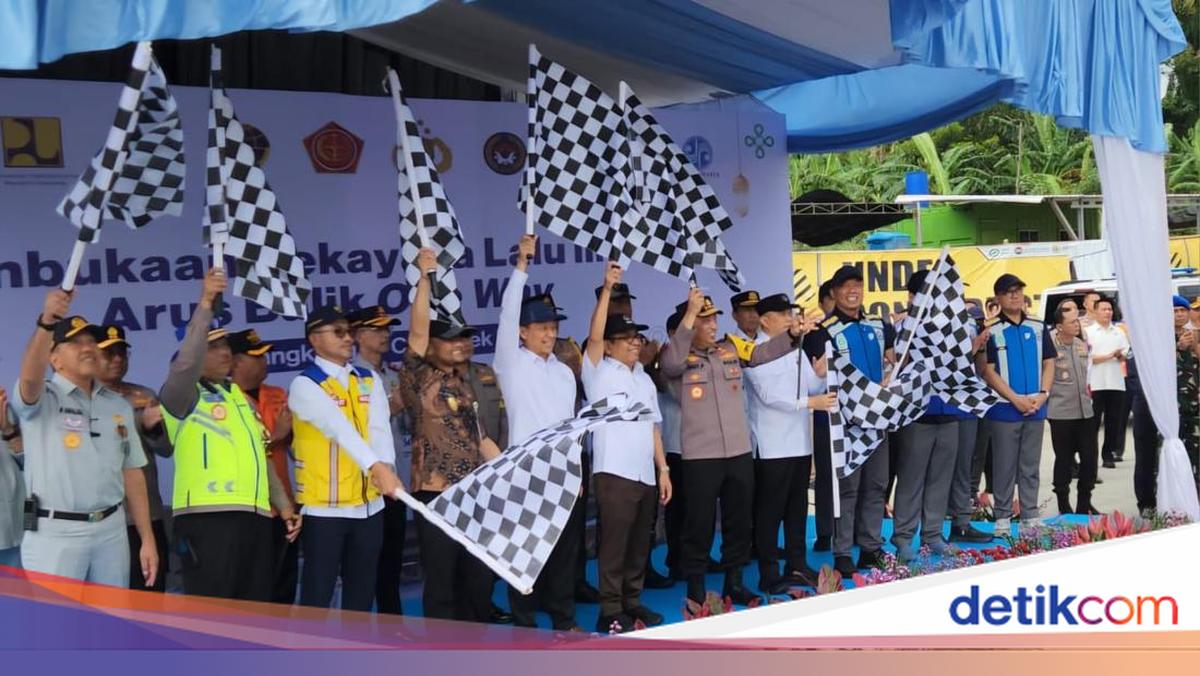
National Police Traffic Corps Chief Irjen Agus Suryonugroho accompanied Police Chief General Listyo Sigit Prabowo in officially launching the national one-way traffic engineering for the 2026 Eid return flow. This policy is implemented from KM 414 Kalikangkung Toll Gate to KM 70 Cikampek Utama.
The launch, marked by a flag-off ceremony, took place at Kalikangkung Toll Gate, Semarang, Central Java, on Tuesday (24/3/2026) at exactly 14:25 WIB. This strategic step is taken to anticipate a surge in return traffic, predicted to be high due to increased public mobility during the peak homecoming period.
The National Police Traffic Corps emphasised that all traffic policies this year are implemented based on data and real-time field monitoring.
“This national one-way scheme is a measured step based on data. We see the potential for very high traffic generation, so it must be managed from the start to avoid build-ups,” said Irjen Agus at the location.
Based on Korlantas analysis, the previous homecoming peak reached 270,000 vehicles per day, while currently only about 43% of vehicles have returned to Jakarta. This indicates significant potential for surges in the coming days.
“That means the return flow will continue to move. Therefore, we prepare gradual and flexible traffic engineering scenarios,” stated Irjen Agus.
Irjen Agus also stressed that the one-way policy is not rigid but will be dynamically adjusted based on field conditions.
“If the flow is still high, the one-way can be extended. But if it has eased, we will normalise it. Everything is based on real-time conditions,” he explained.
In addition to arrangements on toll roads and arterial routes, Irjen Agus reminded the public to take advantage of the government’s Work From Anywhere (WFA) policy for civil servants and similar appeals for the private sector. By working remotely from hometowns, it is hoped that homecomers can delay their return after the peak return flow, allowing density on main routes to disperse more effectively.
“Utilise this WFA policy wisely. The public does not need to rush home all at once at the peak return flow. By staggering return times, the journey will be much more comfortable and avoid long traffic jams,” advised the Traffic Chief.
Ban on Stopping on Toll Road Shoulders
Regarding safety and smoothness, the Traffic Chief issued a stern warning to homecomers not to use toll road shoulders as resting spots. This is highly dangerous to life and is the main cause of congestion on freeways.
“The shoulder is only for emergencies, not for resting or sleeping. If tired, please head to the nearest rest area or exit to arterial roads to find a safe resting place. Stopping on toll road shoulders is very risky for triggering rear-end collisions and obstructing other vehicles’ flow,” he asserted.
Additionally, the public is urged not to focus travel on a single specific time to avoid excessive density. Through this scheme, the Police ensure that the 2026 Eid return flow runs more smoothly, safely, and controllably.
“We are not only managing vehicle flow, but ensuring every return journey is safe until reaching home,” he concluded.