
Traders Say Plastic Prices Up Over 50%, From Rp20,000 to Rp50,000
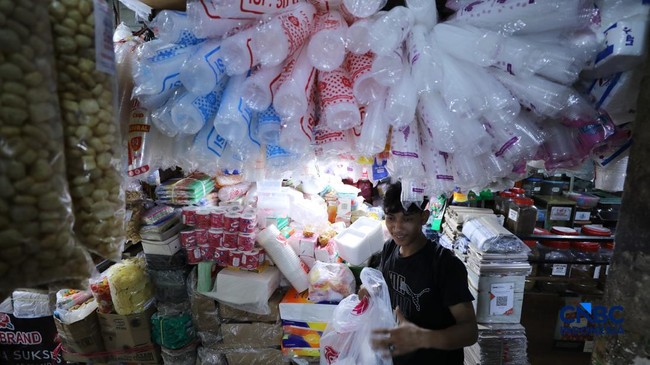
Jakarta, CNBC Indonesia - The surge in global crude oil prices due to conflicts in the Middle East is beginning to ripple through to various derivative commodities. One area now felt at the retail level is the increase in plastic prices, a packaging material widely used by traders.
The rise in oil prices is pushing up the cost of naphtha, the main raw material for plastic. As a result, plastic prices in the market are also being boosted. This situation is starting to be felt by traders at Tanah Abang Market, although prices for main goods like clothing and fabric remain relatively stable.
Based on observations by CNBC Indonesia at Block A of Tanah Abang Market on Monday (13/4/2026), prices for a number of clothing items and fabric materials are still monitored as not having increased. Several traders admit they are still selling goods at the same prices because the stock consists of old inventory. However, behind the stability of those selling prices, pressure on costs is starting to be felt from the packaging side.
Alya, a children’s clothing trader, said the prices of the clothes she sells have not yet increased despite information about potential rises.
“The clothing prices haven’t gone up yet; there is info, but no increase yet. The fabric and clothing prices I sell are still the same. But the plastic has gone up, it’s really expensive,” said Alya when met by CNBC Indonesia at the location.
She even said the surge in plastic prices is very high, far exceeding 50%. “It’s bad (the increase), more than 50%, probably much more than 50%. For example, I usually buy black plastic for wrapping for Rp20,000s, now it’s almost Rp50,000,” she stated.
The rise in plastic prices is forcing Alya to find ways to prevent operational costs from ballooning. In between serving customers, she appears more selective when packaging goods. Instead of immediately taking new plastic, Alya first asks if the customer has brought their own shopping bag.
When she sees a customer holding plastic with previous purchases, she chooses to put her merchandise into that bag. This becomes a simple strategy she applies daily, reducing the use of new plastic, curbing expenses, and still serving customers quickly.
“That’s how I handle it. It’s like saving plastic, protecting the environment, and saving money at the same time. But really, plastic is very expensive; it’s very noticeable,” she said.
Similar complaints were voiced by Feri, a fabric trader at the same location. He confirmed that fabric prices are still stable, but plastic costs have skyrocketed.
“The fabric material hasn’t yet. No increase. But this (plastic) has gone up. Earlier I bought plastic, the increase was 70%; what usually costs Rp100,000 became Rp170,000. The usual Rp50,000 one isn’t even that; earlier I bought for Rp100,000. The plastic increase is really bad,” Feri revealed.
This situation shows that the pressure from the war is not only potentially driving up prices of main goods like fabric and clothing, but has already been felt first on supporting components like plastic. Traders are now beginning to adapt in various ways to hold back costs, while waiting to see if the price increases will truly spread to main products in the near future.