
Traders Provide Latest Update on Minyakita in Markets, Share Their Concerns
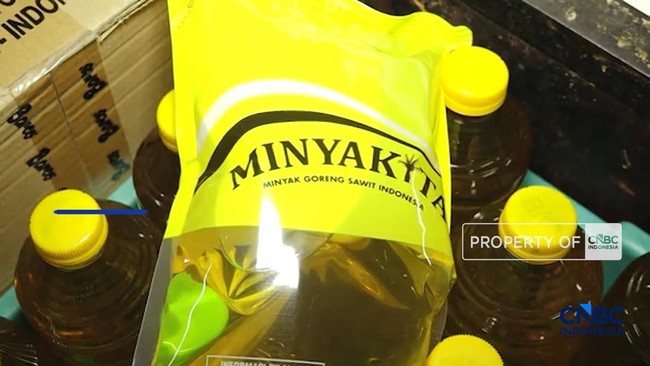
Jakarta, CNBC Indonesia - The Indonesian Traditional Market Traders Association (IKAPPI) DKI Jakarta has revealed the real conditions of the distribution of the people’s cooking oil brand Minyakita in the field, which is deemed not yet running smoothly, even though the government states that stocks are in a safe condition.
Chairman of the Regional Leadership Council (DPW) IKAPPI DKI Jakarta, Miftahudin, emphasised that the main issue felt by traders is not solely about the availability of goods, but rather the uneven distribution.
“Facts on the ground show that in several instances, there is still an imbalance in supply felt by traders. This indicates that the problem does not stop at stock availability, but also concerns the smoothness of distribution,” said Miftahudin in his statement, quoted on Thursday (16/4/2026).
He stressed that traditional market traders are the parties who feel the direct impact most from supply dynamics, especially since the transition from bulk oil to Minyakita.
“As direct actors in the field, we feel how supply dynamics and spikes in demand occur, especially after the transition from bulk oil to Minyakita,” he said.
In this situation, IKAPPI requests that the Minyakita polemic not be directed towards a narrative that corners traders. Because traders have no control over distribution or large-scale supply.
“In this context, it needs to be emphasised that traders are not the determinants of distribution, but rather the parties most affected by every policy and supply disruption,” he asserted.
Miftahudin also reminded that government statements regarding safe stocks should not lead to misunderstandings in society.
“We remind you, do not let the ‘safe stock’ narrative end up cornering traditional market traders. Because traders do not have the capacity to regulate supply, let alone influence distribution on a large scale,” he continued.
According to Miftahudin, the role of traders is actually crucial in maintaining the food supply chain. Therefore, they should not be made the party to blame.
“Traditional market traders are an important part of the national food ecosystem. We are not the source of the problem, but rather the parties who first feel the impact of every policy that does not run optimally in the field,” he said.
IKAPPI also urges the government, particularly Perum Bulog, to ensure that Minyakita distribution runs without obstacles down to the traditional market level.
“In this regard, Bulog as an institution mandated to maintain the stability of food supply and prices needs to ensure that Minyakita distribution does not experience obstacles in every distribution chain,” said Miftahudin.
“Therefore, IKAPPI emphasises that traders should not be made scapegoats in the Minyakita polemic. The focus of improvement must be directed towards strengthening the distribution system so that supply is truly stable and even down to the market level,” he said.
Previously, the President Director of Perum Bulog, Ahmad Rizal Ramdhani, proposed an increase in DMO from 35% to 65% on the grounds of increasing distribution needs, especially for the food assistance programme that reaches around 33 million beneficiaries, to the needs for distribution to SP2KP markets.
If the proposal is approved, the volume of Minyakita supply received by Bulog is estimated to be able to increase significantly from the current around 40,000-45,000 kilolitres per month to 60,000-70,000 kilolitres.
Nevertheless, the government has not yet made a final decision regarding the policy change. Discussions are still ongoing across ministries, considering the balance between domestic needs and the sustainability of supply from producers.