
Trade Minister Reveals Reducing Plastic Use Can Lower Staple Goods Prices
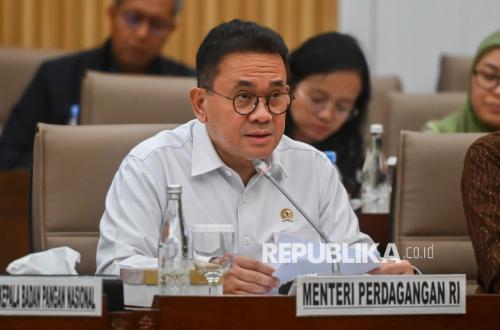
Trade Minister Budi Santoso has called on the public to begin reducing the use of single-use plastics as a simple step to assist traders while maintaining the stability of staple goods prices amid global supply challenges for plastic raw materials. Budi stated that the current global supply chain conditions are making plastic raw materials, particularly naphtha, increasingly difficult to obtain. According to him, shipping disruptions and competition between countries for raw materials are causing distribution to slow and plastic prices to potentially rise.
“This is actually an opportunity for us, yes, starting from small things. From small things, we start to be wise in using plastic that might or actually isn’t necessary,” said Budi in Jakarta on Thursday (16/4/2026).
He gave an example of a simple habit, such as bringing one’s own shopping bag when going to the market. This step is seen as able to reduce plastic use by traditional market traders, while also cutting down on plastic waste.
“If we bring a bag, that means traditional markets also reduce plastic use, right? Because when buying, traditional markets provide plastic. Plastic is expensive, traders are confused if they have to buy expensive plastic, which then affects other staple goods,” he explained.
Budi considers public participation important because plastic is used as packaging for various food commodities. Reducing plastic use is seen as able to help suppress traders’ operational costs while maintaining price stability at the consumer level.
Although global supplies are under pressure, he assured that the condition of staple goods prices domestically remains relatively stable.
Based on direct monitoring in markets, including in Gresik, East Java, Budi said that prices of various commodities, such as chillies and other food items, are still in the normal range, even many below the highest retail price (HET).
“Overall, there hasn’t been any significant increase yet. Yesterday I checked the market in Gresik, it was very cheap. All kinds of chillies had standard prices. On average, even below HET. So, I think it hasn’t significantly affected prices,” said Budi.
The government is currently continuing to coordinate with industry players and Indonesian trade representatives abroad to expand sources of plastic raw material supplies from various countries so that national industry needs remain fulfilled.