
Trade Minister Budi Eases Exports of Oil, Gas, and Coal: See the Details of the Regulations
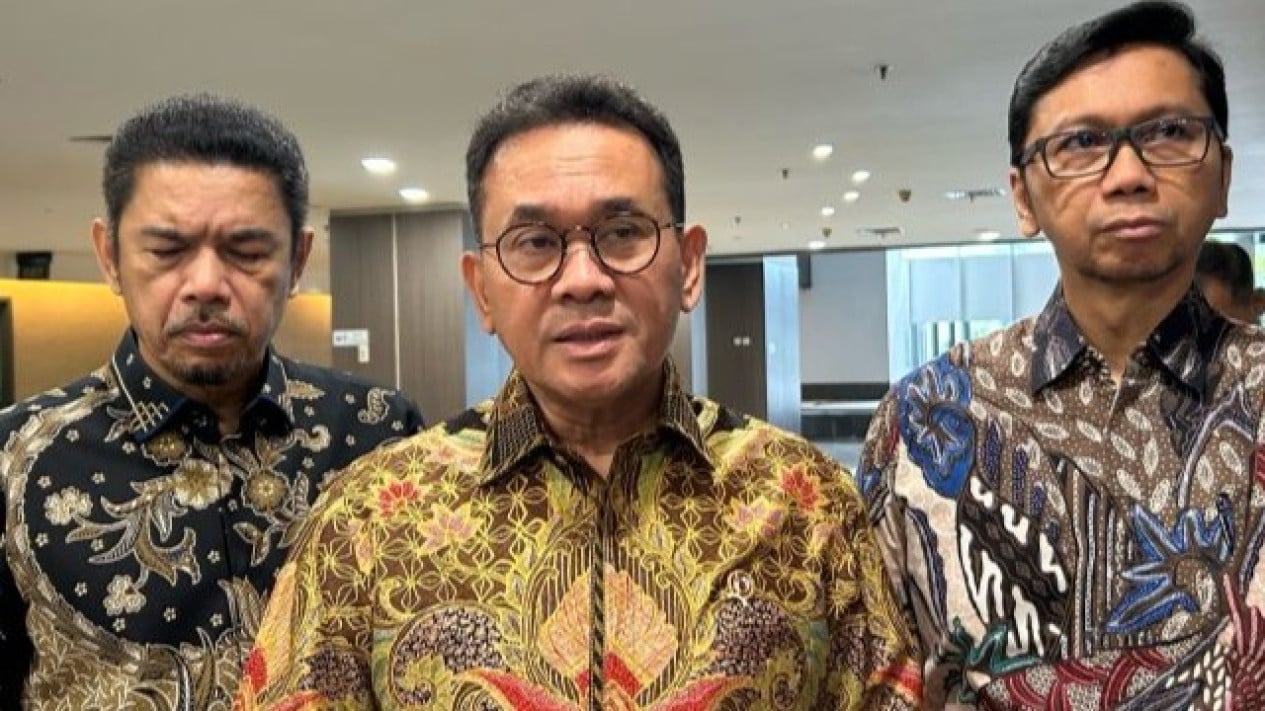
Jakarta – Trade Minister Budi Santoso has issued two new regulations in the export sector to accelerate deregulation and provide ease of doing business.
The two regulations are Trade Ministerial Regulation Number 5 of 2026 on the Fourth Amendment to Trade Ministerial Regulation Number 23 of 2023 concerning Export Policies and Regulations; and Trade Ministerial Regulation Number 6 of 2026 on the Fourth Amendment to Trade Ministerial Regulation Number 22 of 2023 concerning Goods Prohibited from Export.
The two regulations, which were promulgated on 26 March 2026 and take effect on 1 April 2026, are part of efforts to simplify export processes while enhancing the competitiveness of business actors amid global trade dynamics.
“The government is carrying out deregulation and simplification of export licensing to improve ease of doing business and enhance the investment climate,” Budi stated in his remarks on Wednesday, 8 April 2026.
He explained that the two Trade Ministerial Regulations relax export policies by eliminating several obligations and sanctions, as well as reducing documents for prohibitions and restrictions (lartas).
Director General of Foreign Trade at the Ministry of Trade, Tommy Andana, stated that the improvements to export policies are designed to meet the needs of the business world, which desires faster and more efficient export processes.
“This revision aims to simplify regulations and adjust policies to global trade dynamics and the needs of business actors,” Tommy said.
The forms of export policy relaxation in the two Trade Ministerial Regulations include the simplification of export instruments for several strategic commodities. For industrial tin commodities, the requirements are now limited to Export Approval (PE) and Surveyor Report (LS), while the Registered Exporter (ET) requirement is eliminated.
Meanwhile, in the oil and gas sector, the provisions are simplified to only PE and LS, from the previous requirement of ET, PE, and LS. However, an exception applies to natural gas exports via pipeline, which still requires ET.
In addition, coal exports are also simplified by eliminating the requirement for a cooperation agreement in applying for ET, as well as the obligation to realise at least one export within two years and its associated sanctions. This policy is accompanied by flexibility in raw material sources to support industrial tin downstreaming.
On the other hand, technical specification requirements for tin solder, such as limits on iron (Fe) content, dimensions, weight, and packaging methods, have also been removed to simplify processes and increase efficiency for business actors.