
Traces of Late Libyan Leader Muammar Gaddafi Behind Current Iranian Missile Prowess
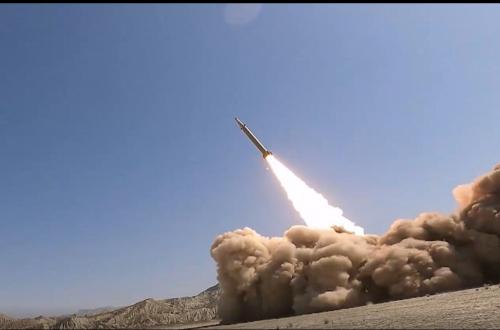
In April 2021, the then-Commander of United States Central Command (CENTCOM), General Kenneth F McKenzie, issued this statement in response to a question regarding developments in Iran’s ballistic missile capabilities.
McKenzie stated: “Over the past five to seven years, Iran has achieved significant qualitative improvements in its ballistic missile capabilities, and this capability has also experienced quantitative growth, with the number of missiles now reaching approximately 3,000 missiles with varying ranges, depending on how one calculates it.”
In an interview conducted with him in December of the same year, General McKenzie went further. Media outlets quoted his statement that Iran’s missile programme now represents a greater direct threat than Iran’s nuclear programme.
These missiles give Tehran what he described as a decisive advantage, including the capability to “overwhelm” or “frustrate” U.S. military defences or allied forces’ defences in the region with firepower exceeding their capacity to counter.
This missile programme represents a key element in the American-Israeli campaign against Iran aimed at, at minimum, reducing Iran’s military capability in terms of deterrence, particularly its missile programme.
Conversely, Iran uses its missile armament to demonstrate its capacity to withstand attacks by directing its missiles at the heart of Israeli cities, as well as towards American bases and interests, as stated by Iranian officials.
History of Iran’s Missile Programme
This programme, which was tested practically during the 12-Day War in June 2025 and the ongoing war that erupted in the early hours of 28 February 2026, has a long history beginning in the 1970s.
This was alongside waves of military development that the Shah attempted to launch during the period before the Islamic Revolution that toppled his regime in 1979.
In 1977, Tehran signed a military agreement with Israel known at that time as “Project Flower,” one of a series of Iran-Israel agreements concluded under the “oil for weapons” formula.