
Traces of Javanese Heritage in Muar, Johor
Muar, Johor, Malaysia – Historically, Javanese communities have significantly influenced social landscapes not only in Indonesia but across Southeast Asia.
This is due to migrations of Javanese people to various Southeast Asian regions since the 19th century in response to colonial oppression in their homeland.
These migrations led to cultural blending with local traditions, which has persisted across generations.
One such trace of Javanese migration can be found in Muar, Johor, Malaysia.
Situated along the Strait of Malacca, the region is known for its fusion of Malaysian, Javanese, and Bugis communities.
From 28–30 May, a delegation visited Kampung Sarang Buaya in Muar, Johor, Malaysia, alongside international media and Singaporean travel agents, as part of a Tourism Malaysia-organised Familiarisation Trip showcasing homestay packages, to explore Javanese heritage in the area.
Javanese Descendants
‘Iso ngomong jowo aku. Setunggal, kalih, tiga, sekawan, gangsal, sedoso.’ (I can speak Javanese. One, two, three, four, five, ten.)
The statement was made by Selamat Takim, a council member from Sungai Balang in Muar, Johor, Malaysia, during a conversation with a reporter at Kampung Sarang Buaya, following the opening of a Tourism Malaysia-organised Familiarisation Trip.
Selamat Takim, a prominent Malaysian figure in Muar of Javanese descent, is a descendant of Sultan Pakubuwono XI of Solo, Central Java. Known by the honorific title YB (Yang Berhormat), he explained that Muar historically served as a destination for Indonesian migrants seeking new lands due to Dutch colonial conflicts.
He noted that in the 17th century, Bugis people from Makassar, South Sulawesi, were the first to migrate to Johor’s coastal areas.
The Bugis established settlements that later accommodated Javanese immigrants, who intermarried with local Malays and have persisted in Muar to this day.
‘The people of Muar are kin. We share a common heritage. In the past, we were one community. Now divided into two nations, the archipelago consists of Malays who unite in mutual respect, working together for progress. Indonesia prospers, Malaysia prospers; our two nations grow stronger in Southeast Asia. Long live Indonesia, long live Malaysia,’ Selamat said.
(We are siblings. A shared heritage. Once united, now split into two nations. The archipelago comprises Malays living in harmony, fostering mutual respect to advance their countries. Indonesia thrives, Malaysia thrives—our two nations grow strong in Southeast Asia. Long live Indonesia, long live Malaysia!).
Selamat is just one of many Muar residents with Javanese ancestry. Beyond mere bloodline, they actively cherish their ancestral culture and traditions.
Rice Spreaders
Local lore in Kampung Sarang Buaya, Muar, Johor, recounts that Javanese people introduced rice cultivation to the area. During difficult colonial periods in Java, several Javanese families travelled north by boat to the Malay Peninsula, settling along the Sarang Buaya River in Muar, Johor, on the Strait of Malacca.
They established settlements in Kampung Sarang Buaya Darat and agricultural areas around Sungai Balang.
According to local stories, spilled rice grains from Javanese migrants sprouted rapidly, convincing locals of the area’s fertile soil. This led to the establishment of rice paddies now known as Sawah Sarang Buaya or Sawah Sungai Balang.
Many descendants of these Javanese settlers still reside in the village, preserving Javanese cultural practices in daily life.
Keraton Mbah Anang
Alongside council member Selamat Takim, Muar, Johor, is home to Johar Paimin, a Malaysian of Javanese descent born and raised in Malaysia, with roots in Mojokerto, Java.
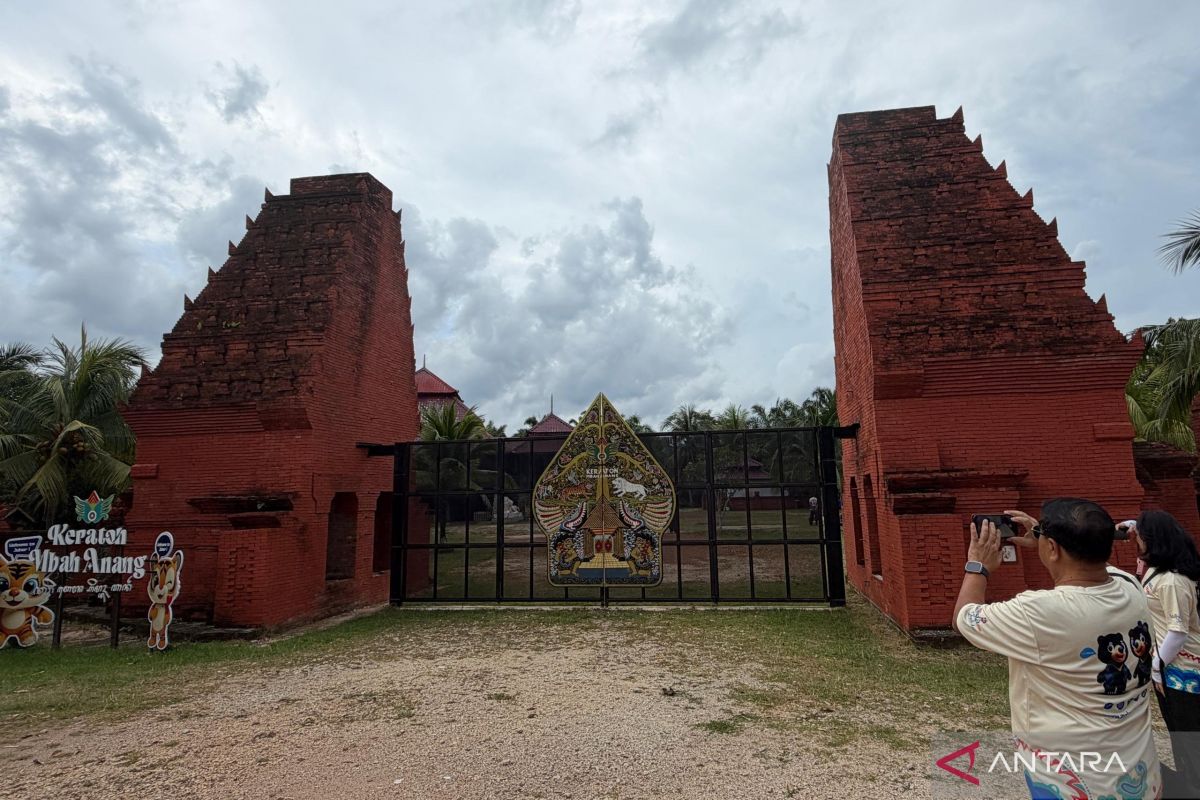
Driven by his love for ancestral culture, Paimin built a structure resembling a Javanese royal palace, named Keraton Mbah Anang, in Muar.
The name ‘Mbah Anang’ combines the Javanese term ‘lanang’ (meaning male) with Bugis language, forming ‘anang’, signifying an elderly man.
The palace features a large Mojokerto-style gateway constructed with bricks imported directly from Java. At the entrance, a giant wayang gunungan (Javanese shadow puppet) displays Javanese artistry blended with Malay motifs, including tigers on either side.
Inside, a spacious courtyard leads to a central joglo house. Paimin’s joglo uniquely combines Jepara-carved teak partitions with Malay cultural elements.
He fills the structure with ancestral artefacts such as wayang puppets, masks, reog/barongan performances, and a complete gamelan set, while also offering gamelan classes for local Malaysian children.
‘Why preserve it? Because we must return to our roots,’ Paimin told a reporter.
As the Javanese proverb ‘sangkan paraning dumadi’ states, humans must be aware of their origins and purpose.