
Traces of Civilisation at Cipari Museum: This Sorkafagus Proves the Advancement of Archipelagic Burial Technology
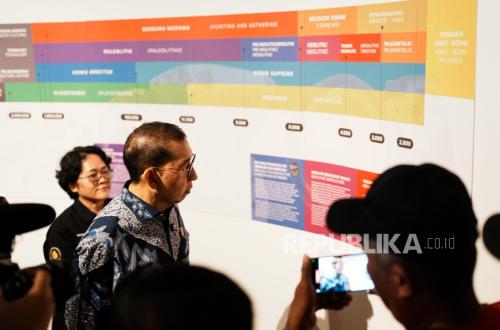
The Cipari Prehistoric Site Museum in Cipari Ward, Cigugur Subdistrict, Kuningan Regency, has long preserved evidence of ancient Nusantara civilisation from the megalithic and neolithic eras. The museum is now more representative and can serve as an educational facility for the younger generation.
Head of the West Java Cultural Preservation Agency, Retno Raswanto, explained that the museum’s revitalisation took place in December 2025. The focus of the arrangement was on the exhibition space to make it more representative as an educational facility. “In the future, the museum will become an active learning space, especially for the younger generation,” she said, during the inauguration of the Cipari Prehistoric Site Museum on Saturday (4/4/2026).
Indonesia’s Minister of Culture, Fadli Zon, stated that the paradigm of museums must change. Museums are no longer merely places for storing historical artefacts but spaces for education, dialogue, and experience. “People who come must get an experience,” he stressed, when inaugurating the museum.
On the previous day, Fadli also encouraged the revitalisation of several cultural heritage sites, such as the Linggarjati Manuscript Building and the Sjahrir Building. This is part of strengthening regional identity.
He said that the importance of the Cipari Prehistoric Site as evidence of ancient Nusantara civilisation from the megalithic and neolithic eras, which has been researched since the 1970s. “Indonesia is a nation with a very ancient civilisation. Archaeological findings show that, and sites like Cipari must continue to be preserved and developed,” he explained.
Fadli added that the government is encouraging the transformation of museums into centres of digital-based experience, strengthening the role of curators and educators, as well as integration with the world of education and the creative industry.