
TPS and the Struggle for Urban Space
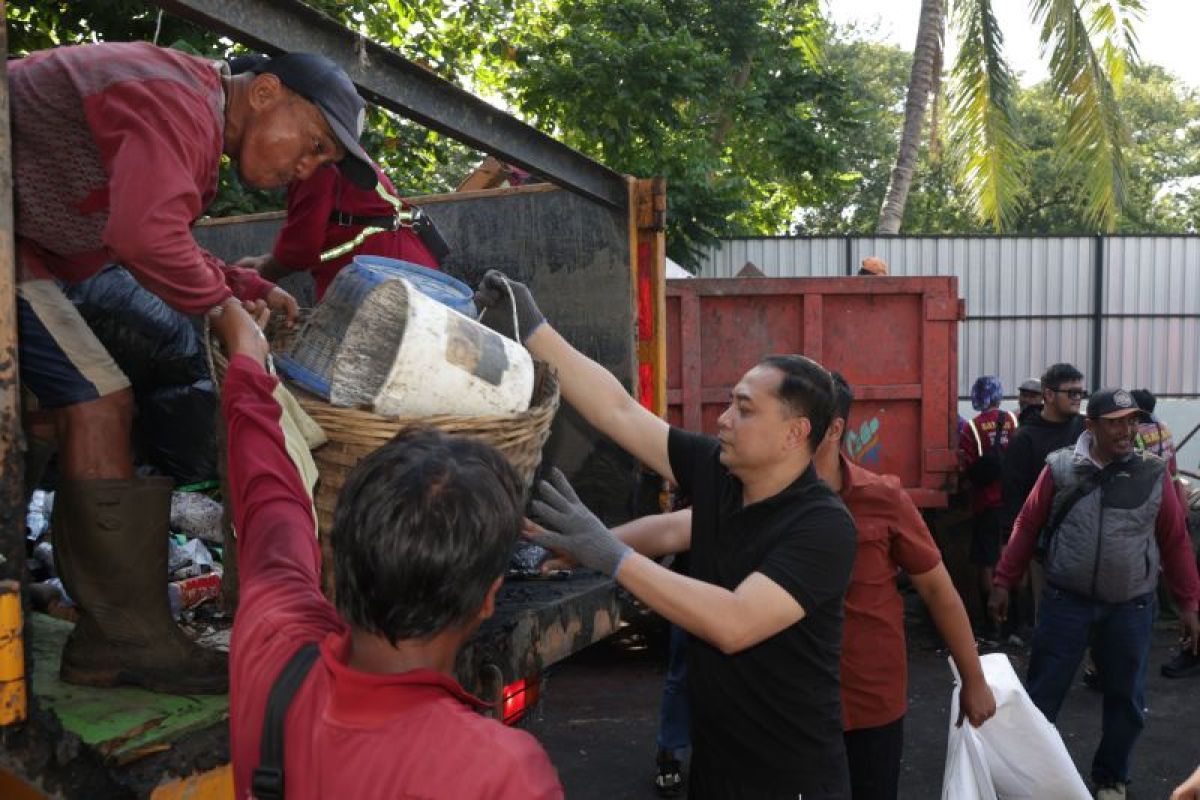
Surabaya (ANTARA) - Waste management in Surabaya City, East Java, still faces fundamental challenges at the most upstream level, namely at temporary collection points (TPS).
At several locations, the conditions at TPS show classic problems, such as pungent odours, overflowing rubbish piles, carts parked haphazardly, and increasingly intense sorting activities by scavengers. This situation underscores that the limited space known as TPS is bearing a heavy burden from the urban waste management system.
In this context, Surabaya Mayor Eri Cahyadi’s policy prohibiting the parking of waste carts at TPS serves as a corrective measure to restore the space’s function in line with operational standards.
This policy may seem simple, but it touches on more fundamental issues, namely spatial governance, system discipline, and the dynamics of interests between urban order and informal economic activities.
With waste production reaching around 1,600 tonnes per day, pressure on the management system is unavoidable. TPS, which should function as a temporary transit point, instead experiences a shift in function when used as a parking area for carts or a sorting location.
This functional change directly impacts the stagnation of transportation flow and increases the potential for accumulation.
The mayor’s ban also serves as an indicator that the city government is attempting to reorganise the system to operate more orderly and efficiently.
Nevertheless, this enforcement step also opens up broader avenues for examination, as the issues at TPS are not solely related to compliance with rules, but also involve the complexities of social, economic, and urban societal behaviour.
Limited Space
TPS is essentially a limited space designed for a quick flow, from rubbish arriving, being temporarily stored, and then transported to the final processing site. When carts park inside it, the space shrinks.
When scavengers sort at the same location, the rubbish dwell time increases. When schedules lack discipline, the flow becomes chaotic. The end result is easily predictable: rubbish overflowing onto the streets.