
TP PKK Chair Emphasises Importance of PKK and Posyandu Roles in South Papua
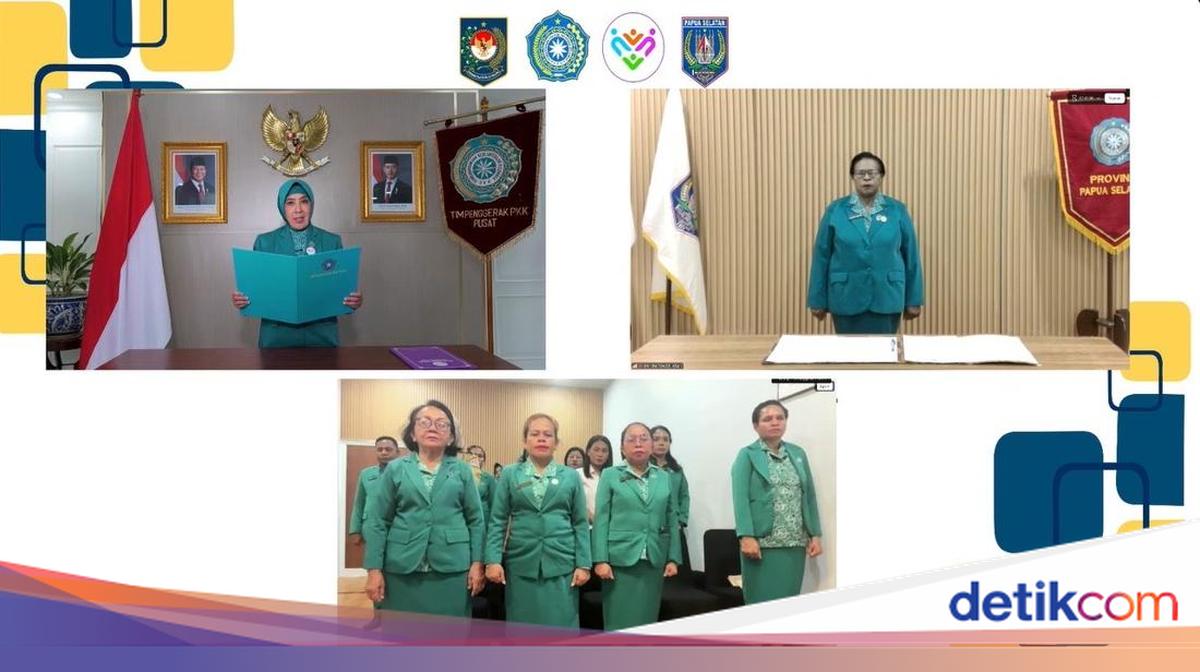
Chair of the Family Empowerment and Welfare Movement (TP PKK), Tri Tito Karnavian, has emphasised the importance of implementing family empowerment programmes that are suited to the conditions of each region, including South Papua Province. Tri asserted that programme approaches in each region cannot be uniform. According to her, geographical challenges must be balanced with the utilisation of local potentials, wisdom, and community solidarity as the main strengths of family-based development. “Adaptation, innovation, and courage are needed to design programmes that are truly contextual, addressing community needs, and able to reach areas that have not been optimally served so far,” she stressed. She conveyed this during the virtual inauguration of Hermina Ewenkos as TP PKK Chair as well as Chair of the Posyandu Development Team for South Papua Province today. On that occasion, Tri encouraged strengthening cross-regional agency collaboration, from planning and budgeting stages to programme implementation, to ensure effective impact at the village and sub-district levels. She also urged the acceleration of Integrated Service Post (Posyandu) registration in the region. As of now, South Papua Province has not yet submitted a Posyandu registration application to the Ministry of Home Affairs (Kemendagri). Tri stated that this needs to be followed up immediately to ensure optimal and nationally integrated guidance. Tri explained that Posyandu has transformed into a basic service centre through Ministry of Home Affairs Regulation Number 13 of 2024. Through this regulation, Posyandu is tasked with handling six Minimum Service Standards (SPM), namely education, health, public works, people’s housing, public order and security, community protection, and social affairs. In her remarks, Tri also extended congratulations to Hermina Ewenkos on the mandate entrusted to her. She affirmed that the position has a strategic role in driving family empowerment and basic services down to the village and sub-district levels. “This mandate is not only an honour but also a strategic responsibility to drive family empowerment and community basic services to the lowest levels,” Tri stated. Tri said that the inauguration is a follow-up to Presidential Regulation Number 99 of 2017, which positions PKK as a strategic government partner in family-based development. This provision is reinforced by Ministry of Home Affairs Regulation Number 36 of 2020, which regulates the national governance of the PKK movement. She also conveyed the importance of continuing and expanding good practices that have been running, as well as encouraging the birth of simple programmes with real impacts. This includes improving family nutrition, strengthening household economies, and utilising local food potentials. At the end of her remarks, Tri invited all stakeholders to strengthen PKK and Posyandu institutions, enhance cadre capacities, and build cross-sector synergies. Through these steps, she is optimistic that PKK and Posyandu in South Papua can become the forefront in realising inclusive and sustainable family welfare.