
Toyota to Build Bioethanol Plant in Lampung, Preparing to Accelerate E10 Mandate
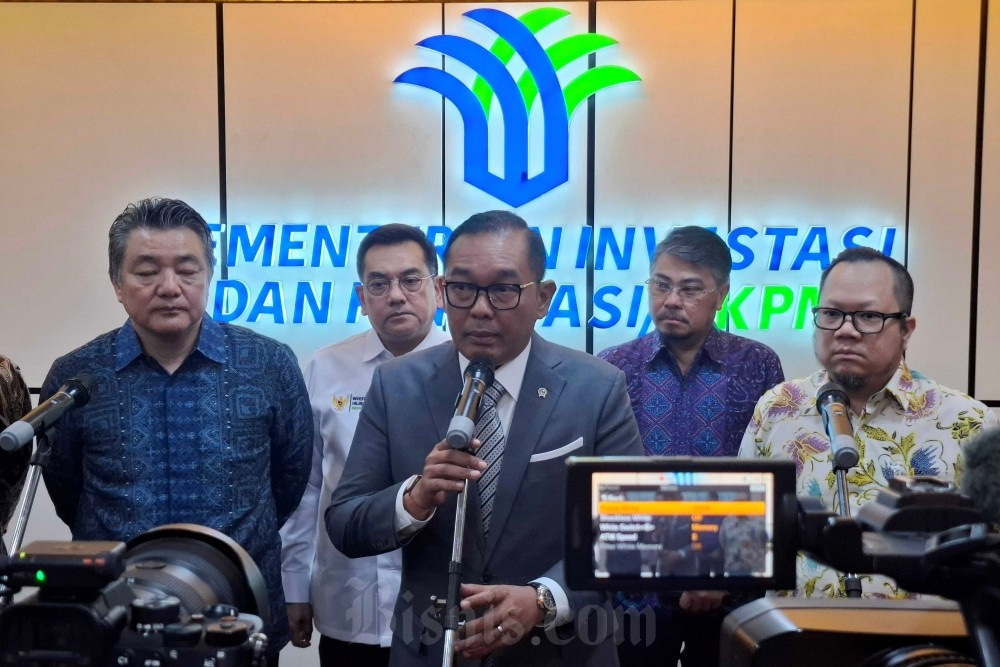
The Ministry of Investment and Downstreaming/BKPM has confirmed the plan by the Japanese automotive giant, Toyota Group, to invest in the development of the bioethanol industry in Indonesia, with the initial step of building a bioethanol plant in Lampung.
Deputy Minister of Investment and Downstreaming/Deputy Head of BKPM Todotua Pasaribu revealed that the certainty of this investment is the follow-up from his meeting with Toyota Asia CEO Masahiko Maeda at the BKPM office on Monday (20/4/2026). That meeting was a continuation of previous negotiations in Tokyo, Japan, which also involved President Prabowo Subianto at the end of last March.
In its execution, this renewable energy development project will be carried out by a consortium. Pertamina New Renewable Energy (NRE) will partner with Toyota Tsusho as a strategic partner.
Additionally, this initiative also involves financing support from Danantara, as well as technology assistance from Research Development for Bioethanol (RABID), supported by Japan’s Ministry of Economy, Trade and Industry (METI).
Todotua explained that the initial production capacity for the plant will reach 60,000 kilolitres per year. According to him, the feasibility study is almost complete.
“We will start construction this year, targeting quarter III, at the latest quarter IV this year. If it runs smoothly, it should be producing by 2028 at the latest,” he stated after the meeting with Maeda on Monday (20/4/2026).
Nevertheless, he could not yet disclose the investment value that will enter for the bioethanol industry development in Lampung because further studies are still needed.
Todotua explained that the government and the consortium have agreed to select Lampung Province as the location for the first plant. The selection of this region is based on the resilience of feedstock availability, which is abundant.
As information, bioethanol can be produced from various feedstock sources (multi-feedstock) such as sugarcane, cassava, sorghum, to aren. Lampung is considered to have a competitive advantage because it already has large-scale sugarcane and cassava plantation lands.
Going forward, Todotua revealed that this project not only focuses on building a processing plant but also includes opening sorghum plantation lands as supporting feedstock.
He underlined that accelerating downstreaming in the bioethanol sector is one of the priorities for national energy resilience. The government, he added, has set a target for a mandatory 10% bioethanol blending (E10) in petrol-type fuel at the latest in 2028, following the implementation of mandatory B50 for biofuel products planned from June this year.
“The total consolidated capacity of ethanol plants in Indonesia currently is around 120,000 kilolitres, even the effective production might only be 80,000 kilolitres. Of course, we are doing this in the framework of preparing the domestic industry. If the E10 mandate comes later, our country is ready to meet the ethanol needs,” Todotua emphasised.
Furthermore, in that meeting, the government also discussed the development of the electric vehicle ecosystem together with Toyota. Todotua leaked discussions regarding the supply from the IBC battery factory, where the Toyota Group is projected to be one of the absorbing parties (off-taker) to support their hybrid vehicle lines.
“Japan is one of the biggest players in the automotive industry. They are indeed in the framework of new renewable energy, so in the future, they will enter the hybrid, hydrogen, and also bioethanol concepts. Mr. Maeda’s arrival today further strengthens and assures us,” he said.