
Toyota Kijang Innova Reclaims Indonesia's Best-Selling Vehicle Crown
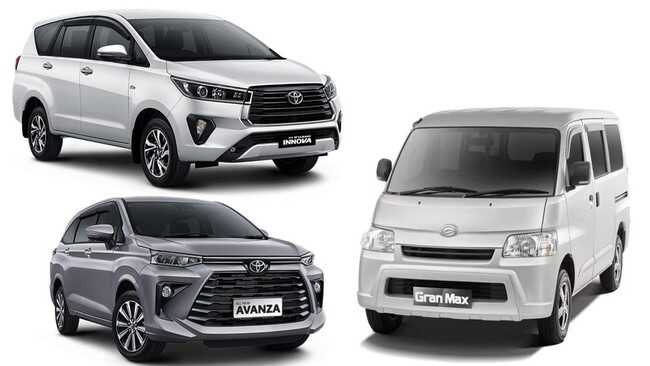
Jakarta — The competitive landscape of Indonesia’s automotive market has shifted again in early 2026. After being overtaken by electric vehicles in late 2025, the title of Indonesia’s best-selling vehicle has returned to an established player.
The legendary Toyota Kijang Innova multi-purpose vehicle (MPV) has reasserted its dominance, leaving rivals including popular city cars and affordable electric vehicles in its wake.
Vehicle distribution data from manufacturers to dealers during January 2026 reveals the strong dominance of the family MPV segment. This vehicle class has proven superior not only in volume but also confirms that Indonesian consumer preferences still lean towards large-capacity and multifunctional vehicles.
In January alone, Innova distribution exceeded 5,400 units, cementing its position at the top and surpassing electric vehicles that had led national sales figures at the end of 2025. This performance signals that the domestic automotive market has not fully switched to electrification, despite the growing trend of environmentally friendly vehicles.
Below it, Daihatsu Gran Max, the commercial vehicle segment, maintains aggressive performance. The pickup truck, which has long underpinned the small business and logistics sectors, continues to record consistently high volumes. This commercial model’s consistency demonstrates that micro-economic activity and goods distribution remain major drivers of four-wheeled vehicle demand.
Meanwhile, competition in the compact car and hatchback class appears tighter. Honda Brio, long known as the young person’s car, still manages to maintain a top-three position but no longer leads the market.
Notably, affordable electric vehicles like BYD Atto 1, which recently made headlines, must accept lower rankings, though their volumes remain significant, indicating sustained public interest in electric vehicles.
Interestingly, the top 10 best-selling vehicles remain dominated by conventionally-engined models. Electric vehicles are beginning to appear regularly on the list, but remain insufficiently strong to displace the dominance of family cars and commercial vehicles. This demonstrates that price, load capacity, and after-sales service networks remain primary considerations for Indonesian consumers.
Nationally, vehicle sales in January declined compared to December of the previous year. However, on a year-on-year basis, the market shows growth. This means that despite the slower start to the year, vehicle demand remains positive compared to the same period last year.
This condition also indicates that Indonesia’s automotive market still has room for expansion, particularly if manufacturers can balance pricing strategies, technology, and the unique needs of domestic consumers—namely spacious, fuel-efficient family vehicles that retain prestige.
The 20 best-selling vehicles in Indonesia for January 2026 based on wholesale distribution are:
Toyota Kijang Innova (Reborn and Zenix) – 5,401 units
Daihatsu Gran Max Pick Up – 4,925 units
Honda Brio (Satya and RS) – 3,672 units
BYD Atto 1 – 3,361 units
Toyota Avanza – 3,236 units
Daihatsu Sigra – 2,610 units
Mitsubishi Xpander (including Xpander Cross) – 2,594 units
Toyota Calya – 2,579 units
Toyota Rush – 2,345 units
Daihatsu Gran Max (Blind Van & Minibus) – 2,135 units
Jaecoo J5 – 1,942 units
Toyota Hilux – 1,340 units
Mitsubishi Destinator – 1,314 units
Toyota Agya – 1,175 units
Mitsubishi L300 – 1,151 units
Toyota Fortuner – 1,062 units
Daihatsu Terios – 946 units
Daihatsu Ayla – 900 units
BYD M6 – 851 units
Wuling Darion – 847 units