
Towards High Growth, Government Clears 'Blockages' in the Business World
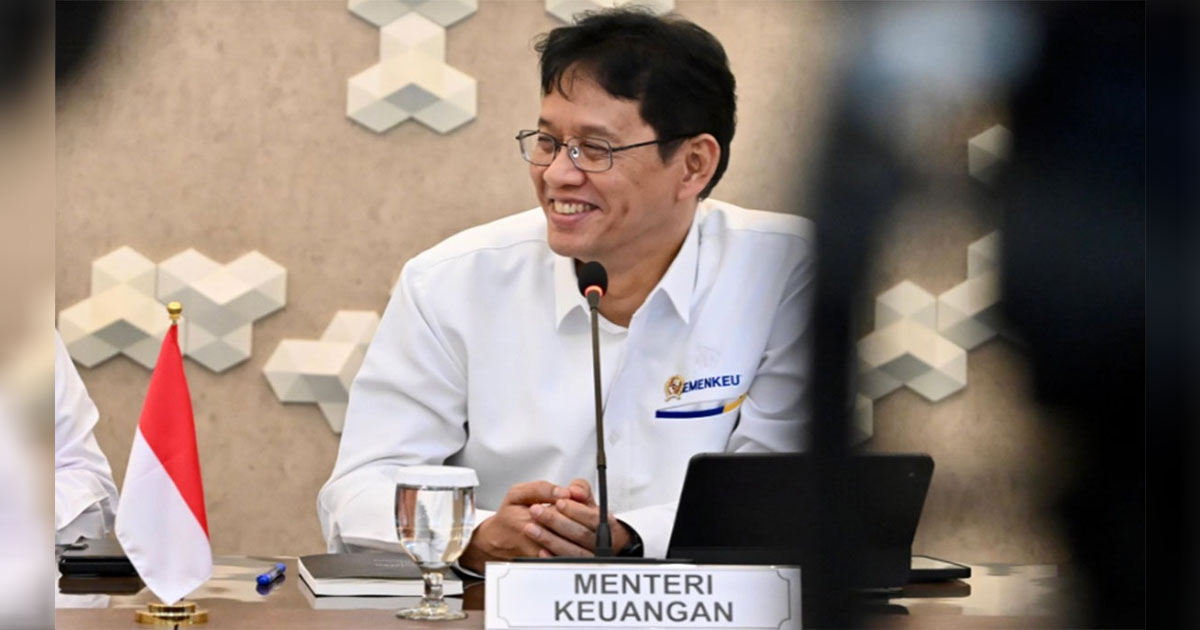
The government is increasingly aggressive in opening up space for the business world by dismantling various “blockages” that have long hindered investment and business expansion. The debottlenecking strategy is now positioned as the key to driving the national economic engine to run faster. This step was emphasised by the Minister of Finance, Purbaya Yudhi Sadewa, at a seminar titled “Untangling Economic Growth Bottlenecks: Synergy of Fiscal, Monetary, and Business World Towards Indonesia 6 Percent” on Monday (6/4/2026). In his presentation, Purbaya underlined that barriers to investment are not just about regulations on paper, but also real issues faced by business actors in the field. He mentioned two main sources of problems: suboptimal policies and operational constraints in running businesses. In response, the government has formed the Task Force for Accelerating Strategic Government Programmes (Satgas P2SP), designed as a fast channel to resolve concrete issues experienced by the business world. “This task force works across ministries/institutions and focuses on resolving cases directly through debottlenecking complaint hearings,” said Purbaya. Through this mechanism, business actors—both domestic and foreign investors—can directly submit their complaints. The government, according to Purbaya, does not merely receive reports but also follows them up immediately. “So all business actors in Indonesia, both domestic and foreign, can report to us. There are many complaints; as of 6 April, there are 112 complaints, and 52 complaints have been heard,” he explained. Furthermore, the debottlenecking approach does not stop at resolving cases one by one. The government also uses it as material for evaluation to improve policies comprehensively, especially if discrepancies between rules and field implementation are found. “If on paper it’s already good, but in the field nothing runs. So I go back to the field; if there are problems in the regulations, we fix the regulations,” Purbaya stated. Purbaya emphasised the importance of ensuring the smooth operation of the private sector, which has long been the backbone of the national economy with a contribution of around 90 percent. “So I am interested in ensuring that the private sector can conduct business well without constraints. That is one of the recipes to ensure we can grow towards 8 percent,” he added. With increasingly close coordination between fiscal and monetary policies, as well as strengthening improvements in the investment climate, the government is optimistic that the debottlenecking steps will become a new accelerator for Indonesia’s economic growth in the future.