
Towards B50: National Biodiesel Production Still Short by 2 Million Kilolitres
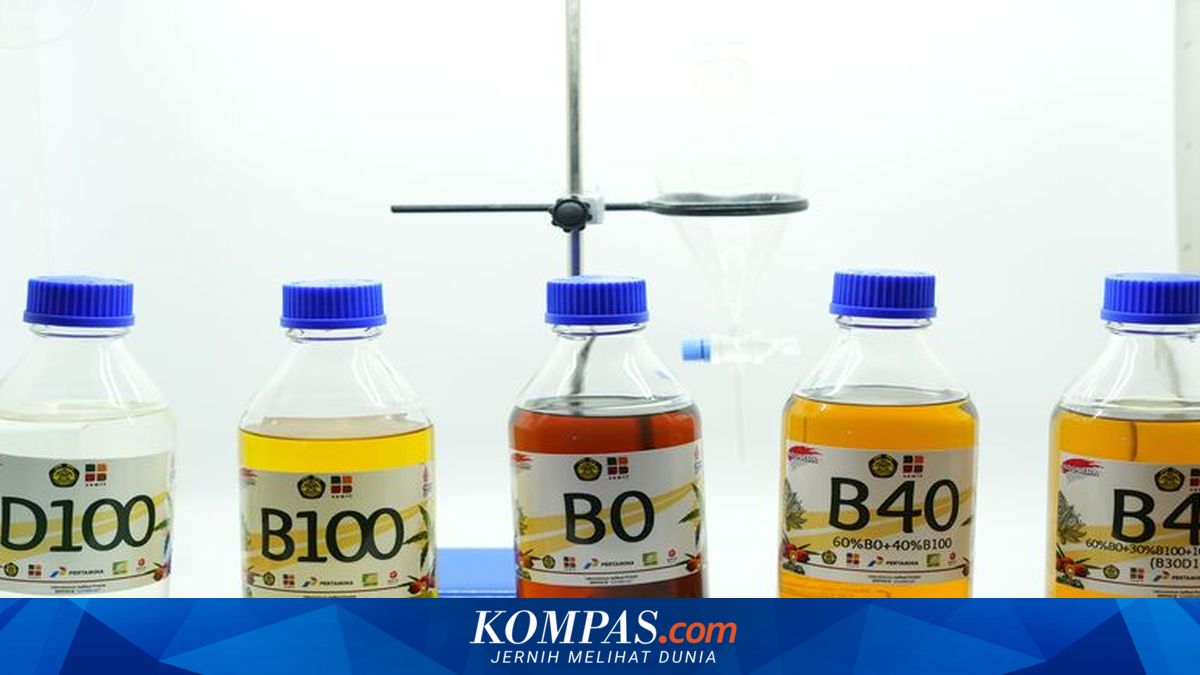
Jakarta — The government’s plan to implement a mandatory B50 mandate faces challenges from national biodiesel production capacity. The Association of Indonesian Biofuel Producers (Aprobi) estimates the industry lacks approximately 2 million kilolitres (KL) of biodiesel production capacity if the policy is fully implemented.
B50 is a fuel blend comprising 50 per cent diesel based on crude palm oil (CPO) and 50 per cent pure diesel. The policy forms part of efforts to increase the use of plant-based energy in the transport sector.
Ernest Gunawan, Secretary General of Aprobi, stated that the current installed capacity of national biodiesel production reaches approximately 22 million kilolitres. However, not all of this capacity can be utilised to its maximum potential.
“With production capacity at around 80 per cent, that is 17.6 (million kilolitres), we are still short by approximately 2 million (kilolitres),” Ernest said during a press conference in the Karet area of Jakarta on Thursday, 12 March 2026.
Ernest explained that although the installed capacity of the biodiesel industry reaches 22 million kilolitres, production realisation typically amounts to only around 80 per cent, equivalent to 17.6 million kilolitres.
On the other hand, national diesel requirements according to the Directorate General of Oil and Gas (Ditjen Migas) of the Ministry of Energy and Mineral Resources (ESDM) reach approximately 39.5 million kilolitres per year.
Under the mandatory B50 scheme, biodiesel demand is estimated to reach approximately half of diesel consumption.
“Divided by two, that is 19.75 million. This means we have frequently conveyed to the government that we need additional investment of 2 million kilolitres,” said Ernest.
To date, Aprobi states that biodiesel production still follows the mandatory B40 policy. Additionally, the industry does not use CPO allocated for food requirements.
“Please discuss this with all stakeholders so that if and when the government implements this, there will not be disputes with the food sector,” said Ernest.
Beyond production issues, the industry has also highlighted concerns regarding fuel storage infrastructure readiness, particularly regarding the separation of B40 and B50.
“From our side at Aprobi, we may be capable, but on Pertamina’s side, do they have sufficient tanks to separate between B40 and B50, as only vehicles are able to run on it,” he said.
Meanwhile, the Ministry of ESDM has conducted road tests of B50 on trucks and buses with distances up to 20,000 kilometres.
Harris Yahya, Secretary of the Directorate General of New Renewable Energy and Energy Conservation (EBTKE) of the Ministry of ESDM, stated that preliminary test results show that B50 usage actually improves vehicle performance.
“So it is very likely that mandatory implementation of B50 will take place not too far in the future,” said Harris during a webinar on Green Energy Transition Indonesia Day, Tuesday, 10 March 2026.