
Total Lunar Eclipse on 3 March: Can It Be Seen in Indonesia?
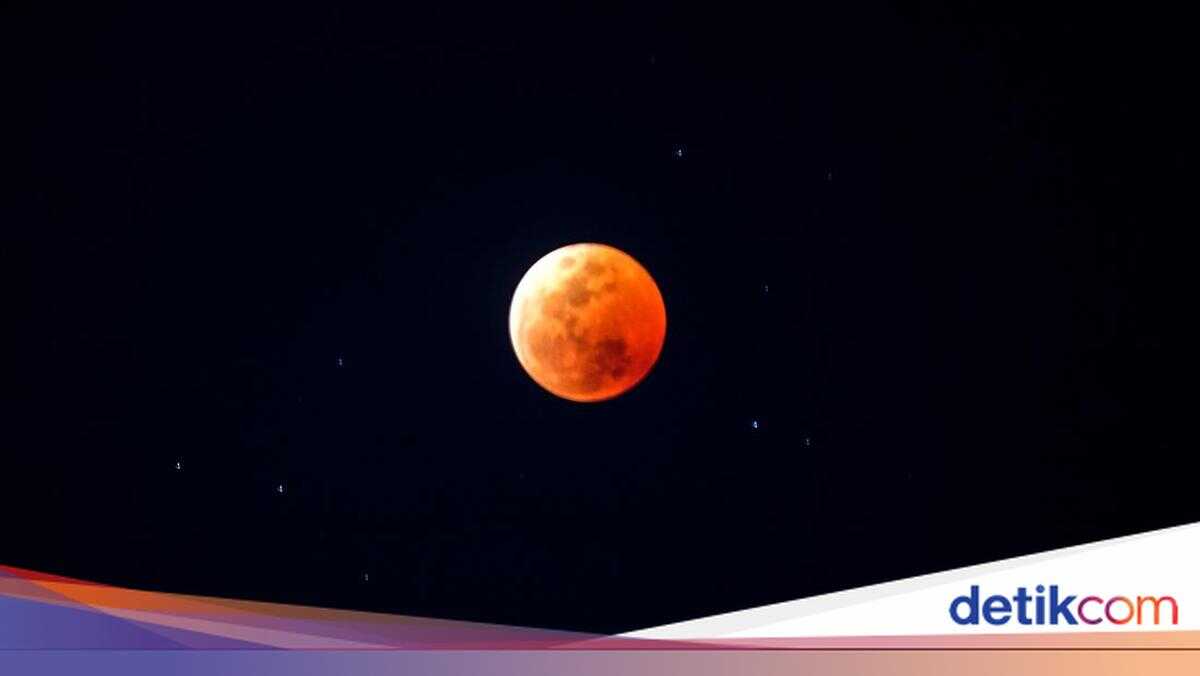
On 3 March 2026, a Total Lunar Eclipse will occur. This is a rare phenomenon in which the Moon will gradually enter Earth’s shadow (Umbra) until it reaches its peak and appears reddish in colour.
According to a post by the Indonesian Agency for Meteorology, Climatology, and Geophysics (BMKG), the Total Lunar Eclipse on 3 March 2026 can be observed from Indonesian territory. The eclipse process can be seen from Eastern America, Australia, and East Asia, Southeast Asia including Indonesia, and Central Asia.
The following are the timing phases of the Total Lunar Eclipse on 3 March 2026 in Indonesia:
Penumbral Eclipse begins (P1): 15:42:44 WIB / 16:42:44 WITA / 17:42:44 WIT
Partial Eclipse begins (U1): 16:49:46 WIB / 17:49:46 WITA / 18:49:46 WIT
Total Eclipse begins (U2): 18:03:56 WIB / 19:03:56 WITA / 20:03:56 WIT
Peak Eclipse (PEAK): 18:33:39 WIB / 19:33:39 WITA / 20:33:39 WIT
Total Eclipse ends (U3): 19:03:23 WIB / 20:03:23 WITA / 21:03:23 WIT
Partial Eclipse ends (U4): 20:17:33 WIB / 21:17:33 WITA / 22:17:33 WIT
Penumbral Eclipse ends (P4): 21:24:35 WIB / 22:24:35 WITA / 23:24:35 WIT
The duration of the eclipse from the start of penumbral eclipse (P1) to the end of penumbral eclipse (P4) is 5 hours, 41 minutes, and 51 seconds. The duration of partiality—the period from the start of partial eclipse (U1) to the end of partial eclipse (U4)—lasts 3 hours, 27 minutes, and 47 seconds. The totality phase of the Total Lunar Eclipse on 3 March 2026 will last 59 minutes and 27 seconds.
The Total Lunar Eclipse on 3 March 2026 is the 27th member of the 71 members in Saros series 133. The previous lunar eclipse associated with this one was the Total Lunar Eclipse on 21 February 2008. The forthcoming lunar eclipse associated with this eclipse will be the Total Lunar Eclipse on 13 March 2044.
How a Total Lunar Eclipse Occurs
A lunar eclipse is an event in which sunlight is blocked by Earth, preventing all of it from reaching the Moon. This phenomenon, which is one consequence of the dynamic movement of the Sun, Earth, and Moon positions, only occurs during the full moon phase and can be predicted in advance.
A total lunar eclipse occurs when the Sun, Earth, and Moon are aligned. This causes the Moon to enter Earth’s core shadow (umbra). When the peak of the eclipse occurs, the Moon will appear red if the sky is clear.
The red colour of the Moon is caused by Rayleigh scattering in Earth’s atmosphere. Sunlight passing through Earth’s atmosphere becomes scattered, so light with short wavelengths such as blue scatters more widely, whilst light with longer wavelengths such as red passes through and reaches the Moon’s surface, making the Moon appear red.