
Total Lunar Eclipse on 3 March 2026 to Feature Blood Moon: What You Need to Know
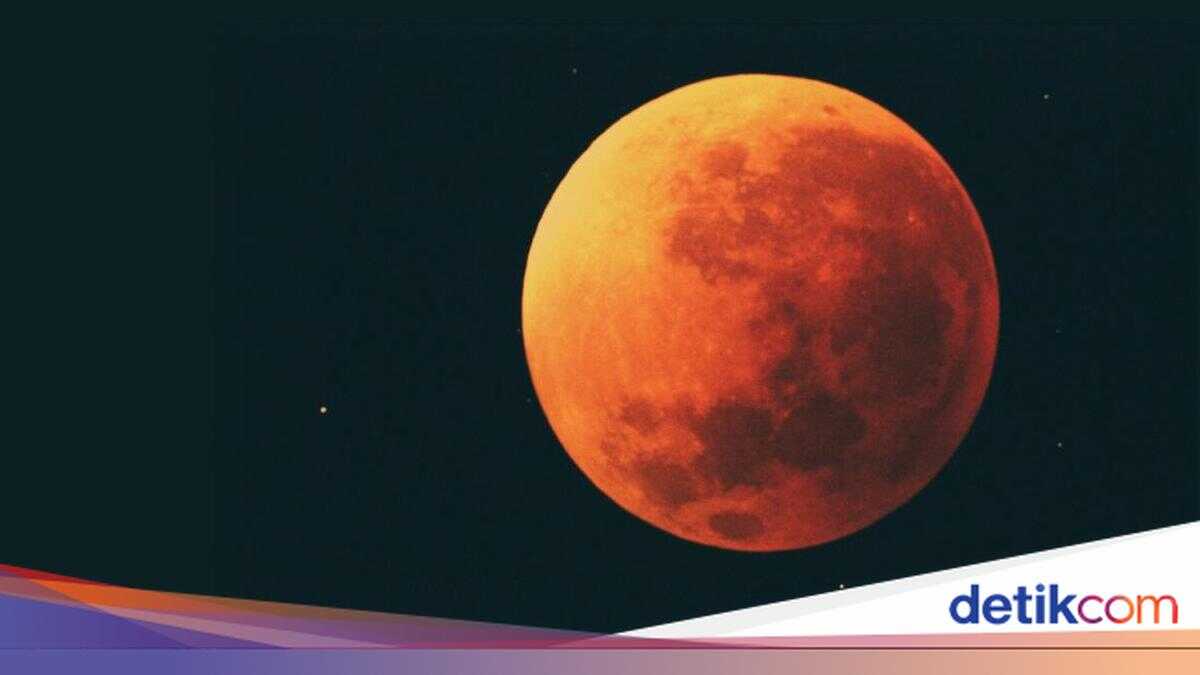
A total lunar eclipse will occur on 3 March 2026 and can be observed from Indonesia. During this event, a blood moon will also occur, a phenomenon that frequently captures the attention of the public and astronomy enthusiasts alike.
What is meant by blood moon and why is it called that during the total lunar eclipse on 3 March 2026?
What Is a Total Lunar Eclipse?
According to the Indonesian Meteorological, Climatological and Geophysical Agency (BMKG), a total lunar eclipse occurs when the Sun, Earth and Moon align in a straight line. Under these conditions, the Moon enters completely into Earth’s umbral shadow.
When positioned within the umbra, sunlight no longer directly illuminates the Moon’s surface. The light reaching the Moon is light that has passed through Earth’s atmosphere. This is what causes the Moon’s appearance to change during the totality phase.
A total lunar eclipse can only occur during a full moon phase. However, not every full moon experiences an eclipse because a truly aligned position between the three celestial bodies is required.
What Is a Blood Moon?
The term blood moon refers to the Moon’s reddish appearance during a total lunar eclipse. According to BMKG’s explanation, the reddish colour emerges due to Rayleigh scattering in Earth’s atmosphere.
Sunlight with short wavelengths such as blue and violet scatter first when passing through the atmosphere. Meanwhile, red light continues through and is refracted towards the Moon, causing its surface to appear reddish from Earth.
A similar explanation comes from astronomy website Space, which notes that blood moon is not a separate phenomenon from a total lunar eclipse. The term is used to describe the red colour clearly visible during the totality phase.
Timing of the Eclipse and Blood Moon on 3 March
Based on BMKG’s official press release, the total lunar eclipse on Tuesday, 3 March 2026 can be observed from all Indonesian regions with time differences according to each region’s time zone.
The total eclipse begins at 18:03 WIB, 19:03 WITA and 20:03 WIT. The eclipse peaks at 18:33 WIB, 19:33 WITA and 20:33 WIT. The total eclipse ends at 19:03 WIB, 20:03 WITA and 21:03 WIT.
BMKG notes that the entire eclipse sequence lasts more than five hours from the initial phase through to the end. The public is advised to monitor weather information through BMKG’s official channels in order to observe this phenomenon optimally.