
Total Lunar Eclipse on 3 March 2026: Itera Opens Public Observation, Schedule and Locations
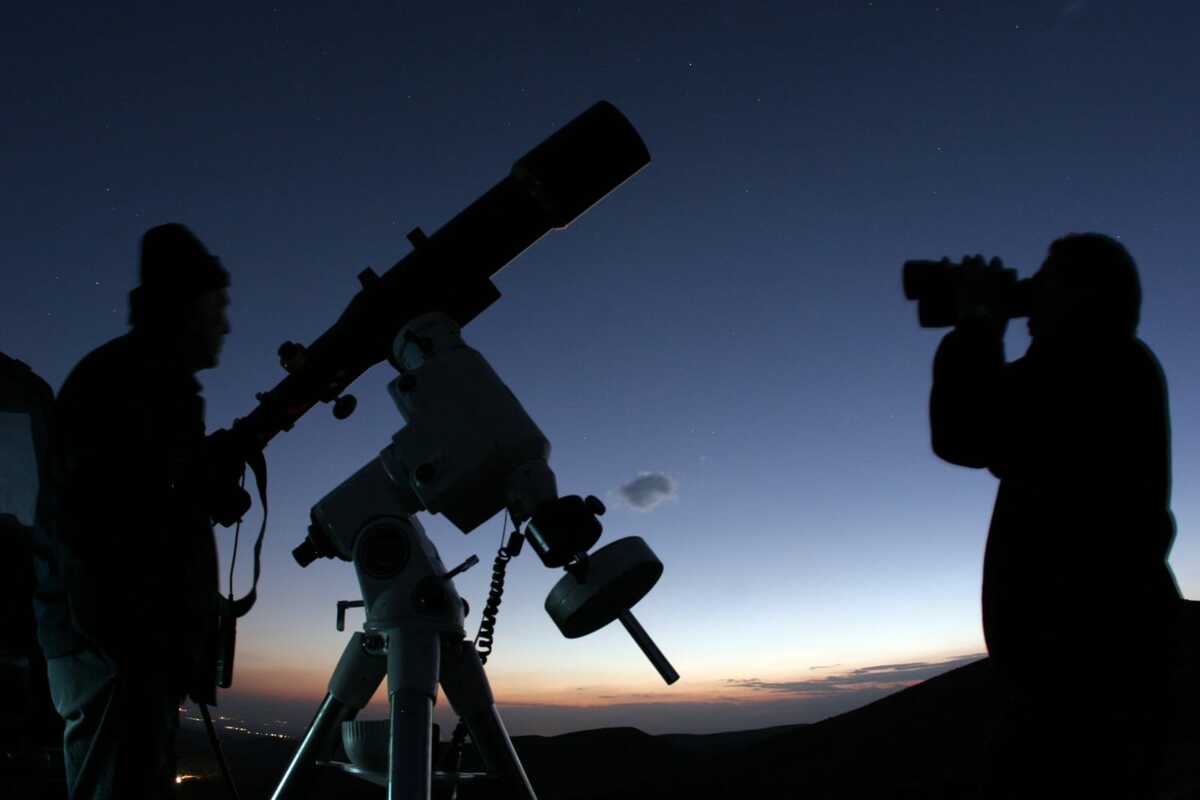
The total lunar eclipse phenomenon on 3 March 2026 is predicted to be one of the most significant astronomical events of the year. The Itera Astronomical Observatory (OAIL) is opening viewing sessions for the total lunar eclipse to the general public and science communities in Lampung.
The total lunar eclipse will occur on Tuesday, 3 March 2026, when the Earth is positioned directly between the Sun and the Moon. This alignment causes the Earth’s shadow to completely cover the Moon’s surface.
A total lunar eclipse occurs when the entire lunar disc enters the umbra, or the Earth’s core shadow. During the peak phase, the Moon does not appear pitch black, but instead turns a copper-red colour. This phenomenon is widely known as a blood moon.
According to NASA, the totality phase of the eclipse is estimated to last approximately 58 minutes, as part of an eclipse sequence that includes penumbral and partial phases with a total duration of approximately 5 hours and 38 minutes.
The entire process can be observed without special equipment. However, using telescopes or binoculars will help to see the details of the Moon’s surface more clearly.
Based on international astronomy reports, this total lunar eclipse can be observed from East Asia and Australia, and throughout the night across the Pacific region, whilst European and African regions will not be able to observe it directly.
Due to its large scale, many astronomy communities worldwide are scheduling joint observations, scientific discussions, and public education sessions.
This phenomenon is also referred to as one of the last significant total eclipses before the next cycle approaches the end of 2028, so observation interest this year is quite high.
The Itera Astronomical Observatory, under the Institut Teknologi Sumatera, has announced plans for open observation with the main location at the General Lecture Building (GKU) 2. The OAIL team will use a number of telescopes for documentation and astronomical education.
This observation is open to the public with limited capacity and is focused on documenting eclipse phases and astronomical education.
Unlike a solar eclipse, a total lunar eclipse is safe to view with the naked eye without special glasses.
During the totality phase, the Moon’s surface will appear red or copper-coloured due to the refraction of sunlight by the Earth’s atmosphere. Red light is transmitted and falls on the Moon’s surface, whilst blue light is scattered into space.
Observers in Lampung who attend the session at Itera can witness the eclipse stages sequentially: the penumbral phase, the partial phase, and finally the totality phase. This moment provides a direct illustration of the dynamics of the Earth–Moon–Sun system in a straight line.
Overall, the duration of the eclipse from the beginning of the penumbral phase to the end will last 5 hours, 41 minutes and 51 seconds. The totality phase will occur during the night in East Asia and Australia and throughout the night across the Pacific region.
Although partially obstructed from some regions, the Moon will not become pitch black. The Earth’s atmosphere refracts red sunlight onto the Moon’s surface, making it appear orange to dark red.
On 3 March, the total lunar eclipse can be seen at night in East Asia and Australia and throughout the night across the Pacific region.
2026 will bring supermoons, solar and lunar eclipses, meteor showers, and a planetary parade that should not be missed.