
Top! Zulhas Receives Indonesia Food Transformation Award
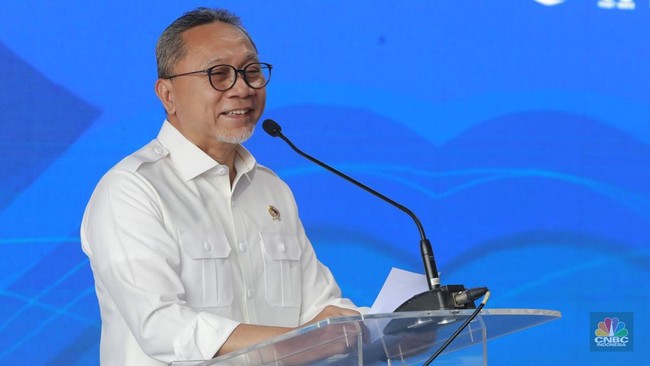
Jakarta, CNBC Indonesia - Coordinating Minister for Food Affairs Zulkifli Hasan (Zulhas) has successfully received the Indonesia Food Transformation Award at the Food Summit 2026 CNBC Indonesia event held by CNBC Indonesia in Jakarta on Monday (27/4/2026). The award was given as a form of appreciation for Zulkifli Hasan’s commitment to realising a more self-reliant and sustainable food future for Indonesia. This achievement is inseparable from Zulhas’s role in accelerating various national strategic programmes, one of which is to achieve national food self-sufficiency. For context, the government under Zulhas’s leadership has prepared a substantial budget of Rp139.4 trillion for 2025, allocated to various relevant ministries and state-owned enterprises, including the agriculture, maritime, public works, and fertiliser sectors. At the same time, the government has also allocated Rp16.259 trillion as Village Funds to support national food security. Zulhas has also promoted the protein self-sufficiency programme through the construction of Red White Fisherman Villages (KNMP). In this context, the government is targeting the development of around 1,000 fisherman villages across Indonesia equipped with ice factories and cold storage facilities. This step is taken to strengthen the national fish supply, maintain price stability, and support raw material needs for the Free Nutritious Meals (MBG) programme. Furthermore, the MBG programme is targeted as a driver of the national food economy. When fully operational, the daily needs are estimated to reach 82.9 million eggs, an equivalent amount for chicken meat, vegetables, fruits, and fresh fish. The government also ensures that farmers’ harvests such as rice, corn, and cassava are absorbed through direct purchase policies. To strengthen the village economy, the government has established Red White Village Cooperatives (Kopdes) which act as off-takers or absorbers of village production results, from agriculture, fisheries to livestock. The absorbed products are then supplied to the Nutrition Fulfilment Service Units (SPPG) as raw materials for the MBG programme. Efforts to accelerate upstream sector reforms have also been undertaken by Zulhas by simplifying the distribution process of subsidised fertiliser through a new Presidential Regulation (Perpres) so that fertiliser reaches farmers more quickly. In addition, the construction of irrigation channels has been accelerated so that farmers no longer rely on rainfall and can increase planting intensity in various regions. Zulhas’s contribution to maintaining food price stability is also significant, namely by strengthening the Government Food Reserve (CPP) through cross-ministerial and institutional coordination. This step is combined with the Affordable Food Movement (GPM) programme and affordable market operations that distribute rice, chillies, sugar, onions, meat, eggs, cooking oil, and other essentials. The government has also distributed rice and cooking oil food aid to more than 33 million beneficiary families in February-March 2026. Not only national policies, Zulhas has also encouraged agricultural modernisation through assistance for agricultural tools and machines (alsintan). In Kebumen, for example, the government has distributed 136 units of alsintan to 56 farmer groups in 19 sub-districts, ranging from hand tractors, water pumps, shredding machines, to four-wheeled tractors. Through this series of policies, Zulkifli Hasan positions food security not merely as a production issue, but as a major national agenda that connects farmers, fishermen, village cooperatives, logistics industries, to meeting community nutrition needs.