
Top! Muslim Nuclear Giant 'Steps In' to Mediate US-Iran Conflict, Proposes This
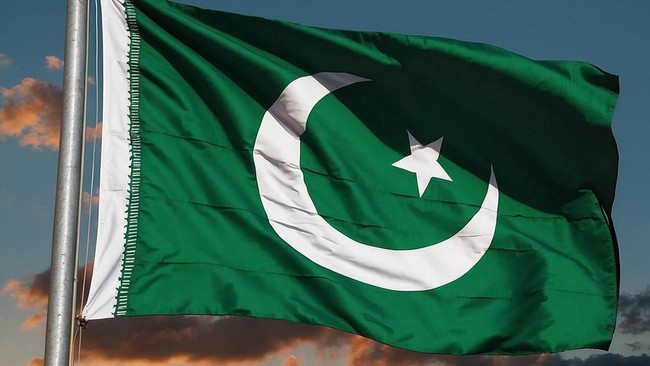
Jakarta, CNBC Indonesia - Pakistan has officially proposed a two-phase plan to end the war between the United States (US)-Israel and Iran, as well as to reopen the crucial Strait of Hormuz for global energy supplies. Citing an Al Jazeera report on Monday (06/04/2026), the framework is currently being deeply considered by both conflicting parties.
Iran’s Foreign Ministry spokesman, Esmaeil Baghaei, acknowledged on Monday the diplomatic efforts from Pakistan, which has shared the plan with Iran and the United States to end the hostilities. Nevertheless, Baghaei added that Iran remains focused on its own security issues amid recent attacks launched by the US and Israeli militaries.
A source revealed that Pakistan’s Army Chief, Field Marshal Asim Munir, has been in overnight contact with US Vice President JD Vance, Special Envoy Steve Witkoff, and Iranian Foreign Minister Abbas Araghchi. The source stated that all elements need to be agreed upon today, with an initial understanding to be drafted as a memorandum of understanding finalised electronically through Pakistan as the sole communication channel in the talks.
Based on the submitted proposal, a ceasefire will be immediately implemented, followed by the reopening of the Strait of Hormuz, while a period of 15 to 20 days will be given to resolve broader issues. The agreement, temporarily dubbed the “Islamabad Accord,” will include a regional framework for the strait, with the final face-to-face talks scheduled to be held in Pakistan’s capital.
The final agreement is expected to include Iran’s commitment not to pursue nuclear weapons possession. In return, Tehran will receive economic sanction relief and the release of their assets that have been frozen by Western parties.
No Opening of Hormuz
Tehran responded to the proposal by stating that they will not reopen the strategic strait merely as part of a temporary ceasefire. A senior Iranian official said on Monday that they will not accept deadlines while reviewing the proposal, emphasising that Washington is also seen as lacking readiness for a permanent ceasefire.
To date, the United States has not provided an official response to the plan proposed by Pakistan. Al Jazeera correspondent Osama Bin Javaid reported that Pakistani officials describe the current situation as highly panicked diplomacy due to the significant psychological barriers among the involved parties.
“The issues they face, as stated by one official, are essentially like handling a schoolyard fight. There are egos to manage, and an ocean of distrust to bridge,” said Javaid.
Javaid mentioned that Pakistan is speaking with Iranian clerics, diplomats, and military commanders, but the level of distrust remains very high. He emphasised that the Iranian Foreign Ministry spokesman has repeatedly mentioned attacks from the US and Israel, raising concerns about security guarantees for their leaders if an agreement is truly reached.
“You hear the Iranian Foreign Ministry spokesman mentioning that they have been attacked multiple times by the US and Israel. And then, if there is some sort of relationship restoration, if there is some sort of agreement, what guarantees are there that their leaders won’t be targeted?” said Javaid.
US 15-Point Plan Deemed Unreasonable
Regarding the offer from the opposing side, Esmaeil Baghaei asserted that Tehran will never accept the 15-point plan submitted by the United States last month. Baghaei stated that Tehran has formulated its own demands amid the existing proposals but will only reveal them at the appropriate time.
Baghaei underlined that Iran will not bow to international pressure that corners their position. He described the proposal submitted through third parties as highly ambitious yet diplomatically unreasonable.
“A few days ago, they submitted a proposal through intermediaries, and the US 15-point plan was reflected through Pakistan and some other friendly countries. Such proposals are very ambitious, unusual, and illogical,” said Baghaei.
Furthermore, Baghaei emphasised that Iran has its own framework for determining the future of its sovereignty. He also rejected the notion that Iran’s engagement with mediators signals weakness in their bargaining position.
“Based on our own interests, based on our own considerations, we have codified a set of demands that we have and still have,” said Baghaei.
Pakistan’s latest diplomatic push comes amid escalating hostilities that have raised global concerns over disruptions to shipping through the Strait of Hormuz. This waterway is a critical artery for global fuel supplies, where more than 20 percent of the world’s oil and gas passes through, and it is currently under a de facto Iranian blockade.
US President Donald Trump, in a social media post on Sunday, issued strong threats to Tehran if they do not immediately open the strait. Trump threatened to bring destruction to Iran if they do not reach an agreement before the Tuesday deadline expires.
Since the war began on 28 February, Iranian authorities have reported more than 2,000 people killed in their territory. At the same time, Israel has also invaded southern Lebanon and attacked