
Top 10 Central Banks by Gold Purchases: China Snaps Up 350 Tonnes
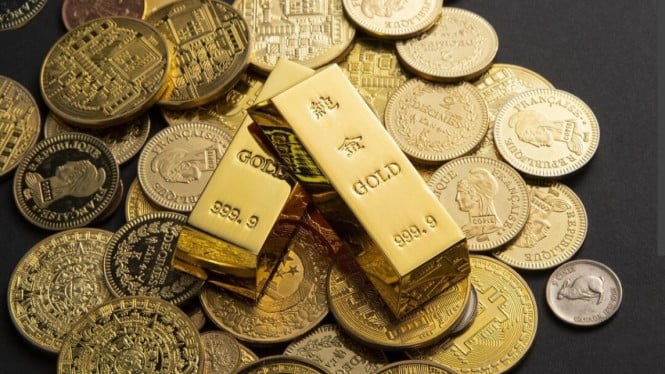
Jakarta — Gold has become the star investment asset in recent years, with the safe-haven commodity recording gains of more than 230 per cent since 2020.
The significant price increase has not only driven retail investor interest in collecting the precious yellow metal. Demand for gold has also come from central banks across various countries buying up substantial quantities.
Beyond its role as a hedge, gold is also regarded as a strategic asset amid geopolitical tensions, currency volatility, and efforts to diversify foreign exchange reserves away from the US dollar. For some central banks, gold serves as a politically neutral anchor amid growing fragmentation of the global financial system.
World Gold Council data shows that the top 15 countries collectively added nearly 2,000 tonnes of gold to their reserves over the past five years. This wave of accumulation ranks among the largest in modern history.
According to Visual Capitalist, the following are the 10 central banks with the highest gold purchases from 2020 to 2025:
1. China China recorded the largest addition at more than 350 tonnes. This move aligns with Beijing’s strategy to diversify its foreign exchange reserves away from the US dollar and reduce dependence on the Western financial system.
2. Poland Poland aggressively increased its gold holdings by 314.6 tonnes to strengthen long-term financial stability.
3. Turkey Turkey’s central bank has continued adding gold as a buffer against domestic currency pressures, purchasing 251.8 tonnes over the past five years.
4. India India bolstered its gold reserves by 245.3 tonnes to maintain external resilience amid global dynamics.
5. Brazil Representing the Americas, Brazil purchased 105.1 tonnes of gold as part of its reserve asset diversification strategy.
6. Azerbaijan: 83.6 tonnes
7. Japan: 80.8 tonnes
8. Thailand: 80.6 tonnes
9. Hungary: 78.5 tonnes
10. Singapore: 77.3 tonnes
Some countries actually reduced their gold reserves during the same period, including the Philippines and Kazakhstan. These differing strategies demonstrate that gold is now viewed as a flexible policy instrument.
The gold accumulation undertaken by these central banks has not only strengthened foreign exchange reserves but also significantly increased national asset values. Should global uncertainty persist, the trend of central bank gold purchases has the potential to continue in the years ahead.