
Toll Roads Become a Pillar of Tourism Access and MSMEs in DIY
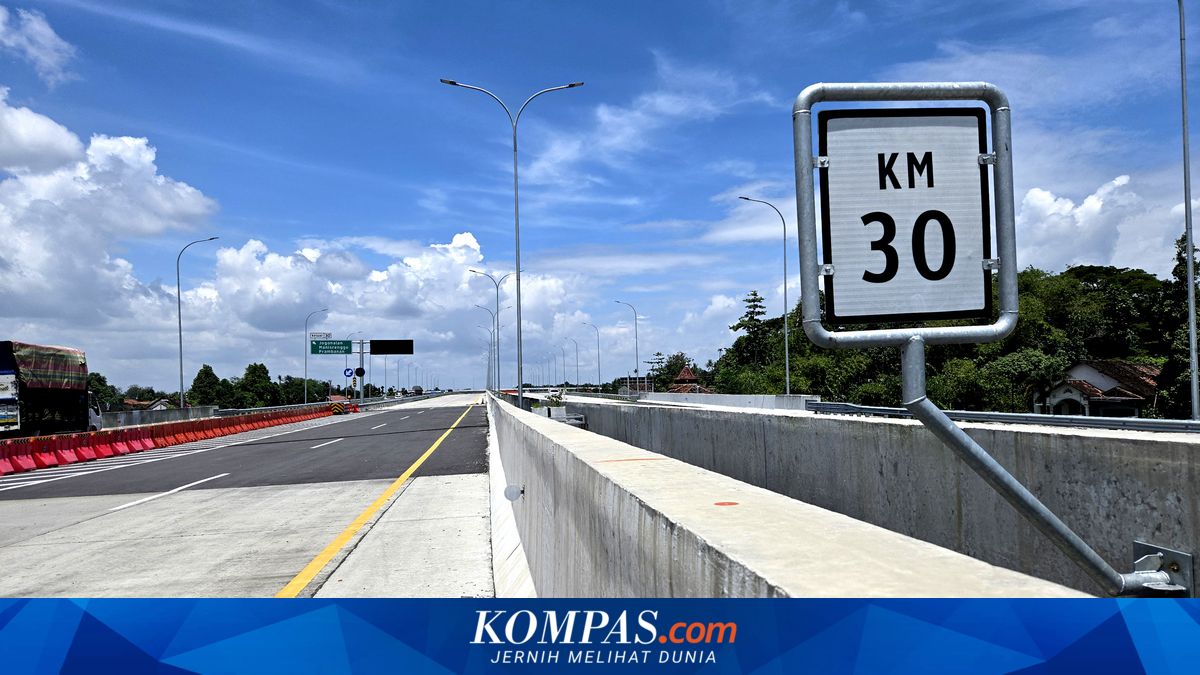
The development of toll road networks in the Yogyakarta and Central Java regions is seen as a key support for connectivity that underpins the tourism sector and local economic activity, including micro, small and medium enterprises (MSMEs). “Yogyakarta and surrounding areas have strategic positions, so toll road connectivity is an important factor in supporting mobility and the development of tourist destinations,” said Rivan A. Purwantono, President Director of PT Jasa Marga (Persero) Tbk, during a Working Visit of the Commission VI of the Indonesian House of Representatives in Yogyakarta on Thursday, 21 May 2026, cited on Saturday, 23 May 2026. Rivan explained that the connectivity supporting the tourism sector in Central Java shows a positive trend in Q1-2026. Revenue on several Jasa Marga Group toll roads grew year-on-year, including the Semarang-Batang Toll Road up 16.59 percent, the Solo-Ngawi Toll Road up 23.52 percent, and the Jogja-Solo Toll Road up 18.91 percent. He said the improvement reflects rising mobility and economic and tourism activities in the Joglosemar area (Jogja-Solo-Semarang). During long holidays and Eid al-Fitr 2026, Jasa Marga also optimised functional lanes on several toll road segments. The utilisation of these lanes includes the Jogja-Solo Toll Road of 30.15 kilometres which has been operational with tariffs on the Kartasura-Prambanan segment, and functional lanes of 12.23 kilometres on the Prambanan-Purwomartani. Additionally, the Jogja-Bawen Toll Road Section 6 of 4.85 kilometres in the Ambarawa-Bawen area was opened functionally. Rivan said these optimised lanes helped absorb daily traffic volumes up to 80 percent compared to normal conditions. In developing the Joglosemar area, Jasa Marga continues to accelerate toll road project completion. “Construction of toll road projects continues to take into account local characteristics by adjusting construction designs around the Yogyakarta ring road to align with spatial planning and the local wisdom of the local community,” said Rivan. In the same event, Deputy Chairman of DPR RI Commission VI Eko Hendro Purnomo said Yogyakarta has great potential in the tourism, economy, and MSME sectors. He said integrated connectivity across transport modes is essential to maximise that potential. “Yogyakarta is a truly special city; that’s why it is called Daerah Istimewa Yogyakarta (Special Region of Yogyakarta). Tourism must be fully supported. We want all tourism to be fully integrated,” he said. He added that the challenge today is to connect all transport nodes, from air routes, rail, DAMRI fleets, to toll road management. “If all transport nodes are not integrated, the great potential of the infrastructure that has been built by state-owned enterprises will not be felt by the public,” he said.