
Tokocrypto Attributes Decline in Indonesian Crypto Transactions to Global Pressures
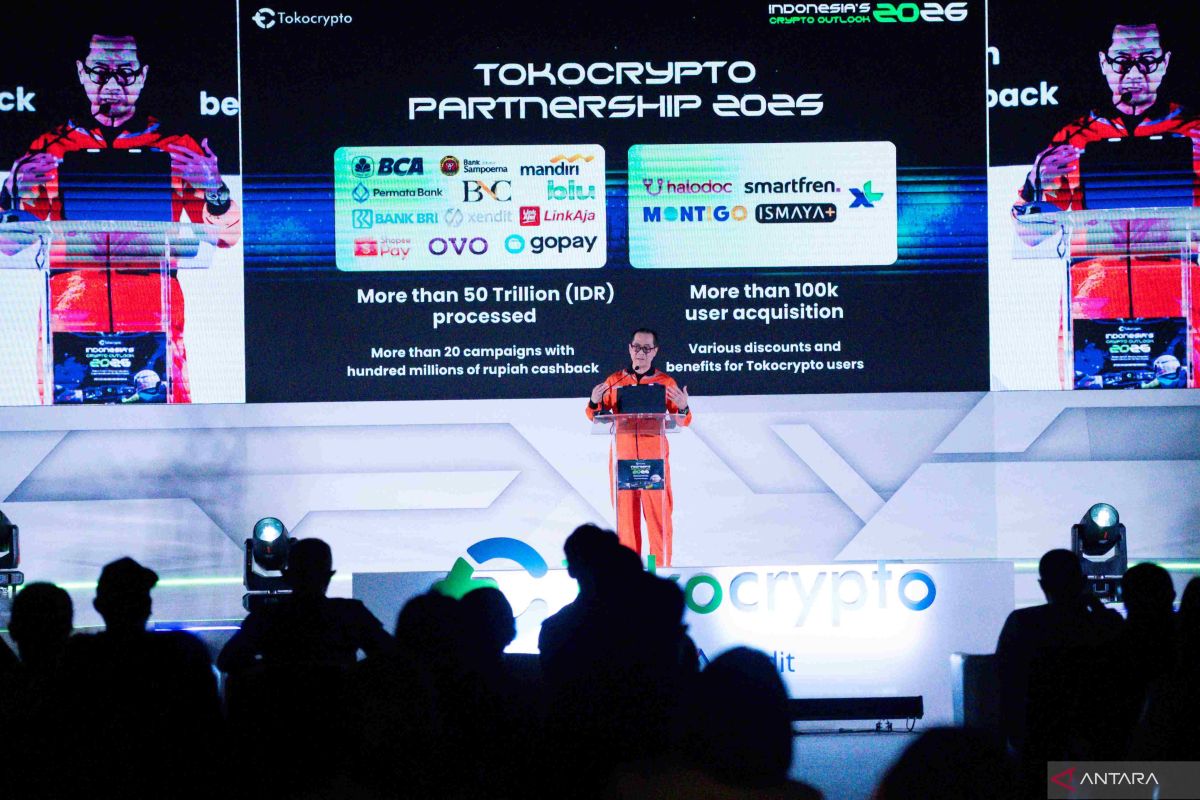
Jakarta (ANTARA) - Tokocrypto’s Chief Executive Officer, Calvin Kizana, assesses that the decline in cryptocurrency trading activity in Indonesia cannot be separated from ongoing global pressures affecting risk assets markets.
“We view the slowdown in cryptocurrency transactions in March 2026 as more influenced by the rising global risk-off sentiment. Investors are currently more cautious due to high volatility, increasing geopolitical uncertainty, and the direction of The Fed’s interest rate policies remaining a primary market concern,” Calvin stated in a press release in Jakarta on Monday.
According to Calvin, this situation does not necessarily indicate a loss of investor interest in crypto assets. Instead, many market participants remain in the crypto ecosystem but opt for more defensive strategies.
“Investors are not fully exiting the crypto market. What is happening is a shift in strategy. Some investors are reducing exposure to more speculative assets and choosing more liquid or stable assets, such as Bitcoin, Ethereum, stablecoins, and gold-backed assets. This is better interpreted as a wait-and-see phase,” he added.
The statement responds to the Financial Services Authority (OJK)’s view that Indonesia’s crypto assets market is facing pressures.
In the April 2026 Monthly Commissioners’ Meeting held on Tuesday (5/5), the Executive Head of Financial Sector Technology Innovation Supervision, Digital Financial Assets, and Crypto Assets at OJK, Adi Budiarso, explained that the transaction decline is more due to market normalisation following the post-Bitcoin halving price surge in 2024.
“This is certainly a high base effect, not a fundamental weakening, but it aligns with global conditions, with the crypto market cap dropping around 45 percent from its all-time high of $4.2 trillion in October 2025 to about $2.3 trillion in March 2026,” Adi said.
OJK data shows that Indonesian crypto transactions in March 2026 reached Rp28.04 trillion, comprising Rp22.24 trillion in the spot market and Rp5.8 trillion in derivatives.
The value of domestic crypto assets trading in March 2026 also recorded a 4.7 percent monthly decline from Rp24.33 trillion in February 2026 to Rp22.24 trillion.
Meanwhile, the total value of crypto assets trading transactions from January to March 2026 reached Rp75.83 trillion.
OJK also recorded that the number of Indonesian crypto consumers as of March 2026 has reached 21.37 million accounts, a slight increase compared to the previous month.
This indicates that confidence in the digital assets industry remains intact despite the market being in a consolidation phase.
“There is still public confidence that the crypto market can provide positive impacts on their investment portfolios. The increase in investors amid the consolidation phase shows that many people still see crypto as an opportunity to gain positive returns from trading activities, which is ultimately expected to help improve economic conditions and their quality of life,” Calvin said.
He assesses that the prospects for crypto assets trading in Q2 2026 have the potential to improve gradually, especially after Bitcoin broke through the psychological level of $80,000 in early May 2026.
“Bitcoin remains the primary barometer of crypto market sentiment. When BTC can hold above key levels like the $78,000-$80,000 range, investor confidence usually starts to improve. However, this recovery is likely to remain selective as the market continues to monitor macro factors, inflation, geopolitics, and global monetary policies,” Calvin explained.
In addition to the recovery in major asset prices, Tokocrypto sees several catalysts that could drive renewed crypto trading activity in Indonesia. These factors include clarity on The Fed’s interest rate direction, easing geopolitical tensions, increasing global liquidity, and more competitive crypto tax policies.
Calvin emphasised that adjustments to tax policies could be an important factor in strengthening the national crypto ecosystem.
“More competitive taxes will help increase the attractiveness of transactions through official domestic exchanges. This is important to ensure trading activities remain on regulator-supervised platforms, thereby maintaining investor protection and market transparency,” he said.
From a regulatory perspective, OJK continues to strengthen oversight of the crypto assets industry. Standards such as Know Your Customer (KYC), Know Your Transaction (KYT), Customer Due Diligence (CDD), and Enhanced Due Diligence (EDD) are implemented to safeguard the ecosystem.
Additionally, the crypto assets whitelist system limits the assets that can be traded in Indonesia to minimise risks for investors.
Therefore, Calvin advises retail investors to remain disciplined in facing the still fluctuating market conditions.
“In declining market conditions, the main focus for investors should not be chasing quick profits, but preserving capital and managing risks. Avoid emotional decisions, limit leverage usage, understand assets before transacting, and use official platforms supervised by regulators,” he concluded.