
Tobacco Industry Under Pressure as Farmers and Factory Workers Face Crisis
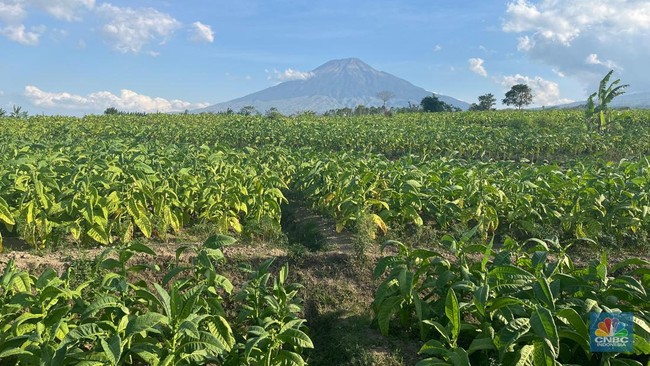
Indonesia’s Tobacco Manufactured Products (IHT) industry is facing significant challenges, primarily from economic pressures and regulatory constraints, including proposed restrictions on tar and nicotine content and standardised packaging. These policies are viewed as increasingly burdensome and threaten the sustainability of the entire IHT ecosystem.
The implementation of derivative regulations from Government Regulation (PP) No. 28 of 2024, which implements Law Number 17 of 2023 on Health, threatens the continuation of the IHT ecosystem. Several provisions stand to make operations within IHT increasingly difficult. One key concern is the establishment of maximum limits on nicotine and tar content. Currently, the Coordinating Ministry for Maritime Affairs and Investment is drafting regulations on Nicotine and Tar Content Restrictions, referring to international standards with extremely low thresholds.
According to Agus Parmuji, chairman of the Association of Indonesian Tobacco Farmers (DPN APTI), tobacco farmers will be significantly affected. Notably, nicotine and tar content levels depend on the geographical specifications of where tobacco is cultivated, meaning such content cannot be standardised in the same way as tobacco farming in other countries.
These requirements will be particularly difficult to meet, especially for the kretek cigarette industry, which accounts for approximately 97% of total national cigarette production. This is because kretek manufacturers use locally sourced tobacco and clove leaves, which naturally contain higher levels of nicotine and tar compared to imported tobacco.
“Indonesia possesses quality, and that quality is inseparable from tar and nicotine. This geographical specificity encompasses seeds, soil, and topography, and cannot be generalised like other crops. When the government creates such regulations, it essentially kills domestic cultivation, national agriculture, and Indonesia’s diversity,” Agus stated.
However, tobacco farmers currently face economic headwinds, including declining demand for tobacco, unsold harvests, falling tobacco prices, farm incomes insufficient to cover production costs, an influx of imported tobacco, and threats of business closure.
Meanwhile, I Ketut Budhyman Mudara, secretary general of the Central Board of the Indonesian Clove Farmers Association (APCI), argues that if tar content is restricted, virtually any cigarette would be difficult to manufacture in Indonesia. This is particularly problematic because Indonesian cigarettes typically contain cloves, which increase tar content.
He expressed concern that if the regulation is enforced, Indonesian domestic tobacco and cloves could no longer be used. Yet clove is an endemic plant and not an imported one.
“If this is implemented, meeting tar standards would necessitate imports. Meanwhile, our tobacco farmer colleagues—where would their tobacco go? It would not meet the requirements,” he stated.
Another significant concern for IHT stakeholders is the regulation of prohibited additives in tobacco products. The Ministry of Health is currently drafting a ministerial decree on prohibited additives in tobacco and electronic cigarette products. The proposed regulation prohibits the use of nearly all additives, including food-grade materials.
To date, additives have been used to enhance flavour and product characteristics, including cooling agents such as menthol, sugar, and other substances. If this prohibition is implemented, the legal cigarette industry would be unable to comply with the new requirements, potentially halting operations.
Benny Wachjudi, chairman of the Association of Indonesian White Cigarette Producers (GAPRI), contends that if this regulation is enforced, domestically produced tobacco would not be absorbed by the market. Farmers would be forced to sell their tobacco to illegal cigarette producers, who typically disregard quality standards.
He noted that despite facing numerous challenges and negative publicity, IHT continues to provide significant positive impacts through employment provision and tax revenue contribution to the government.
“If we say it plainly, smokers will continue smoking, but they will smoke illegal or imported cigarettes. The domestic industry will be finished. That’s essentially what will happen,” he explained.
Henry Najoan, chairman of the Association of Indonesian White Cigarette Factories (GAPPRI), stated that the government has previously provided opportunities for dialogue with IHT stakeholders, though these have not been entirely effective.
Henry believes the government is now divided into two camps regarding IHT products. One camp prioritises health alignment with World Health Organization (WHO) standards, whilst the other camp supports industry protection and state revenue generation.
“Therefore, we believe the President must exercise wisdom in this matter to determine the priority: health or industry and state revenue, including employment. These should be balanced,” he said.
Currently, Henry observes that the government’s pro-health camp appears to be under pressure from global entities, particularly the WHO and the Framework Convention on Tobacco Control (FCTC). They are being pressured to adopt FCTC regulations that are not suitable for Indonesia’s context.
“Indonesia has its own distinctive character regarding kretek cigarettes. We call for the cancellation of regulations concerning nicotine and tar restrictions, additives bans, and plain packaging,” he concluded.
The IHT sector has historically made substantial contributions to the national economy. In 2024, for example, government revenue from IHT excise tax reached Rp 216.9 trillion, and the sector employed 5.9 million workers. Another challenge is the planned standardisation of packaging (plain packaging), which is viewed as eliminating brand identity previously registered with the Directorate.