
Tobacco Industry Players Urge Finance Minister to Implement Special Excise Tax Rate for Machine-Rolled Cigarettes
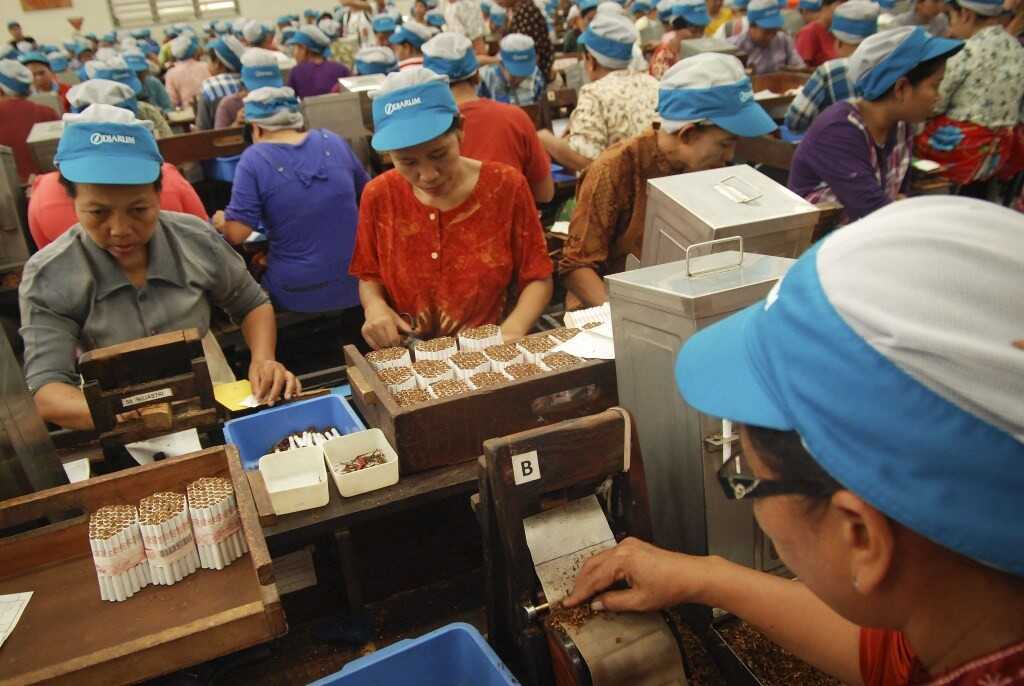
Tobacco industry operators are pushing Finance Minister Purbaya Yudhi Sadewa to promptly implement a differentiated excise tax scheme that is more affordable for tobacco products, particularly machine-rolled cigarettes (SKM). Fathor Rozi, owner of PR Cahaya Pro, argues that the cigarette industry in Pamekasan makes a substantial contribution to employment and the local economy. However, the current high excise tax rate is viewed as an obstacle for business operators, particularly new producers, to enter the legal system.
“When we met Finance Minister Purbaya on 2 October 2025 in Surabaya, we conveyed the need for a more affordable tariff scheme, particularly for SKM business operators. This will have a direct impact on the legality of the local cigarette industry, increased state revenue, and the sustainability of Madura’s economy,” said Fathor Rozi.
He proposed that the SKM excise tax rate be positioned above hand-rolled cigarettes (SKT), in the range of Rp150 to Rp250 per stick. Currently, the SKT rate stands at Rp122 per stick. According to him, the proposal was based on the aspirations of local business operators, including plain cigarette producers who have not used official tax stamps due to cost constraints.
“We spoke with one plain cigarette entrepreneur in Pamekasan. He is ready to use tax stamps if the SKM rate is a maximum of Rp250 per stick. If it is higher than that, he cannot afford it,” he said.
He is confident that implementing a more realistic tax rate will encourage small and medium enterprises to enter the legal system, whilst helping to curb the circulation of illicit cigarettes and increase sustainable state revenue.
The tobacco industry’s contribution to state revenue in Madura is described as quite significant. The excise revenue target imposed on the Madura Customs Authority exceeds Rp1.26 trillion, with realisation exceeding the target at approximately Rp1.7 trillion.
Fathor also emphasised that excise policy needs to consider the real conditions of regional business operators, although the primary objective remains to increase state revenue and control consumption.
“Immediately implement an affordable excise rate. God willing, cigarette entrepreneurs in Madura are ready to use Rp250 stamps. We ask the government to view Madura as an important part of this nation,” he stressed.
Support for the proposal also came from Islamic scholars. Kholil Muhammad, caretaker of Gunungsari Islamic Boarding School in Pamekasan, views the tobacco sector as a mainstay of Madura’s economy.
“We Islamic scholars in Pamekasan will continue to champion this aspiration so that the plan to add a new layer of cigarette tariffs receives serious attention from the central government for immediate realisation,” he said.
Marsuto Alfianto, owner of CV Jawara International Djaya, also expressed support for the proposal.
“I agree with PR Cahaya Pro. I agree unconditionally,” he said.
Previously, Commission XI of the House of Representatives stated that it had given initial approval to the government’s plan to add a tax rate layer for tobacco products. Mukhamad Misbakhun, Chair of Commission XI, said parliament is ready to discuss the concept proposed by the government.
“The government will bring its concept and then we will discuss it. We have already held a meeting today. It can be approved as quickly as possible,” he said.
Despite the government’s decision not to raise cigarette excise tax in 2026, it remains a factor influencing the rise of illicit cigarette circulation in Indonesia. The Purwokerto Customs Authority successfully took action against two passenger vehicles carrying 582,400 illicit cigarettes. The Purwokerto Customs Authority also thwarted the shipment of 86,520 illicit cigarettes through courier packages on Thursday (24 October).
The tobacco products industry is a complex sector that makes a significant contribution to state revenue, employment absorption, and the small and medium enterprise sector. The Pamekasan District Government held a coordination meeting with elements of the leadership forum and local tobacco industry operators to discuss excise policy. The national tobacco products industry is increasingly under pressure due to the proliferation of various control regulation initiatives. The Research and Community Service Institute at UNS highlighted tension between health aspects and economic protection in tobacco regulations. The tobacco products industry is believed to play an important role in national economic resilience, particularly in relation to economic policy in the Prabowo style known by the slogan Prabowonomics.